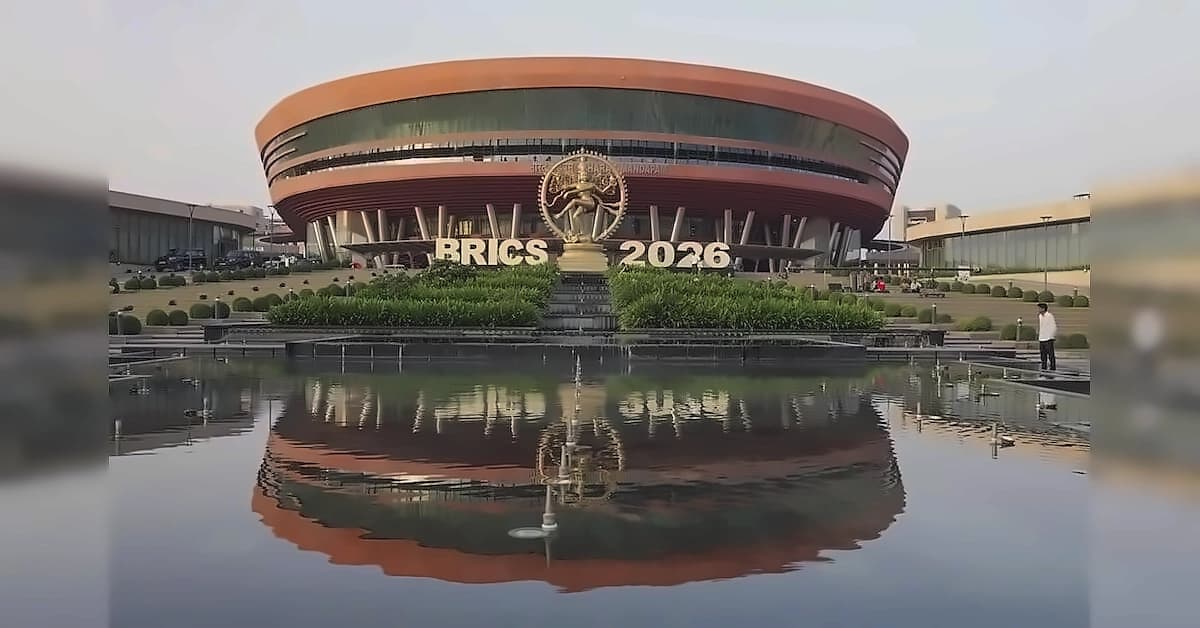
India is advancing its deep-tech and manufacturing ambitions through key Russian partnerships and a 2026 BRICS agenda, targeting industrial growth in AI, semiconductors, and energy while aiming to secure critical research infrastructure. According to reports from Goodreturns, Russian companies from aviation, energy, nuclear technology, mining and heavy industry are expected to explore opportunities in local production, technology transfer and joint industrial projects. The discussions will take place around Innoprom.India, a joint industrial exposition scheduled from September 9 to 11, shortly before the Brics Summit. The 18th summit will bring together leaders from 11 BRICS member states — including Brazil, China, Russia, and India — alongside 10 invited partner countries, marking BRICS's 20th anniversary since its establishment in 2006.
The exposition is expected to bring together Russian firms looking to participate more closely in India's manufacturing expansion, with the timing particularly significant for India's domestic supply chain deepening efforts. As reported by Goodreturns, the agenda is expected to cover aviation, mining, digital technologies, energy and nuclear power. Emerging areas such as artificial intelligence and additive manufacturing are also likely to feature in discussions. These sectors are not merely trade categories for India, they sit at the intersection of infrastructure, defence preparedness, energy security and industrial competitiveness. The summit theme of "Building for Resilience, Innovation, Cooperation and Sustainability" reflects India's strategic focus on technology-driven industrial growth and sustainable development.
A main plenary session is scheduled for September 10, with Russian Industry and Trade Minister Anton Alikhanov and Indian Commerce and Industry Minister Piyush Goyal expected to participate. According to Goodreturns, organisers have listed bilateral trade, investment, market access and joint industrial projects among the key themes for the session. The focus on market access and industrial projects suggests that both sides are looking beyond conventional buyer-seller arrangements. Russia has long been a major partner for India in defence, nuclear energy and heavy engineering, and the current push appears more closely linked to manufacturing localisation, commercial partnerships and the use of India as a production base. Other sessions will cover business cooperation, regional aviation, digital technologies, trade infrastructure, critical minerals and raw materials, and additive manufacturing.
For Indian policymakers and companies, the central question will be whether the engagement results in meaningful technology transfer, as India has attracted several global manufacturers but depth of localisation has varied sharply by sector. As reported by Goodreturns, Russian participation in aviation, nuclear technology and heavy industry could be significant if it helps Indian firms gain access to processes, tooling, engineering standards or specialised materials. Such areas require long investment cycles and close regulatory oversight, involving sensitive technologies making government-level trust an important part of any commercial arrangement. The scale and structure of potential agreements are not yet clear, with technology transfer taking various forms including licensing, joint ventures, contract manufacturing, research collaboration, training or component sourcing. For finance and industry watchers, near-term impact may be visible through memorandums of understanding, sector-specific working groups or pilot projects, while larger investments would likely require longer negotiations and regulatory clearances.
Alongside the bilateral industrial track, India is expected to use the Brics platform to push cooperation in artificial intelligence, high-performance computing, quantum technologies and semiconductor materials. The expanded grouping now brings together Brazil, China, Egypt, Ethiopia, India, Indonesia, Iran, Russia, Saudi Arabia, South Africa and the United Arab Emirates. India is expected to seek progress on several multilateral initiatives during its chairmanship, including the Global Research Advanced Infrastructure Network (GRAIN), which is aimed at giving researchers across member countries shared access to high-performance computing infrastructure and supercomputing resources. Another proposal under development is a digital science and research repository intended to help participating countries share datasets and research capabilities, especially in advanced materials engineering and functional nanostructures.
India's year-long Brics chairship has produced 20 sectoral outcomes covering trade, supply chains, Micro, Small and Medium Enterprises (MSMEs), startups, agriculture, energy and urban infrastructure, according to the Ministry of External Affairs. The outcomes include an MSME cooperation portal, a network linking startups and incubators across member countries, a proposed Brics Startup Innovation Fund, and a 2026-2030 action plan on global value chains. The Brics Incubator Network will connect national nodal agencies, selected incubators and startups, while the Brics Logistics Supply-Chain Cooperation Framework seeks to address fragmented supply chains through technical exchanges and knowledge sharing. The Global Value Chains Action Plan for 2026-2030 includes a Technical Council and joint study to make value chains more resilient, efficient and productive.