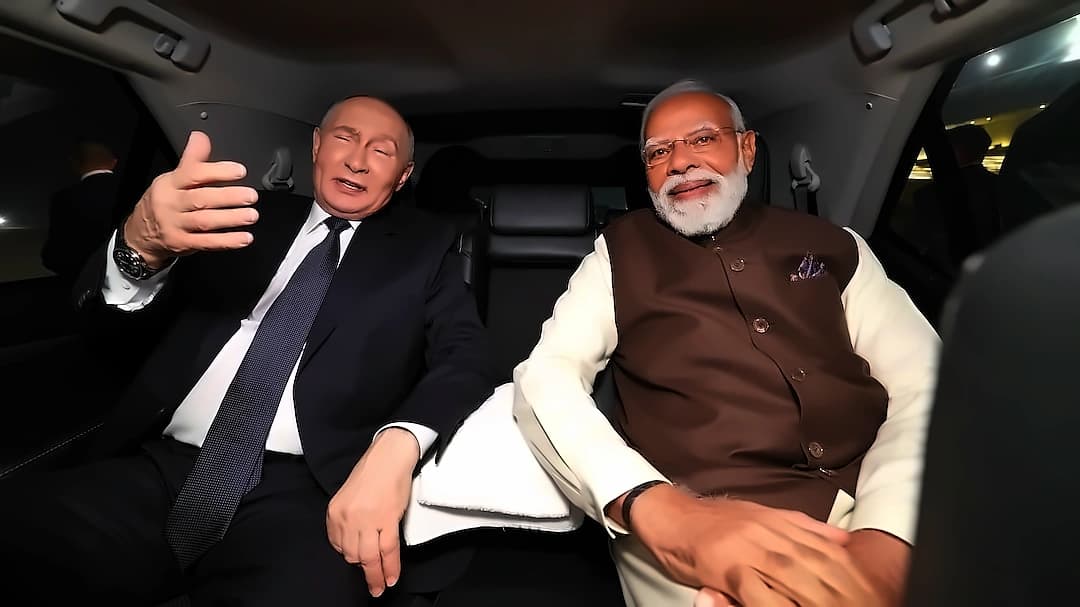
The 18th BRICS Summit officially began in New Delhi on Saturday, September 12, with leaders of the expanded grouping meeting at Bharat Mandapam as India hosts the bloc's annual summit for the first time since its expansion. According to Business Standard, the two-day summit, themed 'Building for Resilience, Innovation, Cooperation and Sustainability', brings together Russian President Vladimir Putin, Chinese President Xi Jinping, South African President Cyril Ramaphosa, Egyptian President Abdel Fattah el-Sisi, Indonesian President Prabowo Subianto, Iranian President Masoud Pezeshkian, Crown Prince of Abu Dhabi Sheikh Khaled bin Mohamed bin Zayed Al Nahyan, and Ethiopian Prime Minister Abiy Ahmed Ali among other leaders. India assumed the BRICS chairship on January 1, 2026, marking its fourth time hosting the grouping, with the summit now expanded to include 11 full members alongside partner countries. The summit will bring together 11 major emerging and developing economies — Brazil, China, Egypt, Ethiopia, Indonesia, India, Iran, Russia, Saudi Arabia, South Africa and the UAE, as reported by the Ministry of External Affairs.
Prime Minister Narendra Modi is conducting an extensive series of bilateral meetings throughout Day 1, beginning at 10 a.m. at Hyderabad House with Ethiopian Prime Minister Abiy Ahmed Ali. As reported by Business Standard, Modi will then meet Malaysian Prime Minister Anwar Ibrahim at 10:30 a.m. and Abu Dhabi Crown Prince Sheikh Khaled bin Mohamed bin Zayed Al Nahyan at 11 a.m.. The schedule includes a meeting with Vietnamese Prime Minister Le Minh Hung at 11:30 a.m., followed by a significant engagement with Chinese Premier Xi Jinping at 5:45 p.m. at Bharat Mandapam. Modi is also scheduled to meet Iranian President Masoud Pezeshkian at Rashtrapati Bhavan at 11:30 a.m., with the day concluding with a dinner hosted by PM Modi for participating leaders at 7:30 p.m. The bilateral meetings are expected to provide an opportunity to discuss key areas of cooperation and exchange views on regional and global developments.
Chinese President Xi Jinping delivered a powerful message at the summit, calling for member nations to stand united against the ongoing West Asia conflict. As reported by Bloomberg, Xi called on BRICS countries to 'help end the conflict in the Middle East' and stated that 'China was ready to work with other members to push for peace'. He urged BRICS countries to 'stand on the right side of history' in addressing the crisis in West Asia and described the bloc as an important platform for cooperation among emerging and developing economies. Xi stated that 'The war in West Asia has caused serious losses to people across the region and does not serve the common interests of the international community'. His remarks come as the summit takes place against the backdrop of the US-Iran war and continuing tensions in West Asia, presenting India with a difficult diplomatic balancing act. Xi also highlighted that 'The Brics cooperation mechanism has become the world's most influential platform for cooperation among emerging markets and developing countries'.
The summit at New Delhi's Bharat Mandapam assumed greater significance as it is taking place against the backdrop of a global economy facing the adverse impacts of the Russia-Ukraine war, the West Asia crisis, especially the blockade of the Strait of Hormuz, and the Trump administration's trade and tariff policies. As reported by Business Standard, Prime Minister Modi welcomed world leaders including Russian President Vladimir Putin and Chinese President Xi Jinping to India on Saturday to kick off the summit aimed at protecting developing economies from the global impact of wars in Ukraine and West Asia. UN Secretary General Antonio Guterres, WTO Director General Ngozi Okonjo-Iweala, WHO Chief Tedros Adhanom Ghebreyesus, New Development Bank (NDB) President Dilma Rousseff and Asian Infrastructure Investment Bank Chief Zou Jiayi are also attending the Brics summit. India's chairship of the grouping centred on the four pillars: resilience, innovation, cooperation and sustainability, with leaders focusing on strengthening collective cooperation in areas such as health, agriculture, food, energy, disaster risk reduction and supply chains.
The summit is taking place against the backdrop of the US-Iran war and continuing tensions in West Asia, presenting India with a difficult diplomatic balancing act. As reported by Business Standard, PM Modi indicated India's concerns over the escalating situation in West Asia at the Brics Business Forum on Friday, stating 'Global trade can move forward only when sea lanes are secure, supply routes remain open, and seafarers are safe. That is why India is a staunch advocate of freedom of navigation and the safety of seafarers'. The expanded BRICS includes Iran, Saudi Arabia, and the UAE, whose interests and positions on the regional conflict do not always align. India, meanwhile, maintains significant strategic and economic ties with the US as well as West Asian nations. This complex geopolitical landscape adds significance to India's role as BRICS chair, as the grouping continues to expand its role in global economic and diplomatic affairs while managing diverse regional interests and tensions. Iranian President Masoud Pezeshkian was also present at the summit, his first visit to India, with the safety of Indian seafarers and the conflict's regional spillover forming part of bilateral discussions on the sidelines.