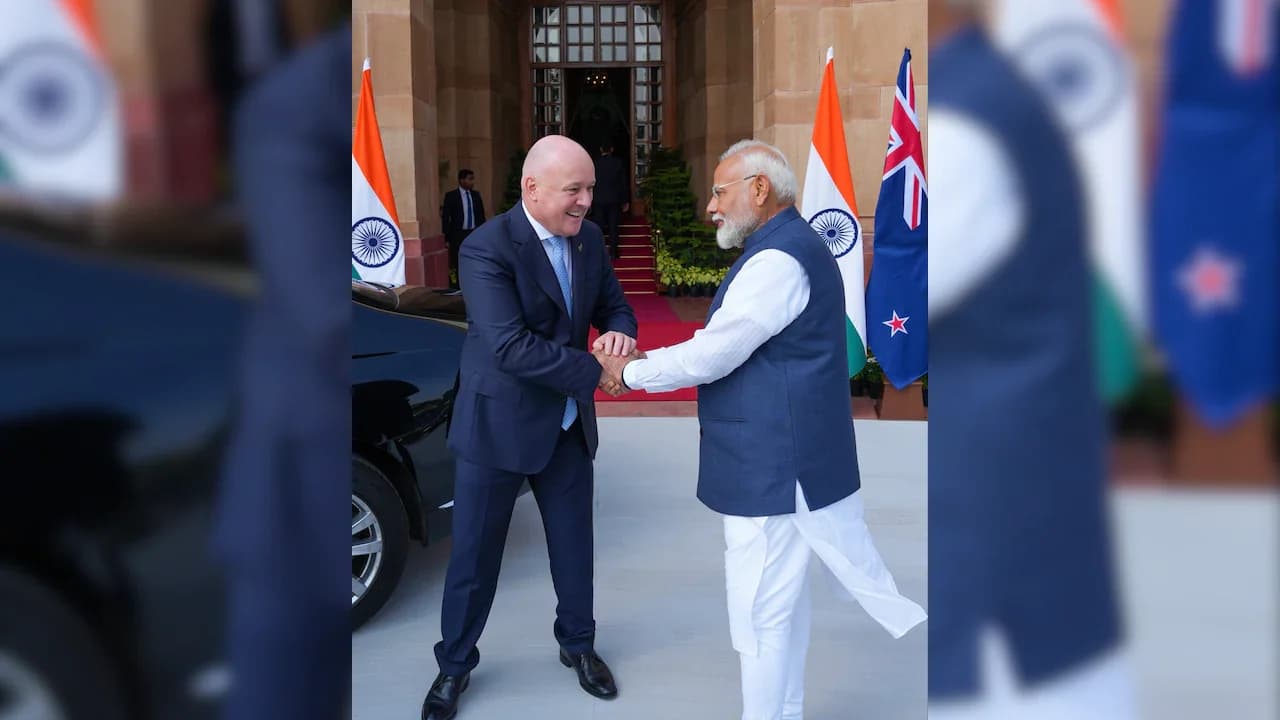
The India-New Zealand Free Trade Agreement will come into force on October 20, 2026, coinciding with Dussehra, Commerce and Industry Minister Piyush Goyal announced on Monday during a virtual interaction with New Zealand Trade and Investment Minister Todd McClay in New Delhi. According to reports from The Times of India, the agreement was signed in New Delhi on April 27, 2026 after negotiations between the two countries concluded in nine months. Goyal reviewed ongoing work towards the signing of the recently concluded India-New Zealand FTA with New Zealand Minister for Trade and Investment Todd McClay, discussing avenues to further enhance bilateral trade and investment while strengthening cooperation across key sectors of mutual interest. New Zealand High Commissioner Patrick John Rata described the pact as "huge" for both countries, stating that "an FTA works well because the two countries have decided to trust each other." The legislation was passed by the New Zealand Parliament on September 16, 2026, with both countries completing their internal processes to enable the October 20 implementation date.
The India-New Zealand Free Trade Agreement will provide duty-free access for 100% of Indian exports to New Zealand once it enters into force, according to government documents. As reported by The Times of India, New Zealand will eliminate or significantly reduce tariffs on about 95% of its exports to India, including wine, kiwi fruit and apples, giving Indian exporters duty-free access to the New Zealand market. The agreement provides zero-duty market access for 100% of India's exports to New Zealand, representing a significant expansion of trade opportunities for Indian exporters in the New Zealand market. Sectors expected to benefit include textiles and apparel, pharmaceuticals, machinery, vehicles, gems and jewellery, processed foods, tea, coffee and spices. In return, India has offered tariff liberalisation across around 95% of tariff lines, covering 95% of bilateral trade value, with around 57% of New Zealand exports becoming duty-free in India from the first day of implementation. These include products such as sheep meat, wool, coal, forestry and wood products. From the entry into force, every single tariff line covering 100% of India's exports to New Zealand becomes duty-free, offering Indian industry a level playing field that puts it on par with New Zealand's other trading partners. Indian manufacturers will also benefit from tariff-free access to critical inputs such as wooden logs, coking coal and metal scrap, sharpening their competitive edge in global markets.
India has agreed to tariff concessions on 70% of its tariff lines for products coming from New Zealand, with the remaining 30% of tariff lines kept on the exclusion list. As reported by Mint, wood, wool, sheep meat, raw hides and leather will have import duties removed completely from October 20, 2026. Petroleum oils, vegetable oils, malt extract, and some electrical and mechanical machinery will have import duties reduced gradually over 3, 5, 7, or 10 years. Pharmaceutical drugs, polymers, and aluminium, iron and steel products will have import duties reduced but not removed completely. Manuka honey will see up to 200 tonnes annually get a 75% tariff reduction phased over five years, subject to a minimum import price of $20 per kg, while kiwi fruit imports up to 6,250 tonnes in the first year, rising to 15,000 tonnes by the sixth year, will be allowed at 0% duty during the 1 April to 15 October seasonal window. Apples will have the quantity eligible for lower duties rise from 32,500 tonnes in the first year to 45,000 tonnes by the sixth year, attracting a 25% duty during the 1 April to 31 August seasonal window. Albumins, including milk albumin, will see imports of up to 1,000 tonnes in the first year, rising to 3,000 tonnes by the fifth year, attracting a lower 11% duty.
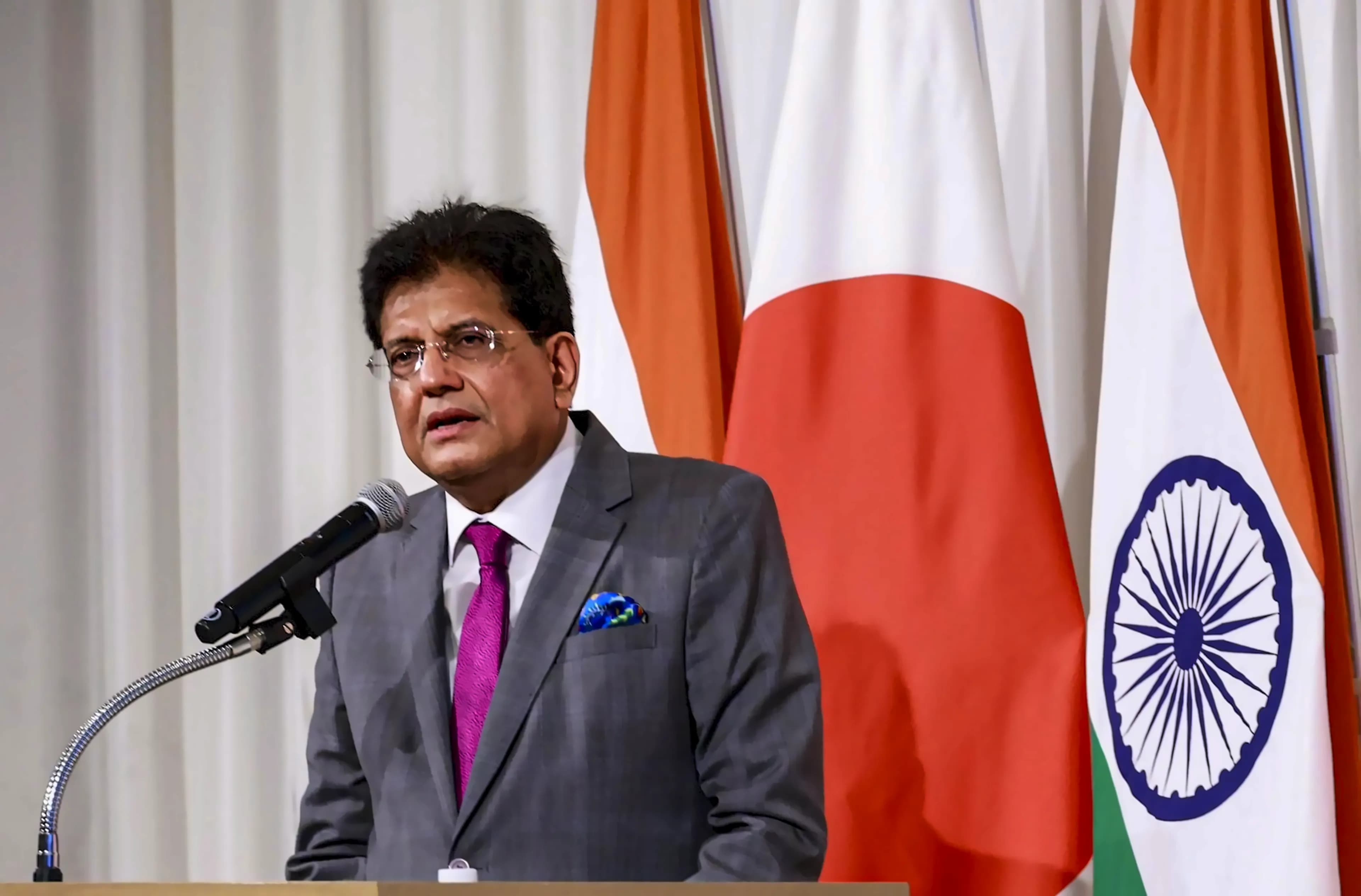
Prime Minister Narendra Modi's visit to New Zealand in July 2026, the first visit by an Indian Prime Minister to New Zealand in four decades, provided further momentum to the bilateral relationship and emphasised the importance of the early implementation of the India-New Zealand FTA, according to the Ministry of Commerce & Industry. The visit also marked an important elevation in the relationship, with India and New Zealand announcing a Strategic Partnership and endorsing the India-New Zealand Strategic Partnership: Roadmap to 2030 as a shared framework to guide cooperation over the next four years. The FTA also sets the stage for deeper investment gains for India, with New Zealand's commitment to facilitate USD 20 billion in investment into India. This investment by New Zealand will benefit Indian agriculture, manufacturing, infrastructure and start-ups. The agreement provides an aspirational goal of doubling bilateral two-way trade in goods and services to NZ$7 billion (approximately ₹35,000 crore) by 2030. With bilateral merchandise trade already at around USD 1.1 billion in 2025-26, the entry into force of the India-New Zealand FTA is set to give a decisive push to two-way trade, investment and job creation in the years ahead.
The FTA establishes an Agriculture Productivity Partnership to strengthen cooperation in agriculture, with dedicated Action Plans for kiwifruit, apples and honey aimed at improving productivity, quality and farmer incomes in India. Centres of Excellence will be established for orchard management, post-harvest practices, supply chains, food safety and sustainable beekeeping, facilitating the exchange of knowledge, technology and capacity. A Joint Agriculture Productivity Council will monitor that the market access is complemented by cooperation activities by New Zealand under Agriculture Productivity Partnership. The Government has safeguarded the interests of Indian farmers by keeping sensitive products such as dairy, animal meat (except sheep), key agricultural commodities, sugar and edible oils excluded from tariff concessions. A calibrated market access has been structured for New Zealand's apples, kiwifruit and Manuka honey through Tariff Rate Quotas with Minimum Import Price and seasonal import windows, alongside safeguards to protect domestic farmers. India's pharmaceutical and medical device exporters gain a long-awaited edge as New Zealand begins accepting inspection approvals from globally trusted regulators such as the US FDA, EMA, UK MHRA and Health Canada, cutting long waiting time and speeding up market entry.