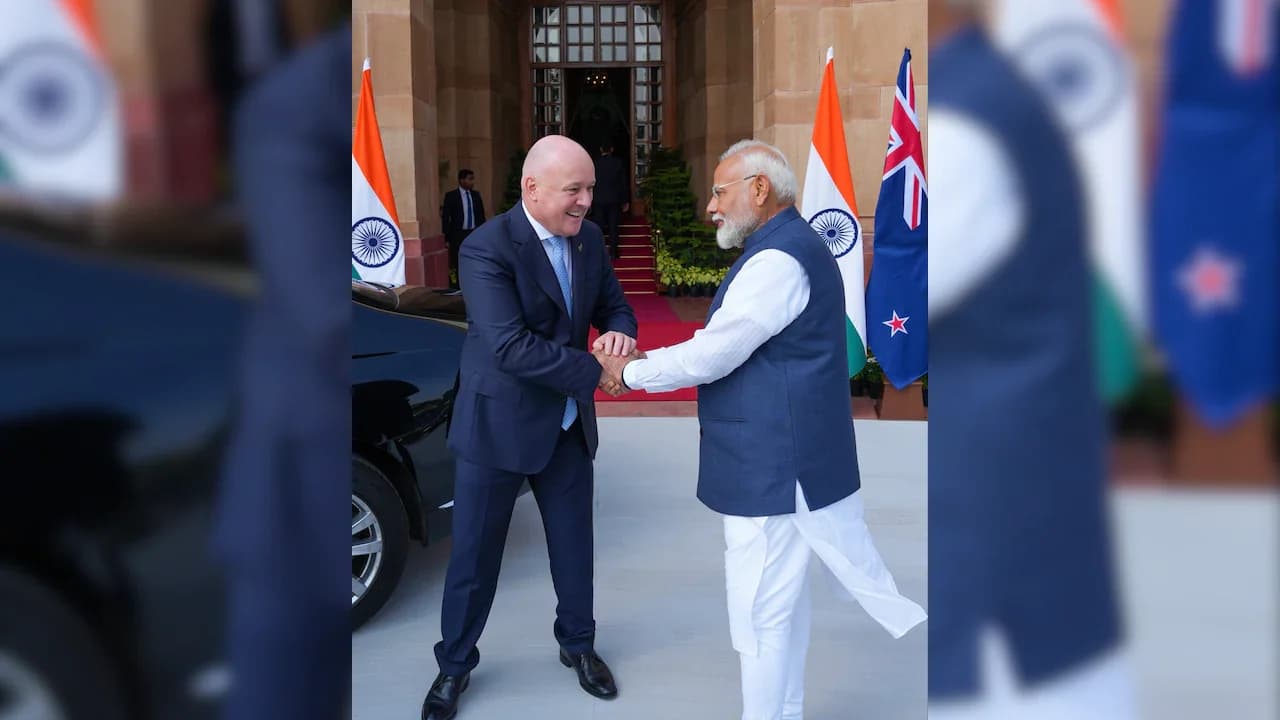
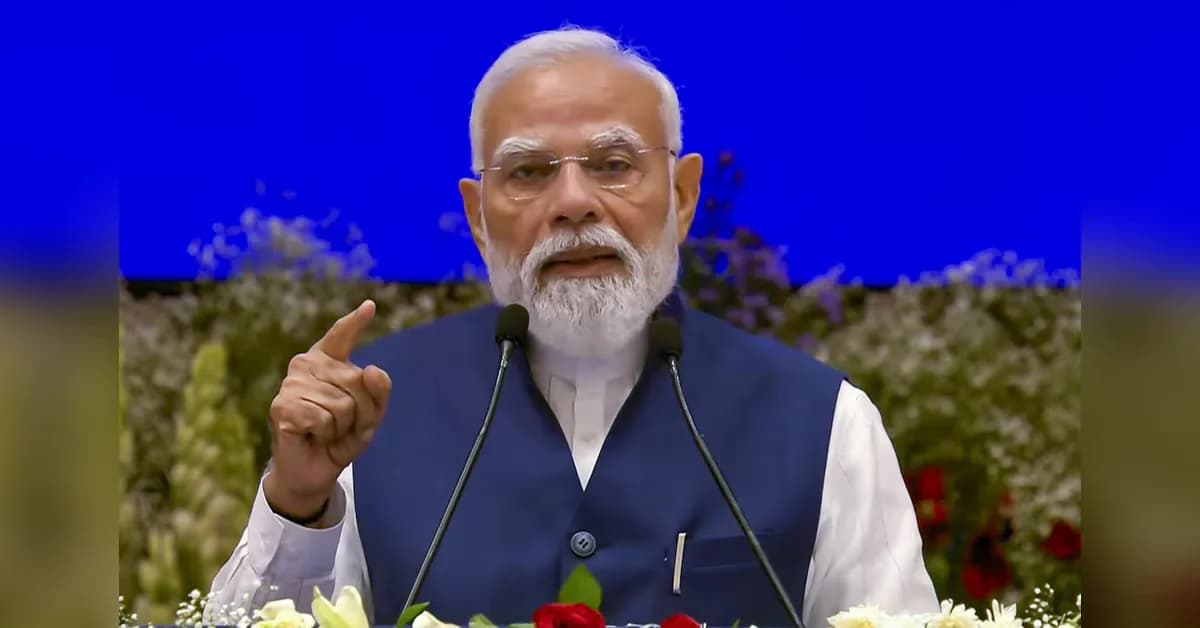
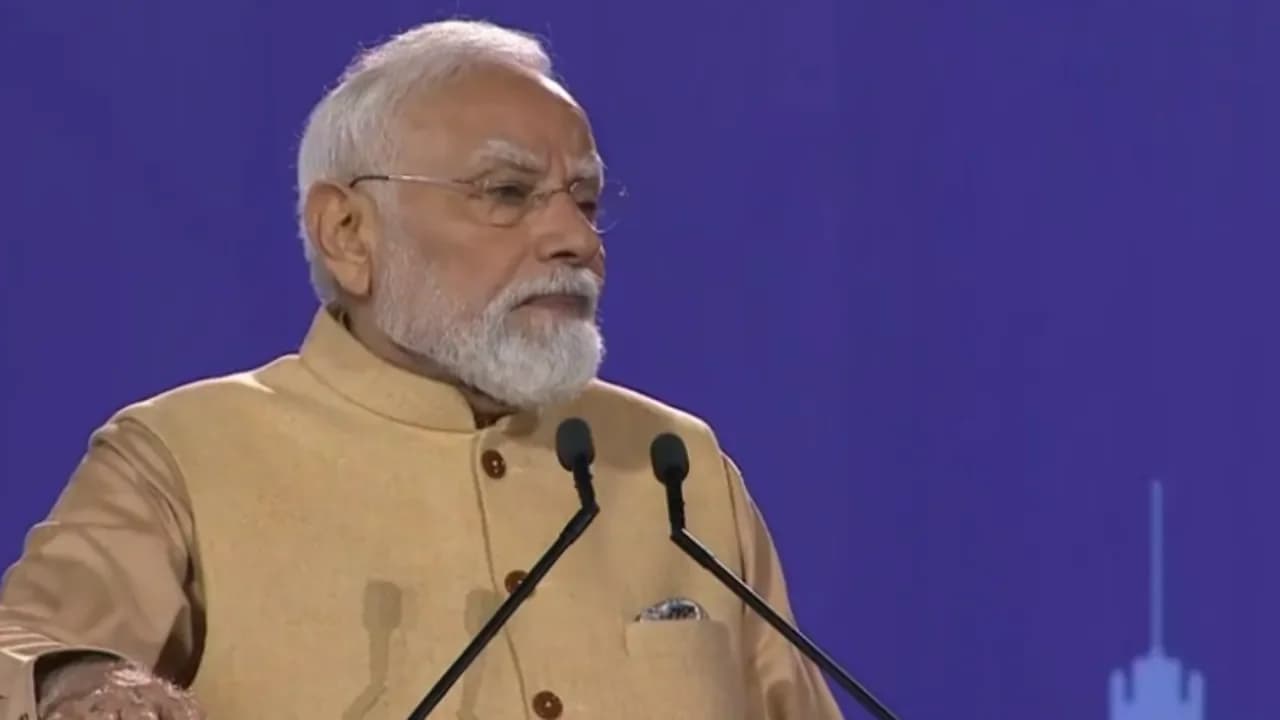
Prime Minister Narendra Modi and New Zealand Prime Minister Christopher Luxon have elevated bilateral relations to the level of strategic partnership following their wide-ranging talks in Auckland. As reported by Business Standard, Modi made the announcement during an interaction with a select group of CEOs and business leaders, stating that "under this, we will move forward in every sector with clear goals and concrete outcomes." The prime minister emphasized that "a stronger economic partnership between India and New Zealand will create new opportunities for businesses, innovators and our youth." Modi described the India-New Zealand free trade agreement as a "landmark" initiative that would add depth and dynamism to the bilateral economic ties and open new opportunities for market access, investment, services, technology and talent mobility. The strategic partnership comes after Modi's historic visit to New Zealand, marking the first trip by an Indian Prime Minister to the country in nearly 40 years. Speaking at an Indian community event titled 'Kia Ora Modi' in Auckland, Modi said that "the relationship between India and New Zealand is built on cherished memories, enduring friendship, shared values and a mutual commitment."
Modi invited New Zealand investors and business houses to partner India in infrastructure development, civil aviation, logistics, clean energy, urban mobility, water management, waste management and digital economy sectors. According to Business Standard, the Prime Minister noted that India's sustained high growth coupled with young and skilled workforce, expanding middle class, digital revolution, next-generation infrastructure push, and continuing economic reforms, offer significant opportunities for trade and investment for companies in New Zealand. Modi called upon the business leaders to expand investment and commercial partnerships and help realise the target of doubling bilateral trade to NZD 7 billion (approximately ₹35,000 crore) by 2030. The FTA's provision of $20 billion investment in India over the next 15 years is expected to serve as a driving force for a stronger economic partnership, with 57% of everything New Zealand exports to India being tariff-free from day one of implementation. Modi emphasized that "the future of India and New Zealand is intertwined, and the bilateral trade agreement will accelerate India's journey towards a developed nation."
New Zealand Prime Minister Christopher Luxon hailed India's "incredible" economic transformation during the interaction themed "India-New Zealand: A Winning Partnership." As reported by Business Standard, Luxon, who worked for Unilever in India during the mid-90s when people were paid daily wages in coins, said he has been a "great fan" of India for a long period of time. He highlighted Modi's achievement of lifting 250 million people out of poverty, with 440 million people now in the middle class and about to be 750 million by the end of the decade. Luxon described the transformation as "so inspiring and so exciting to see the move from low income to middle income to high income," calling it an "incredible transformation" as the 1.4 billion Indian community gets wealthier. Stressing collaboration opportunities, Luxon named food and produce, tourism experiences, educational institutions, and technology as sectors for possible collaboration, urging all three actors - government, business leaders and community leaders - to come together to realize the huge opportunities.
The Ministry of External Affairs (MEA) revealed that dairy is a sensitive sector in India, but both countries have signed the Agricultural Productivity Arrangement to address these concerns. As reported by Business Standard, MEA Secretary (East) Rudrendra Tandon explained that "in India, there is a system of cooperative-based dairies, instead of larger commercial operations. So dairy, as you know, is a very sensitive sector in India. That's because of the unique structure of our agriculture sector." He noted that "New Zealand is an agrotech giant. They have developed some very advanced technologies in the entire range of activities in the agriculture sector." Under the FTA framework, both countries will explicitly cooperate on agrotech issues which will eventually benefit our dairy industry and the development. Tandon emphasized that "absorption of new technology is very important part of our agriculture policy," aligning with the Government of India's plan to commercialize and raise farm income. The partnership is expected to leverage New Zealand's advanced agricultural technologies to support India's cooperative-based dairy system, which serves as "a very important source of liquidity for a small and marginal farmer."
The bilateral merchandise trade between India and New Zealand stood at $2.25 billion, with the FTA and almost tariff-free business environment creating strong likelihood of rapid trade growth. According to latest reports, India's exports to New Zealand declined to $566 million in FY2026, while imports rose to $589 million, resulting in a merchandise trade deficit of $23 million. The FTA aims to double bilateral trade to $5 billion over the next five years. India's export basket is becoming increasingly value-driven, led by pharmaceuticals, passenger vehicles and refined petroleum products, while imports from New Zealand are increasingly concentrated in industrial raw materials such as wood logs, ferrous scrap, coal and aluminium scrap. Modi noted that New Zealand's strengths in dairy science, horticulture, and forestry, and India's consumer market, food parks and agri-tech talent should come together to create global food value chains. Modi highlighted India's technological achievements, stating that "today in India, billions of digital transactions are happening every month through UPI, India is touching new heights in drone technology and the space economy."
During the Auckland talks, Modi and Luxon produced 18 key outcomes covering trade, investment, defence, education and regional cooperation, including 10 agreements. As reported by Business Standard, Modi called for closer engagement between the private sectors of both countries in the fields of innovation, fintech and emerging technologies. The Prime Minister emphasized that the India-New Zealand economic partnership could become a model for inclusive and sustainable trade and a platform for innovation and prosperity. Modi is also expected to engage with prominent business leaders and sports figures during the visit, with the proposed agreement expected to provide long-term benefits for exporters while reinforcing New Zealand's economic engagement with one of the world's fastest-growing major economies. The FTA is expected to create new opportunities across manufacturing, agriculture, MSMEs, services, investment and skilled workforce mobility. Modi showed a muffler to the crowd and said he received it as a gift when he visited New Zealand around 25-30 years ago, before entering public life. Luxon encouraged New Zealand businesses to travel to India and learn about its consumers, describing them as "the most discerning" in the world, urging them to "learn about the markets, find the right partners, understand how to tailor your product and service in order to be able to create opportunities both in India and here in New Zealand as well."