Economist SP Sharma has identified significant diversification potential for Indian exports, revealing that $200 billion market exists across 15 other countries for products currently exported to the US. According to ANI, Sharma explained that if US tariffs reach 100% on countries buying Russian crude, India has substantial alternatives. He identified the Netherlands, France, the UK, Latin American countries, Saudi Arabia, the UAE and Nepal as key markets where Indian exporters could diversify their shipments. India's exports to the US stood at $87.3 billion in 2025-26, compared with $86.5 billion in 2024-25, despite tariff-related uncertainty and global headwinds. As reported by ANI, Sharma noted that if India grows with the US at 10-15%, then growth rate in exports with other markets is 20-25%. "I believe we have alternatives and we are not that much dependent on the US economy," Sharma stated.
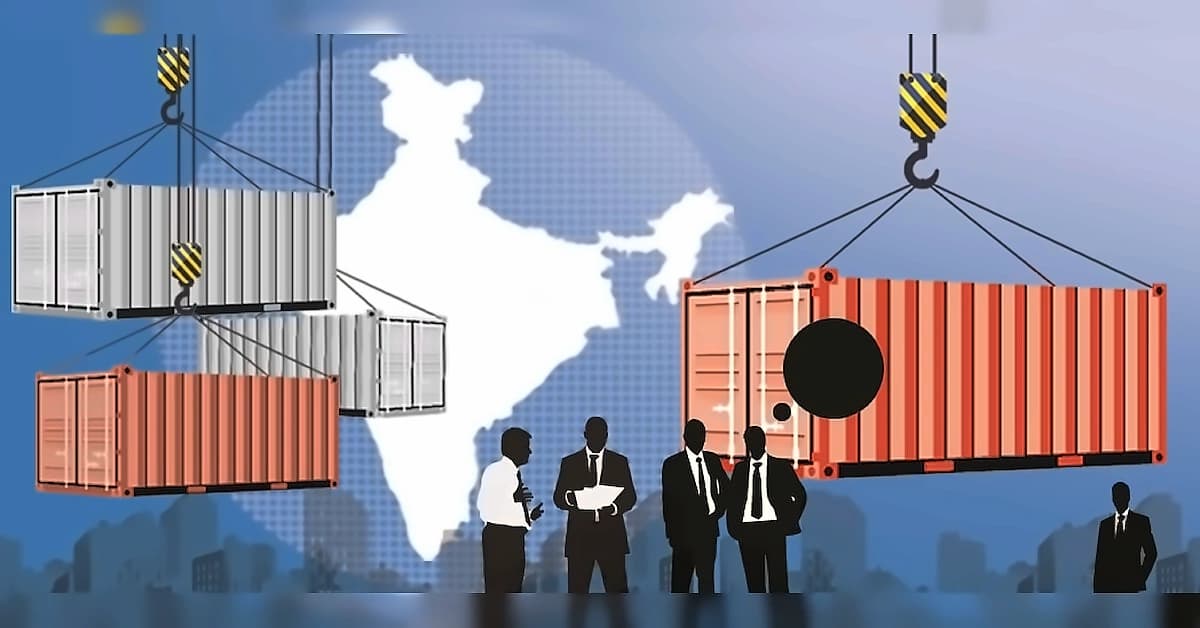
Union Finance Minister Nirmala Sitharaman announced that by the 2027-28 Budget, she would be able to declare that barring a few items, Customs duty will come down to single digits. According to reports from Business Standard, the government has been working to improve conditions for higher growth, with duties and slabs already being rationalised. A further push in this direction is being welcomed by economists who argue that India needs a simple and low-tariff regime.
India has demonstrated resilience in export growth despite challenging conditions, with exports to some alternative markets expanding faster than shipments to the US. As reported by ANI, Sharma noted that if India grows with the US at 10-15%, then growth rate in exports with other markets is 20-25%. "Despite these headwinds, our exporters were able to show resilience, were able to make increase in their export trajectory because there is a lot of demand in the US for Indian products, we are competitive and we are providing the labour-intensive products to the US," Sharma explained. Economists have long argued that India needs to aggressively focus on export diversification, noting that tariffs increase costs and affect businesses' ability to compete in global markets.
Despite the diversification potential, Sharma stressed that India continues to have strong economic relations with the US and the two countries are engaged in negotiations for a bilateral trade agreement. According to ANI, Sharma argued that tariffs of up to 100% would not benefit either economy and could lead to higher prices for American consumers, given India's position as a competitive, low-cost supplier. "Trade is always for the welfare, trade is not for the tussles," Sharma said. "Such kind of announcements are not in favour of US economy too because they will face the inflation," he added, arguing that higher tariffs on Indian products could add to price pressures in the world's largest economy. Sharma concluded that continued trade engagement between India and the US would be more beneficial for both economies than additional tariff barriers.
India has done well to sign trade agreements more recently, including those with the United Kingdom and the European Union. According to Business Standard, the country will now need to focus on utilising these agreements effectively. However, it still needs to bring down tariffs in general, as higher tariffs create friction that restricts participation in global value chains, particularly important given the bulk of goods movement happens in intermediates in the modern trade architecture.
Along with completing tariff rationalisation, India must focus on investment treaties to attract foreign direct investment, which can be a big driver of exports. As reported by Business Standard, the government has indicated that the template for bilateral investment treaties is being made more accommodating. This multi-front approach is essential for capitalising on trade as a sustainable driver of growth, as proven by several countries.