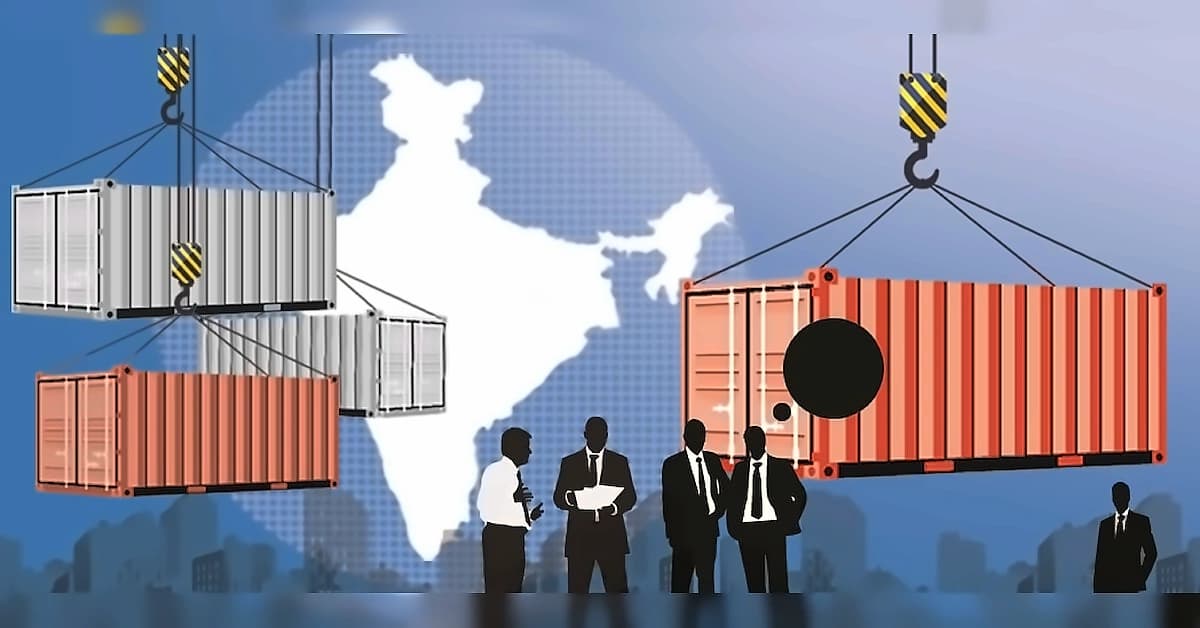
The government may soon offer policy support and financial incentives to encourage geographic diversification in India's chemical exports, according to reports from Mint. The proposed measures, part of an effort to reduce dependence on the US market, will focus on helping exporters identify and access new markets while strengthening India's integration and position in global chemical value chains. The US accounts for 18% of India's chemical exports, underscoring the need to broaden the export base and reduce concentration in a single market.
According to Mint reports, a product-region approach could allow India to target specific chemical categories based on demand and competitive opportunities in individual markets. Agrochemicals, water-treatment and construction chemicals could be targeted in African markets, while Latin America could offer opportunities for agrochemicals, specialty chemicals, dyes and pigments. Asean markets could be explored for surfactants, polymers and industrial intermediates, while Europe could offer opportunities in specialty, green and pharmaceutical chemicals.
Official data from DGCIS figures submitted to the Rajya Sabha by the minister of state for chemicals and fertilizers shows India's chemical exports rose sharply from ₹2,79,337 crore in FY21 to ₹3,68,597 crore in FY22—a growth of nearly 32%. Growth slowed to 3.2% in FY23 before contracting 2.1% in FY24, but exports bounced back in FY25, rising 5.4% to reach ₹3,92,769 crore. Government think tank Niti Aayog has targeted scaling annual chemical exports to $81 billion by 2030, including $45 billion from specialty chemicals and $26 billion from petrochemicals.
On the import side, India faces significant supply-chain risks due to heavy reliance on a single market, with China accounting for 41.8% ($560 million) of India's $1.34 billion organic chemical imports in April 2026, a sharp rise from 29.4% a year earlier, according to Mint reports. A senior government official noted that diversifying sourcing geographies and encouraging alternative supply chains could improve supply security and reduce concentration risks. Recent analysis suggests that country-of-final-assembly diversification does not equal supply-chain independence, as products assembled in alternative locations may still rely on Chinese electronic components, machinery, chemicals, battery materials, or tooling.
Industrial policy has become a significant driver of production geography, with governments using tax credits, grants, financing, local-content rules, export controls, procurement requirements, and strategic-industry programs to influence where companies build capacity. According to recent analysis, production is being rewired more often than fully relocated, with new suppliers, second plants, regional assembly, inventory, and backup capacity often more practical than abandoning established manufacturing ecosystems. The key principle is to understand what risk is actually being reduced—if the exposure is export controls, sanctions, or technology restrictions, production inside an aligned jurisdiction may materially reduce risk. However, subsidy-dependent capacity is not automatically sustainable, and companies should separate policy-adjusted economics from underlying operating economics when making production decisions.