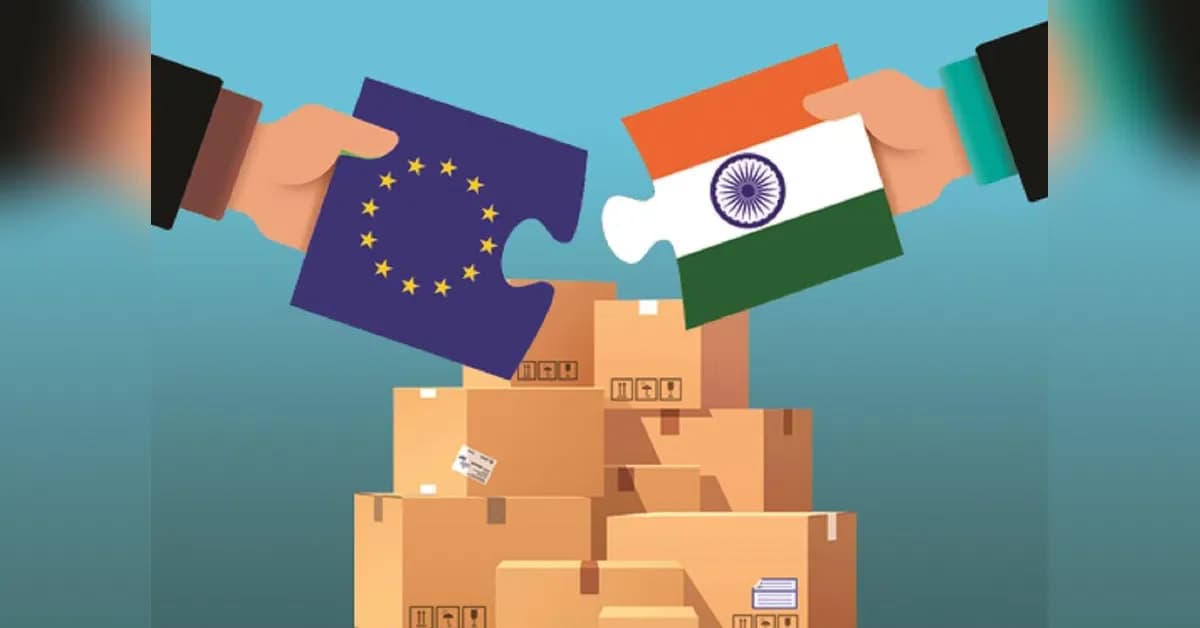
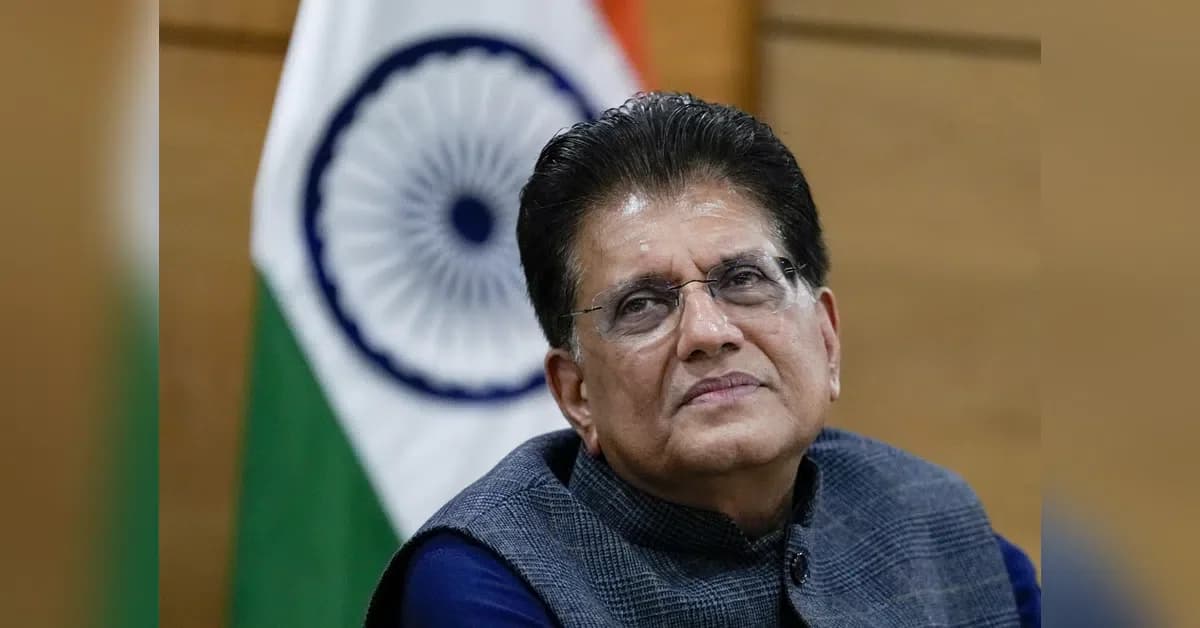
Commerce and Industry Minister Piyush Goyal announced that India will implement at least 2-3 free trade agreements in the next six months, with another 3-4 FTAs expected to come into force in 2027. Speaking at the Citi 2026 India Conference, Goyal said at least two to three 'very substantive' FTAs would come into force in the next six months following the implementation of the Oman FTA on June 1. The minister emphasized that over the next year, India will execute at least another three or four significant free trade agreements and the coming into effect of all the nine free trade agreements over the next nine to ten months. According to Goyal, in the last three-and-a-half years, India has finalised nine FTAs including with Mauritius, New Zealand, the UAE, Australia, Oman, EFTA bloc, the UK, European Union and the US. The nine agreements cover 38 developed economies that 'do not compete with India, but in fact complement the India growth story', as reported by Business Standard.

A comprehensive report titled 'Resilience in a Fragmenting World: India's Economic Relations with Great Powers' released by Koan Advisory Group in association with Chintan Research Foundation recommends that India should reassess the effectiveness of its existing Free Trade Agreements (FTAs) and modernise its investment screening architecture. According to the report, India's economic strategy must move beyond reactive policymaking and focus on proactive integration through calibrated partnerships, stronger institutional coordination and clearer market access objectives. The report specifically calls for auditing existing FTAs, assessing whether they have met intended objectives, and aligning future trade agreements more closely with industrial and export priorities. As per Shishir Priyadarshi, president of Chintan Research Foundation, 'Trade agreements cannot be treated as ends in themselves. India needs a clearer understanding of what each agreement delivers in terms of market access, supply-chain resilience and industrial capacity'.
Canada's Minister of International Trade Maninder Sidhu has announced the country's intention to pursue a free trade agreement with India, positioning the deal as crucial for Canadian businesses. According to reports from Business Standard, Sidhu emphasized that India is destined to become the world's third largest economy, creating significant opportunities for Canadian exporters across multiple sectors. The strategic timing aligns with India's accelerated FTA implementation schedule, with Goyal highlighting that India would remain the world's fastest-growing economy for over two decades into the future. The new report suggests that India should explore high-quality market arrangements and utilise multilateral institutions and bilateral investment treaties to secure greater predictability for businesses and investors.
The report addresses India's dual challenge of reducing strategic vulnerabilities while sustaining manufacturing growth and competitiveness. Rather than relying solely on geography-based restrictions, participants recommended a sector-specific and national-security-led investment screening framework, coupled with a phased strategy to reduce dependence on Chinese inputs where vulnerabilities exist. According to Deep Pal, director of Koan Advisory Group, 'India faces the dual challenge of reducing strategic vulnerabilities while sustaining manufacturing growth and competitiveness. That requires moving beyond blunt restrictions toward a more calibrated framework that distinguishes between legitimate national security concerns and economically productive investment'. The report notes that India's manufacturing ambitions, particularly in electronics, clean energy and advanced technologies, remain linked to global supply chains that include Chinese capital and components.
Addressing investors at the Citi 2026 India Conference, Goyal emphasized that India has emerged as the world's most credible alternative manufacturing destination as multinational corporations reassess global supply chains. His discussions with roughly 50 company representatives at a roundtable clearly showed that the world is looking at India as the only credible alternative as a manufacturing hub, as a trusted partner, as an investment destination which is safe. The minister noted that investor sentiment during recent visits to Canada and the United States reflected growing confidence in India's long-term growth prospects, with the world's long-term capital looking at India and the opportunities that India presents. The new report reinforces this position, stating that India has emerged as the world's most credible alternative manufacturing destination.