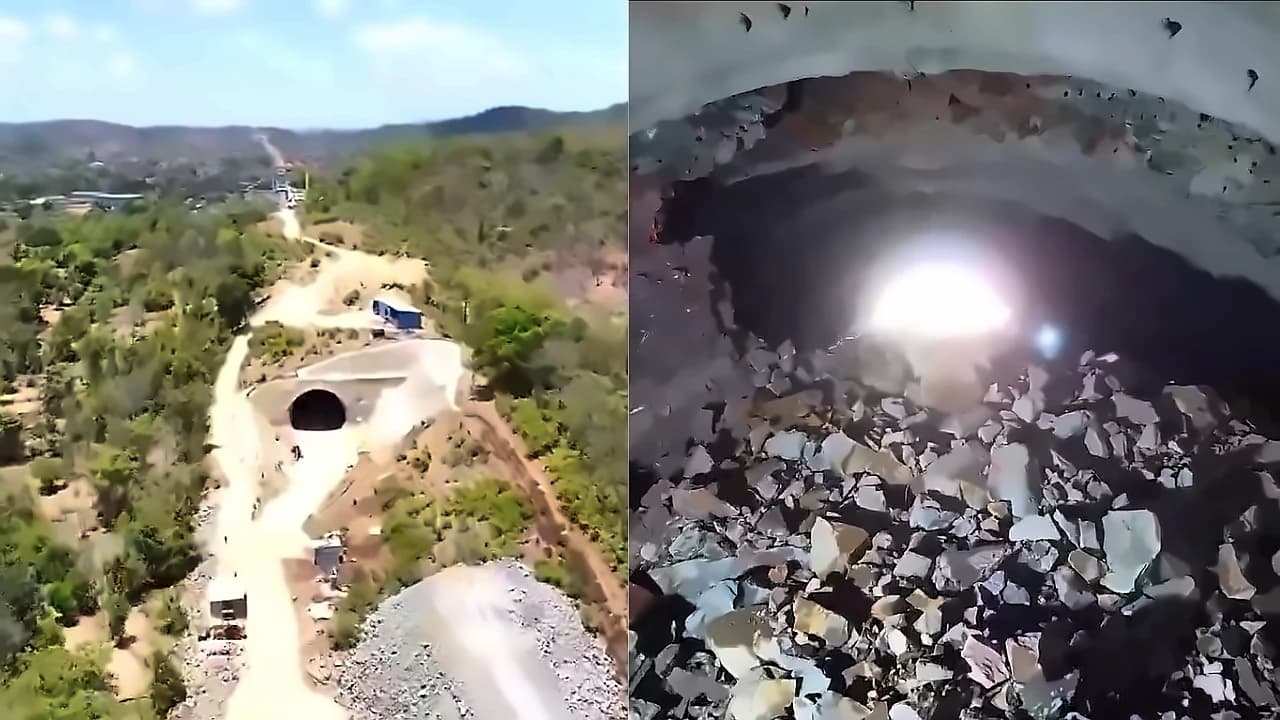
The Mumbai-Ahmedabad Bullet Train project achieved its third mountain tunnel breakthrough at Ambesari village in Dahanu Taluka of Palghar district, marking rapid progress in a key section of India's first high-speed rail corridor. Railway Minister Ashwini Vaishnav confirmed the breakthrough, stating that the newly excavated tunnel, designated MT-07, is 417 metres long and 14.4 metres wide and is designed to accommodate both up and down high-speed rail tracks. Excavation was carried out using a controlled drilling and blasting technique from both ends, supported by advanced monitoring systems to ensure structural integrity and operational safety throughout the construction process. Engineers deployed sophisticated geotechnical instruments, including Surface Settlement Points (SSP), 3D targets, strain gauges and seismographs, to monitor vibrations, tunnel behaviour and the impact on nearby structures in real time. Worker safety remained a key priority, with dedicated ventilation systems, fire protection measures, controlled access arrangements and continuous geotechnical supervision maintained during excavation. This latest breakthrough demonstrates the growing capabilities of Indian engineers and construction teams working on complex infrastructure projects, with tunnel construction being considered one of the toughest parts of the entire high-speed rail corridor.
Among recent project milestones, the project has completed the launching of a viaduct over the Kalupur flyover, a Railway Over Bridge (ROB) on the Sabarmati-Mumbai main line of Western Railway in Ahmedabad district. As reported by The Times of India, the viaduct runs parallel to the existing railway line and the launching over the flyover was completed on Monday using the Span-by-Span (SBS) method. The bridge features a 45-metre span over the flyover, 19.5-metre viaduct from ground to rail level, 19 segments and a total span weight of 1,200 metric tonnes. The Kalupur flyover is among Ahmedabad's busiest two-lane flyovers, connecting Shahibaug, Asarwa and Kalupur, and is used daily by thousands of commuters. The release stated that the Mumbai-Ahmedabad Bullet Train corridor passes over 31 crossings in Ahmedabad district, including eight Indian Railways crossings, a road flyover, roads, road underpasses, 16 canal crossings, one bridge crossing over the Sabarmati River and six steel bridges. Work on 23 of these crossings has already been completed, with construction activity gathering pace across the 508-km Mumbai-Ahmedabad High-Speed Rail (MAHSR) corridor.
With the completion of MT-07, three mountain tunnels have been successfully excavated within the past five months. Earlier, MT-08 (350 m) was completed on October 5, 2023, followed by MT-05 (1.5 kilometres) on January 2, 2026, and MT-06 (454 metres) on February 3, 2026. The breakthrough also means that all three mountain tunnels located between the Boisar and Vapi Bullet Train stations have now been fully excavated. This section passes through a strategically important industrial belt spanning Maharashtra and Gujarat and is considered crucial for the overall corridor development. Among the remaining mountain tunnels, MT-03 has crossed 80% excavation progress, while MT-04 has achieved nearly 60% completion. Work on MT-01 and MT-02 is progressing steadily. The Mumbai-Ahmedabad Bullet Train project includes a total of eight mountain tunnels, of which seven are located in Maharashtra's Palghar district and one is situated in Gujarat's Valsad district. The project also includes a significant undersea tunnel section near Mumbai, which represents one of the biggest engineering highlights of the entire corridor.
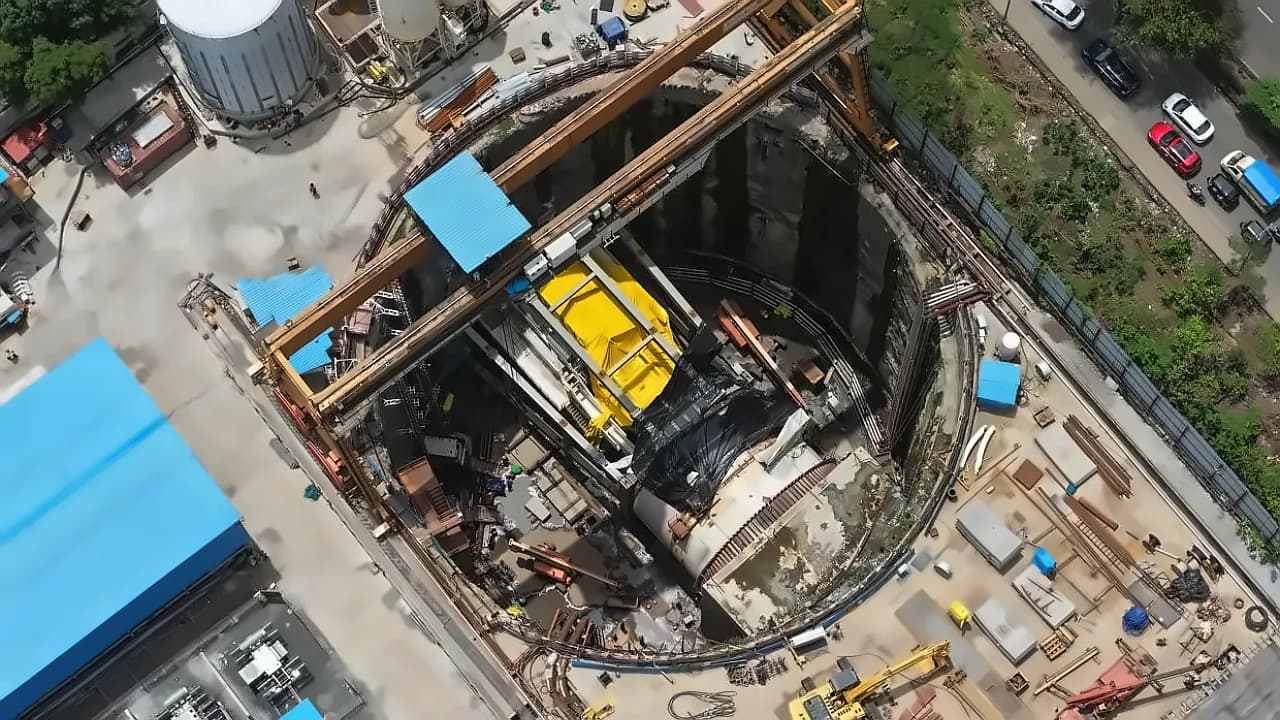
Progress is ramping up across the Maharashtra section, where foundational work is currently underway at the Thane, Virar, and Boisar stations. Additionally, excavation work at the high-profile Bandra Kurla Complex (BKC) station in Mumbai is nearing completion, with the casting of the base slab officially underway. Out of the 12 planned stations along the corridor, foundational work has been successfully completed at eight locations, which includes Vapi, Bilimora, Surat, Bharuch, Anand, Vadodara, Ahmedabad, and Sabarmati. The 508-kilometre MAHSR project is currently under construction, backed by technical and financial support from the Government of Japan. The route will have 12 stations — Mumbai, Thane, Virar, Boisar, Vapi, Bilimora, Surat, Bharuch, Vadodara, Anand, Ahmedabad and Sabarmati. The corridor will pass through Maharashtra, Gujarat and the Union Territory of Dadra and Nagar Haveli and Daman and Diu. Railway estimates indicate that the fastest service on the route, stopping only at Surat and Vadodara, is expected to complete the journey in slightly over two hours, significantly faster than the current regular trains that take around seven hours and the Vande Bharat Express that takes approximately five-and-a-half hours.
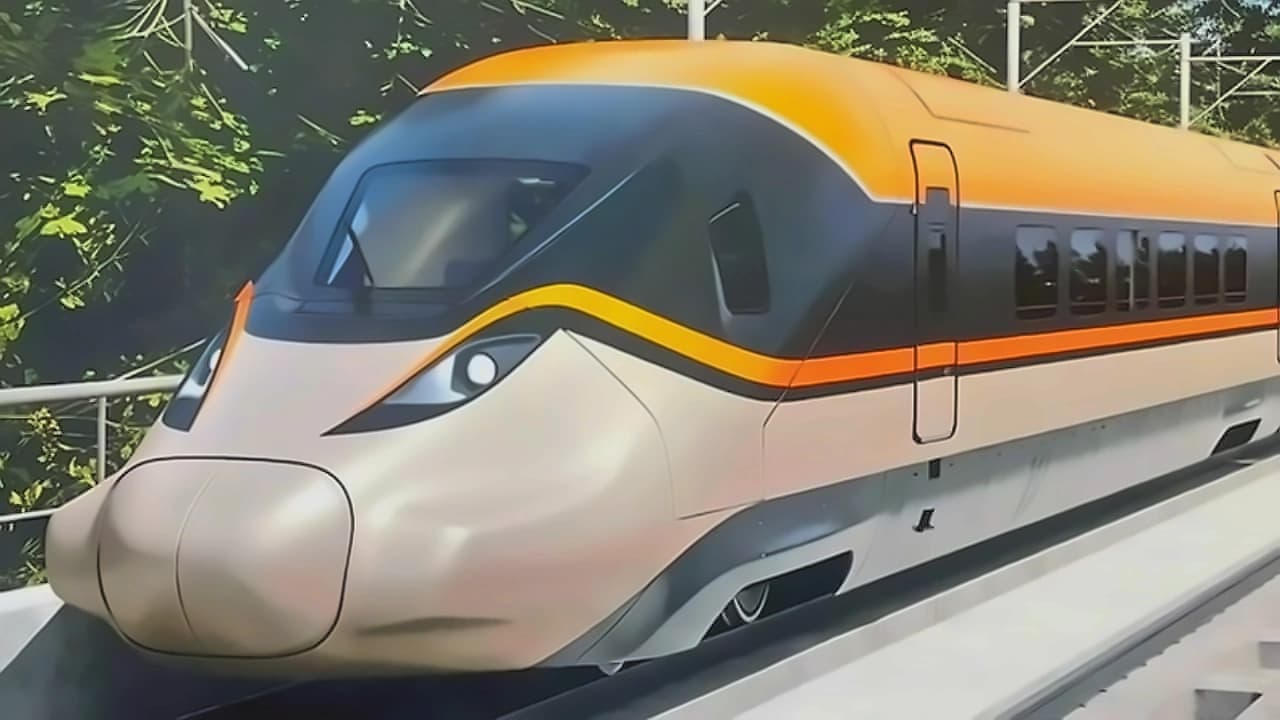
The project is being implemented by the National High Speed Rail Corporation Limited (NHSRCL) and is being developed with technical and financial assistance from Japan using the Shinkansen system. As reported by The Times of India, Japan agreed to fund around 81 per cent of the project through a soft loan carrying an interest rate of 0.1 per cent, repayable over 50 years with a long moratorium period. Railway officials have stated that the Mumbai-Ahmedabad corridor was chosen because it is among India's busiest business travel routes, with Mumbai remaining the country's financial capital and Ahmedabad, Surat and Vadodara being major industrial and commercial centres. Passenger demand projections, economic feasibility studies, expected urban growth and travel density were among the key reasons behind selecting the route. The project was also envisioned as a technology-transfer initiative under the government's "Make in India" programme. The 508-km corridor will pass through Maharashtra, Gujarat and the Union Territory of Dadra and Nagar Haveli and Daman and Diu. The project has faced several delays in the past due to land acquisition and environmental clearances, but recent construction updates indicate that work is now moving at a faster pace, with the India's first indigenously developed high-speed trainset expected to roll out by 2027.