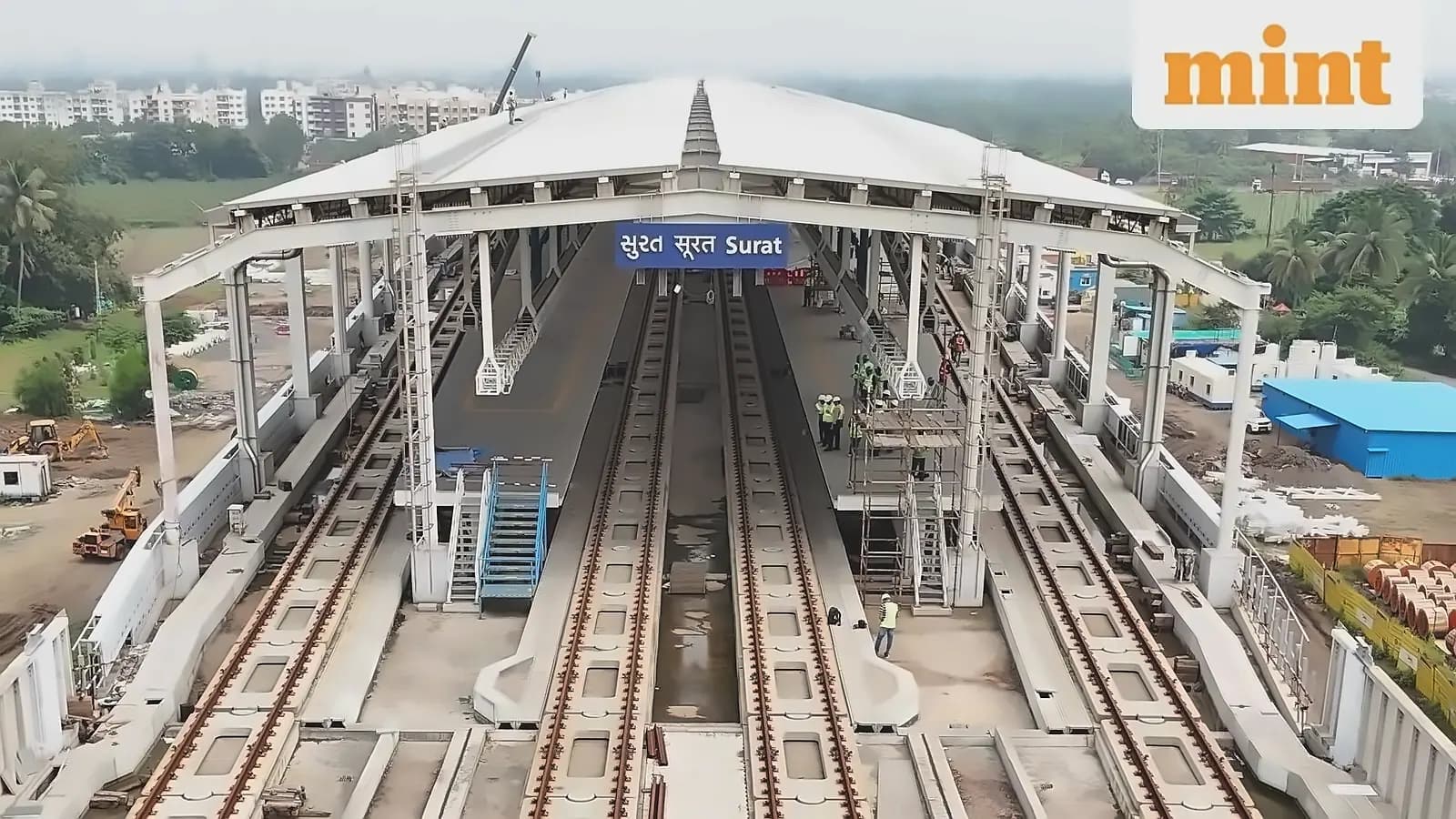
India's ₹2-trillion bullet train project has achieved another significant milestone with all 14 portal beams over Vadodara's Delhi–Mumbai Rajdhani line completed successfully. According to the Ministry of Railways, the 508-km Mumbai-Ahmedabad High Speed Rail corridor is now more than 80% complete in land and major structural progress, with the first operational stretch expected to open in 2027. Railway minister Ashwini Vaishnaw announced that an over 100 km long Surat-Vapi section is expected to be ready by December, with testing of India's indigenous trainsets to follow next year.
The project's cost has doubled from ₹1.08 trillion in 2017 to ₹1.98 trillion in the latest revised estimate, as reported by Mint. The railway ministry attributes this increase to several factors including taxes and cess, addition of rolling stock and signalling systems, inflation, and higher costs related to land acquisition and rehabilitation. The estimated cost of the project is ₹1,08,000 crore and is being executed with Official Development Assistance (ODA) Loan assistance from the Japan International Cooperation Agency (JICA). Japan offered yen loans covering up to 81% of the project cost at 0.1% a year over 50 years with 15 years of grace period.
India has chosen to develop its own high-speed trainsets through BEML, India's metro car manufacturer. As reported by Mint, the first two prototypes from BEML will be eight-coach trains capable of a maximum test/design speed of 280 km/h, expected to initially operate at around 250 km/h. Officials at Nhsrcl expect the first BEML trainsets to reach the Surat rail depot in the first quarter of 2027. The corridor now combines Japanese Shinkansen-derived technology with systems being developed from other technology ecosystems, including a European signalling system and coaches made in India.
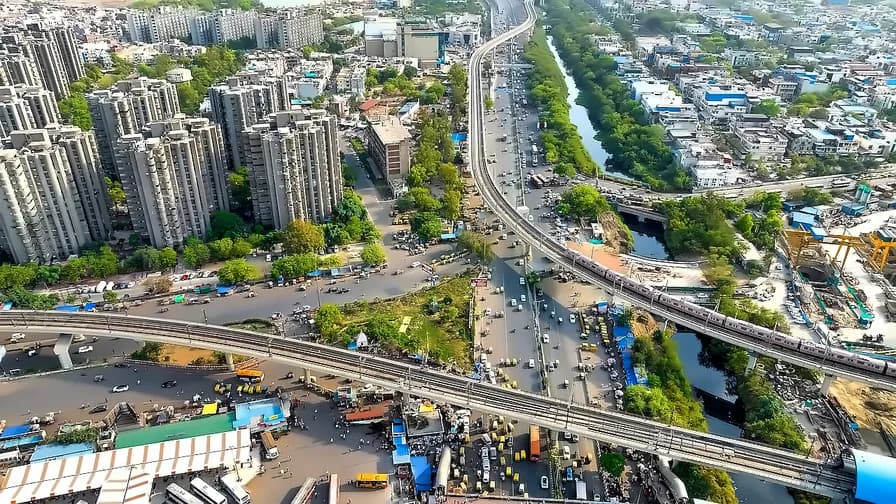
The project has achieved several significant infrastructure milestones recently. According to NHSRCL, the 480-metre long and 36-metre tall bridge over the Sabarmati River has been completed, with its height equivalent to a 12-storey building at around 118 feet. The bridge is located between Sabarmati and Ahmedabad bullet train stations, approximately 1 km from Sabarmati station and 4 km from Ahmedabad station. Additionally, a 100-metre-long bridge, weighing 1,405 metric tonnes was installed in Maharashtra's Thane district, making it the first steel bridge set up in Maharashtra as part of the project. With this installation, 16 out of the total 28 steel bridges planned along the entire bullet train corridor have now been completed.
The entire 508-km Mumbai-Ahmedabad High Speed Rail corridor will offer fast connectivity between Maharashtra and Gujarat states, with stops at 10 cities - Thane, Virar, Boisar, Vapi, Bilimora, Surat, Bharuch, Vadodara, Anand, Ahmedabad and will terminate at Sabarmati. The entire journey will be completed in about 2 hours 7 minutes with limited stops, which is substantially less than the time taken by trains or road journeys. The estimated energy cost of running the train for about two hours between Ahmedabad and Mumbai is around ₹7,000 per minute, putting the running cost of a two-hour journey at roughly ₹8.4 lakh, before accounting for capital costs and other overheads. The final passenger fare has not been announced, with estimates of ₹6,000-7,000 for a Mumbai-Ahmedabad journey.