Bullet train operations are set to begin soon as the infrastructure reaches completion milestone. According to the Railway Ministry, overhead equipment system for power supply on the Surat-Bilimora section of the 508-km-long Mumbai-Ahmedabad Bullet Train corridor was successfully energised on Saturday. This marks a significant achievement as the section comprises both Up and Down lines on the elevated alignment and marks an important advancement towards further testing activities for the project. The ministry has indicated that energisation will be carried out progressively in smaller sections, under the close supervision of technical teams to ensure safety and compliance with prescribed procedures. The overhead equipment system for power supply on the Surat-Bilimora section was the first section of the Mumbai-Ahmedabad bullet train corridor where the overhead electric wires were energised, as reported by NDTV.in.
The Centre has approved the Northern Bullet Train Corridor, a proposed high-speed rail network connecting Delhi with several important cities across Uttar Pradesh, Bihar, West Bengal and Assam. According to reports from NDTV.in, the corridor will span approximately 1,500 km and is expected to be the country's longest bullet train route. This will be the first high-speed rail project for Delhi and the second in India after the under-construction Mumbai-Ahmedabad corridor. The project aims to significantly reduce travel times between the national capital and eastern and northeastern India, while improving connectivity across major urban and industrial centres.
Bihar emerges as one of the biggest beneficiaries of the proposed corridor, with five stations being planned in the state: Buxar, Patna, Begusarai, Khagaria and Katihar. As reported by NDTV.in, Buxar, near the Uttar Pradesh border, is expected to be the first stop in Bihar, followed by Patna. The route will then pass through Begusarai, Khagaria and Katihar, improving rail connectivity across the state's central and northeastern regions. The high-speed service could bring down the Delhi-Patna journey to around four hours and 41 minutes, compared with the 11-14 hours currently required by conventional trains.
The corridor will connect Delhi with Agra, Kanpur, Lucknow, Ayodhya, Varanasi, Prayagraj, Patna, Siliguri and Guwahati. According to the latest reports, the Delhi-Varanasi journey is expected to take 3 hours and 33 minutes, while the Delhi-Patna route could be completed in approximately 1 hour. The Delhi-Siliguri journey, which currently takes nearly 20 hours, could be reduced to around 6 hours. Travel between Delhi and Guwahati could take less than 8 hours, compared with the 30-35 hours required currently. The corridor is planned in three phases, beginning with the Delhi-Varanasi section, followed by the Varanasi-Siliguri and Siliguri-Guwati stretches. Initially, the corridor was proposed to extend only up to Siliguri, but has been extended to Guwahati to ensure connectivity needs of Northeast India.
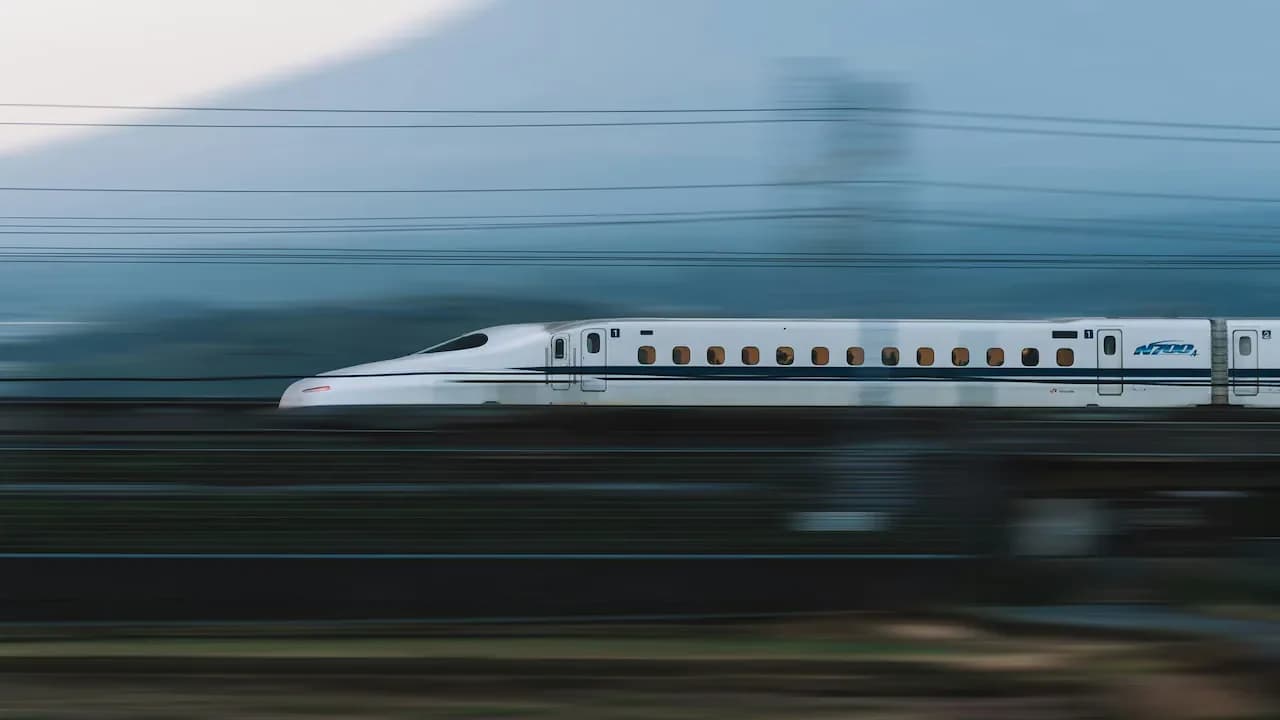
The Mumbai-Ahmedabad Bullet Train corridor is equipped with an advanced 2 A 25 kV overhead traction system, one of the sophisticated electrification technologies used for high-speed rail systems worldwide. According to the Railway Ministry, the electrification network comprises 14 strategically located traction substations (TSS) along the 508-km corridor that will receive power from the national grid and supply it to the overhead traction system used by high-speed trains. The entire electrical network will be monitored through a centralised control centre to ensure safe and reliable operations. The Surat-Bilimora section comprises approximately 50 km of elevated alignment between the two stations, including bridges across four rivers and a steel bridge over National Highway 53. Officials noted that the viaduct is also equipped with approximately 94,000 noise barriers to minimise the impact of noise on surrounding areas.