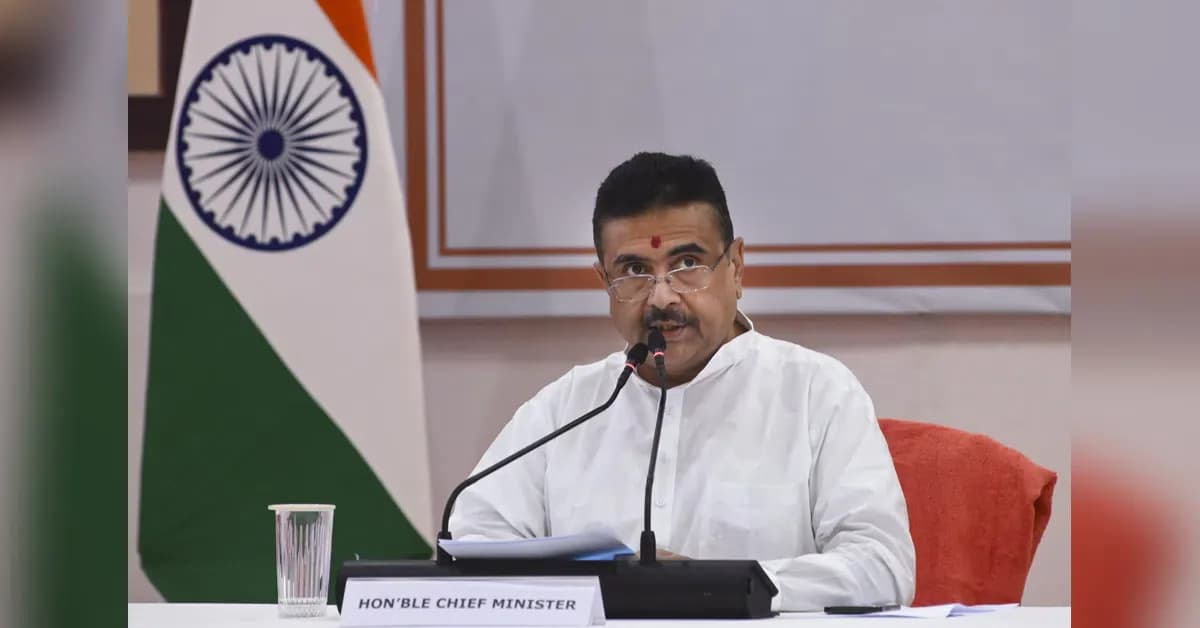
West Bengal Finance Minister Swapan Dasgupta announced at a business conclave that the state will scrap the Urban Land Ceiling Act, 1976, meeting a long-standing industry demand. Speaking at the event organised by The Delhi Council of the Bengal Chamber of Commerce and Industry (BCC&I), Dasgupta confirmed that the government has taken important reform initiatives. The Budget speech noted that West Bengal is the only major state where the Urban Land Ceiling policy is being implemented, describing it as a major investment bottleneck that hampers large-scale institutional investments. According to Business Standard, Sushil Mohta, president of Credai West Bengal, explained that the Act had set organised urbanisation in West Bengal back by at least 25 years, with the law fragmenting land holdings into multiple 500-square metre parcels to bypass ceiling restrictions, resulting in unorganised and haphazard city development.
Despite West Bengal's relative decline, the Kolkata metropolitan region remains India's third-largest urban agglomeration with an estimated GDP of around $150 billion and a population of nearly 16 million. As reported by Business Standard, Kolkata offers structural advantages over other major Indian cities including relatively affordable land and housing, a large skilled workforce, an IT ecosystem, strong educational base, and established infrastructure. The city historically functioned as the gateway to eastern India, the Northeast and neighboring countries, with its port, rail connectivity, educational institutions, financial networks and industrial clusters creating one of the subcontinent's most powerful regional economies.
Several companies outlined significant investment plans following the reform announcements. Dip Kishore Sen from Larsen & Toubro announced a ₹2,500 crore data centre investment and revealed plans for a software park in Bengal Silicon Valley that will create employment for 25,000 people, with the first phase almost complete. Abhijit Roy from Berger Paints India said the company is setting up a fifth factory at Panagarh with an initial investment of ₹350-400 crore, with plans to scale up to over ₹600 crore once the industrial policy is finalised. Navanit Narayan from Haldia Petrochemicals announced a ₹6,000 crore investment in India's largest phenol acetone plant, while Jayanta Roy from The Peerless General Finance announced a ₹1,000 crore investment across various verticals. According to Business Standard, Dasgupta also announced that the government will make it easier for people investing more than ₹100 crore to obtain clearances, and plans to make Kolkata open 24x7 for an immediate retail sector boost.
A revitalised Kolkata can attract sectors currently bypassing the city, including global capability centres, data centres, financial back offices, design industries and technology firms. As reported by Business Standard, the city needs a new metropolitan planning framework, with existing documents like the 'Vision 2025: Perspective Plan' and 'Comprehensive Mobility Plan (2001-25)' becoming obsolete. The new government has an opportunity to break the impasse by allowing carefully regulated conversion of closed industrial lands into GCCs, data centres, innovation hubs, educational institutions and public amenities for congested industrial suburbs. For Gen Z professionals, tech parks, BPOs, tourism, and creative industries are steadily picking up steam, with the job ecosystem gradually breaking away from traditional molds. Sanjeev Sanyal, member of Prime Minister Narendra Modi's Economic Advisory Council, emphasised that Bengal needs a major hub in Eastern India, stating that by sheer size and history, it's got to be Kolkata.

Urban reform should not become a license for uncontrolled real-estate speculation, with land-use changes remaining linked to infrastructure capacity, planning norms, environmental safeguards, and affordable housing obligations. According to Business Standard, Kolkata needs a new Economic Development and Spatial Plan that integrates land use, mobility, infrastructure, housing, climate resilience, and investment strategy across the metropolitan region. Finance Minister Dasgupta acknowledged that the reforms would put pressure on state finances but said the government was banking on higher economic growth to offset the fiscal cost. "It's going to cost us some. It's going to strain the exchequer. But we believe that the growth trajectory we've set will enable us to cover a lot of that. So we are banking on growth. It's a gamble," he said. The ultimate success depends on how effectively new leadership invests in youth development, with West Bengal cultivating strengths as a hub for services, digital entrepreneurship, education, and creative fields.