Worli Sea Face has surpassed Malabar Hill as Mumbai's preferred address for the new wealthy, according to diamond merchant Karan Gulwani and lifestyle influencer Myra Gulwani. Speaking from their home in an episode of The Habitat with Vishal Bhargava, the couple discussed life in one of India's most expensive residential markets, where sea-facing properties can cost as much as ₹3 lakh per square foot. Karan described Worli Sea Face as an exclusive residential community that would be difficult to replicate elsewhere, stating it has become a closed billionaires' club, which can never happen anywhere else. He drew a parallel between the neighbourhood and DLF Camellias in Gurugram, where transaction values have crossed ₹100 crore, noting that startup founders such as Deepinder Goyal, Aman Gupta and Peyush Bansal live in Camellias.
Mumbai's transformation from a mill-driven industrial city to a sprawling services and financial hub began with India's 1991 liberalisation reforms, which accelerated the transition from a highly regulated, port-led economy to a services-led economy. According to reports from Business Standard, the Great Bombay Textile Strike of 1982, led by union leader Datta Samant, marked a defining moment in the city's economic transition. The strike, which sought better wages, ended in a deadlock and was used by industrialists to shut down mills that employed thousands. This event paved the way for two crucial regulatory changes: Development Control Regulation no. 58 in 1991, which allowed mill owners to carve up their land into three parts, and the repeal of the Urban Land Ceiling (ULC) Act in 1999, as highlighted by Niranjan Hiranandani, chairman of Hiranandani Group.
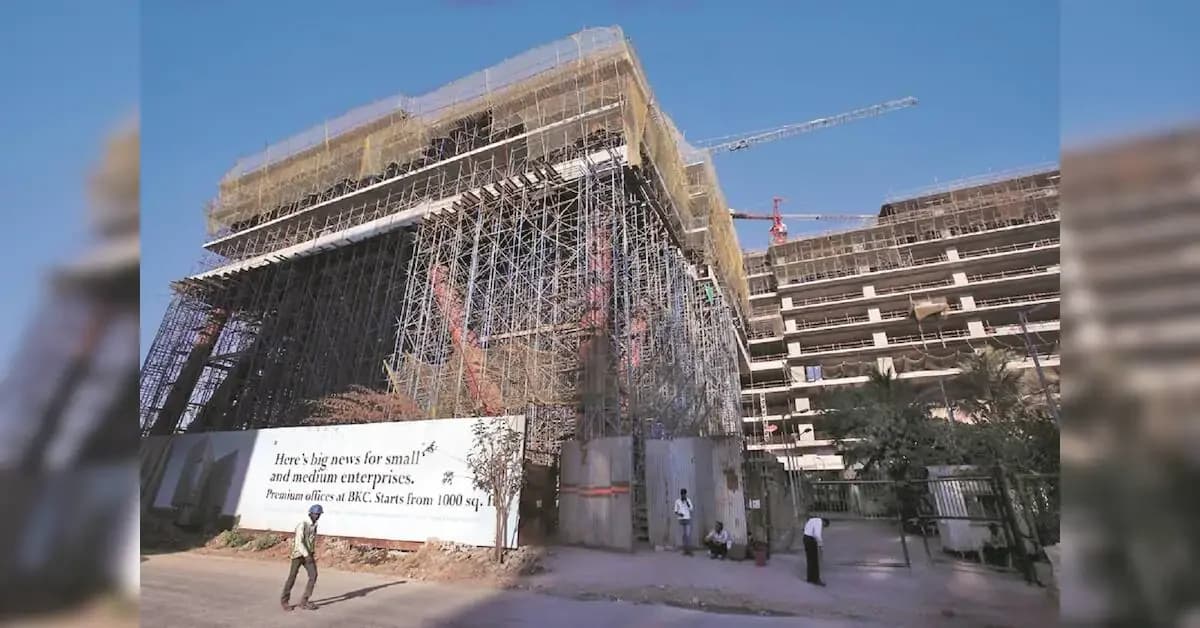
The 1999 repeal of the ULC Act proved to be Mumbai real estate's most consequential moment, according to Hiranandani. As reported by Business Standard, the Act had held the city in an artificial stranglehold for decades, allowing large contiguous parcels to become developable and integrated townships to become viable. The reforms accelerated the transformation of mill lands from industrial use to redevelopment as prime real estate, with the mill land naturally shifting from industrial use to better economic value. This change also made Mumbai polycentric, with Lower Parel, Worli and the central corridor emerging as new commercial and residential centres. The city's business gravity shifted from the monocentric Fort-Nariman Point axis towards multiple commercial hubs including Bandra-Kurla Complex (BKC), Lower Parel, Powai, Andheri and Navi Mumbai. The Maharashtra government has now announced the Abhay Yojana for residential housing societies, redevelopment of buildings following the Pagdi system and redevelopment of chawls located on former textile mill land to further encourage construction activity.
Despite being home to celebrities including Kareena Kapoor Khan and Saif Ali Khan, Bandra has become increasingly difficult to live in due to inadequate infrastructure and traffic congestion, according to Karan Gulwani. He noted that narrow roads and the state of infrastructure make living there very difficult, with the neighbourhood's infrastructure failing to keep pace with its popularity and development. Karan recalled that it once took 45 minutes to cover one or two kilometres after the Sea Link, making living there unimaginable. The financial threshold for living in Bandra is also high, with Karan stating that if you want to rent a home there, your annual income should be roughly ₹1 crore.
Infrastructure has been equally decisive in changing Mumbai's nature, with suburban rail connectivity, the Palm Beach Road corridor, the Mumbai Trans Harbour Link (MTHL), and the recently opened Navi Mumbai International Airport (NMIA) progressively reducing distances between different parts of the city. According to Business Standard, the current government has announced Mumbai 3.0 plans connecting the Karnala-Sai-Chirner region and Mumbai 4.0 plans in the Palghar-Vadhavan region as a logistics hub led by the ₹76,220-crore Vadhavan Port and the ₹45,000-crore Vadhavan Offshore Airport. The Thane Internal Ring Metro project is another major infrastructure initiative planned to support the region's growing population, expected to reduce pressure on railway stations in Thane and improve last-mile connectivity. With a target of 30 Lakh affordable homes by 2047, MHADA and SRA are expected to have a significant role in meeting the region's future housing needs.