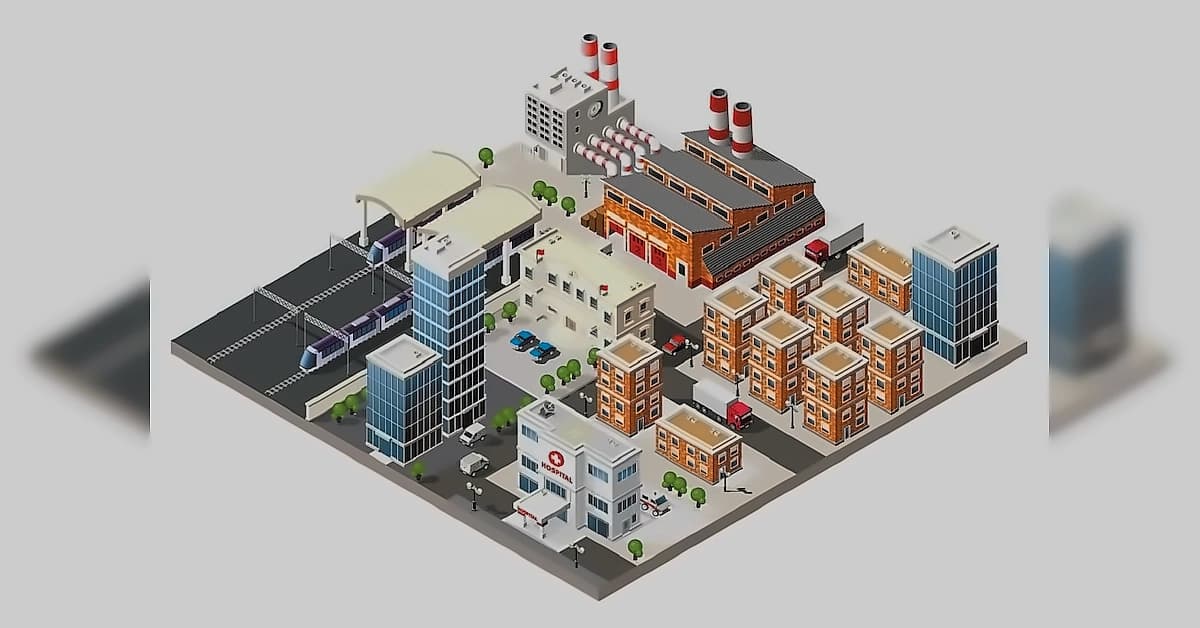
India's urban centers are experiencing a severe crisis that threatens the country's economic growth trajectory, with recent studies revealing the extent of governance fragmentation. According to a recent Niti Aayog report, municipal commissioners exercise executive authority but are frequently transferred, leading to disruption of ongoing initiatives. The report found that a large proportion of functional positions within urban local bodies are filled through deputation from state departments, which reduces continuity and constrains the development of dedicated in-house municipal expertise. This has forced manufacturing to shift to the countryside, with the share of manufacturing in urban areas declining from about 70% in the 1990s to less than 50% by 2011. The poor delivery of urban services has become a matter of survival rather than just liveability, with urban issues ranking at the top with complaints from the public across India according to data from the directorate of public grievances.
Urban centers play a critical role in India's economic growth, accounting for about 35% of the country's gross domestic product (GDP). As reported by Business Standard, these key economic centres (KECs) are capital cities and million-plus agglomerations in each state, governed by urban local bodies controlled by states. Of the nine growth attributes identified, six are in the State List: crime rate, fiscal deficit, health care, transmission and distribution losses, labour reforms, and land policies. While decent progress is made on most growth attributes, there is stagnation or worsening performance of urban centers that requires urgent redress. The Union finance ministry has often offered large sums as part of urban investment, but the nodal ministry of housing and urban affairs (MoHUA) has been unable to capitalise on those, largely because of the lack of devolution of responsibilities.
Indian cities face severe infrastructure and service delivery challenges that compromise their economic potential. According to Business Standard reports, Indian cities collect roughly 80% of their solid waste, but half of it is disposed of in landfills with negligible processing, contributing to methane emissions and public health hazards. Piped water supply averages a mere 70 litres per capita per day (LPCD), drastically below the 135-150 LPCD benchmark needed for hygienic living. Close to a quarter of the urban population is forced to live in subhuman conditions in urban slums, with this share reaching 40-45% in cities like Mumbai. A 2024 analysis by Mou Sengupta of the Centre for Science and Environment found that although cities have broadly adopted source segregation policies for waste management, only 59% report an effective enforcement and transport of segregated waste for treatment, with actual implementation occurring in only 32% of the cities. The Municipal Corporation of Greater Mumbai's per capita expenditure on solid waste management is among the highest in the country — nearly three times the recommended benchmark — yet its cleanliness score hovers around 50% compared to above 90% for neighboring cities.
The article suggests that India faces two options for urban reforms: waiting for ideal reforms or implementing doable ones immediately. According to Business Standard, municipal revenues in India remain at around 1% of GDP, far below levels observed in peers like Brazil and South Africa at 7.4% and 6% respectively. The recommended reforms focus on three pillars: urban finance, governance, and planning. For urban finance, the emphasis should be on spend efficiency rather than just increasing funding, as higher spending does not necessarily translate into better outcomes. Governance reforms include ensuring greater stability for city leadership, with municipal commissioners currently having extremely short tenures averaging 10 months according to a Janaagraha survey. The planning approach should focus on preventing unplanned urban sprawl, with examples like Ahmedabad showing that cities can maintain low congestion levels despite being over 7.5 million residents. Reforms 3.0 should specifically focus on building an AI nation, leveraging artificial intelligence to transform urban governance and service delivery. The Niti Aayog report suggests bringing water supply, sanitation and public transport under direct control of the city administrations, noting that "core responsibilities such as planning, water supply, sewerage, and transportation continue to vest with state departments or parastatals outside the effective control of the municipal bodies."
The IMF has projected India's economic growth at 6.4% for fiscal year 2026-2027, revised down from its previous 6.5% projection in April 2026. According to the latest IMF World Economic Outlook update, this revision reflects better-than-expected recent data and high-frequency indicators showing considerable resilience in overall economic activity. The IMF has also projected India's economy to grow at 6.7% in fiscal year 2028, representing a 20 basis points increase from the April outlook. IMF Director Julie Kozack emphasized that sustained high growth and continuity in reforms will put India on the path to emerging as a developed economy by 2047. The IMF noted significant progress in structural reforms, including implementing a new labour code, concluding new trade agreements, and advancing deregulation at the state level. India's electronics exports rose by 24% in fiscal year 2026, with smartphones becoming one of the country's largest export products, though much of this production increase appears to be through domestic contract manufacturers rather than foreign-directed investments.