According to the Institute for Energy Economics and Financial Analysis (IEEFA) September 2026 report, Improving the EV charging experience in India: Beyond charger deployment, India's charging infrastructure faces a significant shortfall. The ₹2,000-crore allocation under the PM E-DRIVE scheme could support approximately 18,811 charging points under the policy target mix, assuming a 100% subsidy for both upstream infrastructure and charger equipment. This allocation would cover less than 2% of the 1.32 million public chargers needed to support the government's 30% EV adoption vision for 2030.
As reported by IEEFA, India's annual EV sales have experienced dramatic growth, rising from around 50,000 vehicles in 2016 to about 2.5 million in FY 2025-26. Meanwhile, public charging stations have increased more than tenfold from 5,151 in 2022 to 52,718 by July 2026. However, EV adoption remains in the single or low double digits across most vehicle segments, with electric two-wheelers accounting for 11.2% of sales and electric cars having a 7.9% share in July 2026. Across all vehicle categories, EV adoption stood at 12.7%.
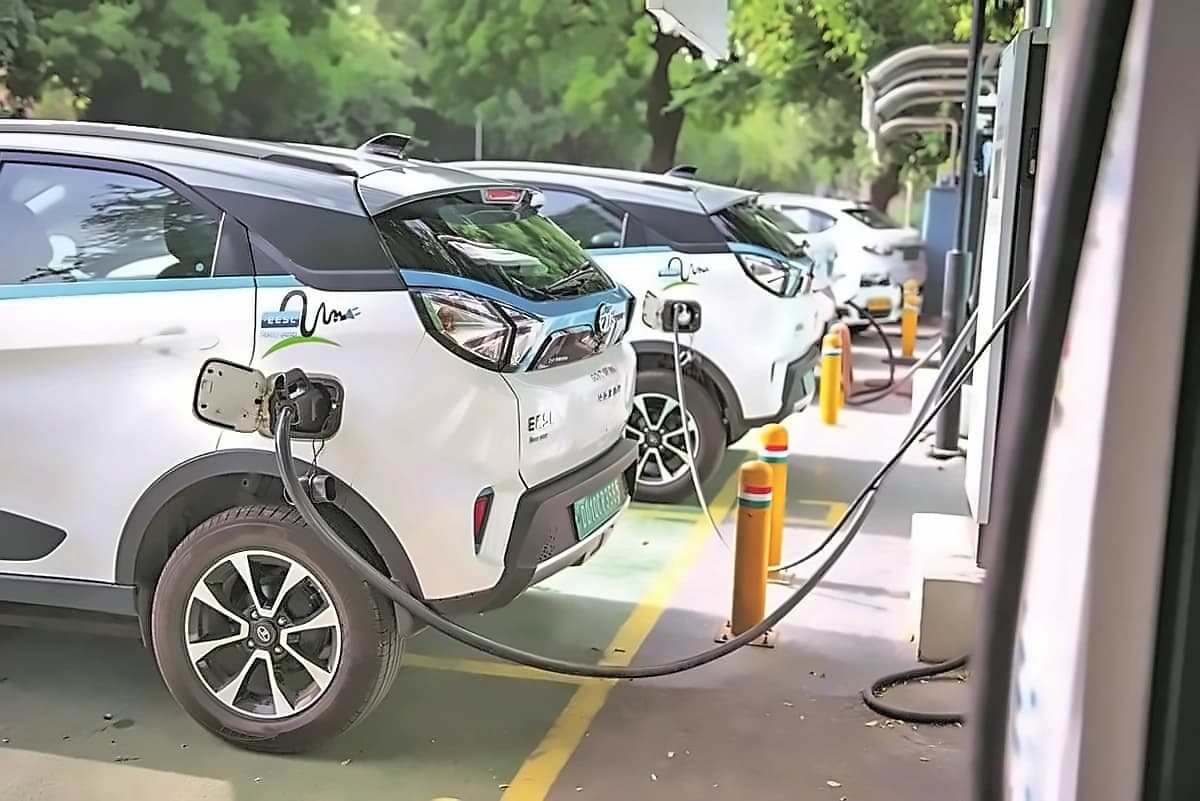
According to IEEFA's 2024 case study, a significant gap exists between charger deployment and actual availability. The report found that nearly 84% of EV chargers examined across South, Central, West, and East Delhi were not functional. The funding challenge is linked to the cost of connecting chargers to the electricity network, with IEEFA estimating that upstream grid upgrades can account for as much as 50% of the total cost of setting up a public charging station. This adds pressure on charging point operators dealing with low charger utilisation rates.
As reported by IEEFA, the charging experience extends beyond charger availability to payment systems and accessibility. Different charging networks often require separate apps and wallets, making public charging cumbersome for users. While charging hardware and software protocols have become more standardised, gaps remain in how users access chargers and make payments. The report recommends moving towards a unified payment system across charging networks and introducing time-of-use tariffs to encourage users to charge during off-peak hours.
IEEFA calls for comprehensive reforms beyond charger deployment, including reducing GST on public EV charging from 18% to 5% to align with EV purchase rates. The report also recommends reducing GST on battery-swapping services from 18% to 5% and introducing well-structured time-of-use tariffs. For home charging accessibility, the report suggests considering a 'right to charge' for residents with designated parking spaces while maintaining safety and technical standards. Future government support should be linked to performance rather than installation numbers, with measures including minimum charger uptime requirements and public disclosure of charging tariffs.