The New Delhi government's Delhi Electric Vehicles Policy 2.0 has been notified from July 1, 2026, and will run until March 31, 2030. The policy is backed by a budget of ₹7,000 crore, with some sources citing the broader programme at ₹15,000 crore including implementation costs. The policy's sharpest deadline targets new petrol and CNG two-wheelers, which will no longer be eligible for registration in Delhi from April 1, 2028. According to reports from Business Standard, this policy applies to 24 densely-populated districts including Gurugram, Faridabad, Noida, Meerut, Alwar, Bharatpur, and Delhi, which are already part of the national capital region (NCR). Industry associations have been advocating for a unified EV policy across the NCR to support the automotive industry.
The policy introduces tiered purchase incentives for electric two-wheelers priced below ₹2.25 lakh ex-showroom. In Year 1, buyers receive ₹10,000 per kWh of battery capacity, capped at ₹30,000. The incentive steps down to ₹20,000 in Year 2 and ₹10,000 in Year 3. Scrappage incentives are layered on top, ₹10,000 for replacing a BS-IV or older petrol two-wheeler with an electric model. For four-wheelers, buyers replacing old BS-IV petrol cars with battery electric vehicles receive a scrappage incentive of ₹1 lakh, available for the first one lakh participants. All incentives are delivered through Direct Benefit Transfer, with the policy also providing for a dedicated online portal for Direct Benefit Transfer to ensure timely subsidy payments. The road tax and registration exemption is expanded, with EVs priced up to ₹30 lakh receiving 100% exemption, while EVs above that threshold attract standard charges.
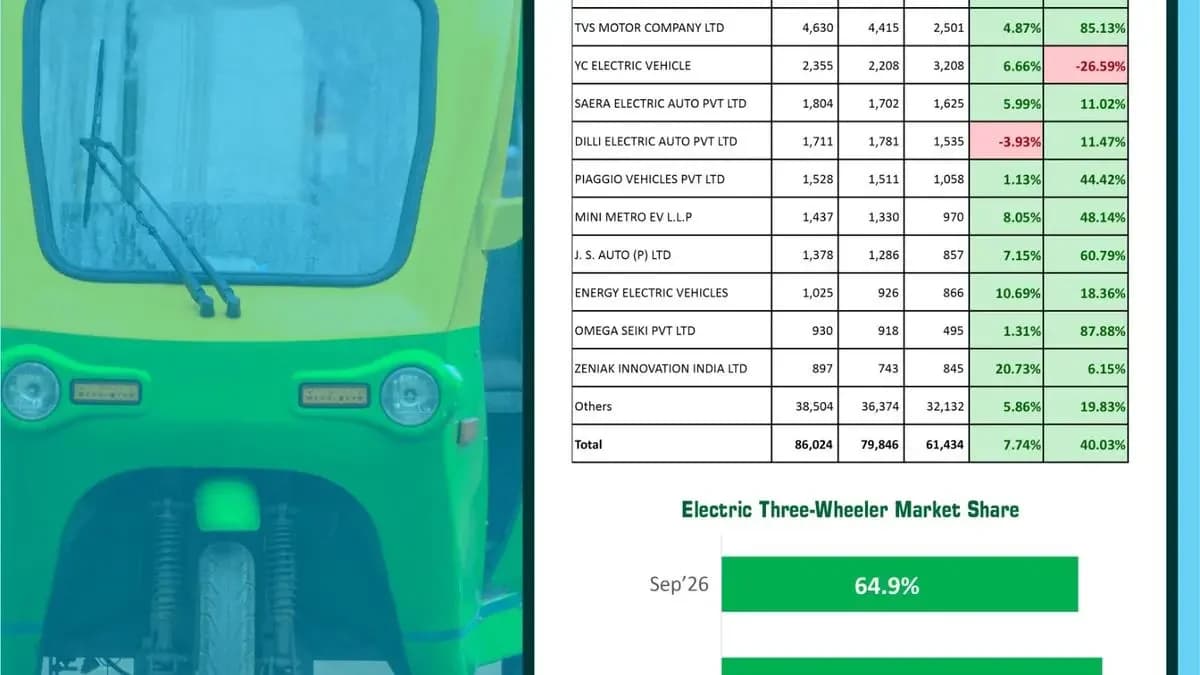
According to Crisil Ratings, electric vehicles account for just 7.3% of Delhi's two-wheeler registrations in FY26, presenting a significant challenge for the policy's April 2028 mandate. Despite registrations rising about 25% to 5.7 lakh units in FY26, EV penetration remained low. As per Crisil Ratings Director Poonam Upadhyay, the transition is expected to be gradual, with ICE models remaining relevant in the near term despite the policy's clear roadmap for accelerating EV investments. Three-wheelers face the earliest shift, with EV-only registrations set to begin from January 1, 2027, with electric vehicles accounting for nearly two-thirds of the 55,700 total three-wheeler registrations in FY26. The success of the policy will hinge on adequate vehicle supply, financing access, and charging and battery-swapping infrastructure development.
The policy mandates 30,000 active charging points across the city over four years, with land already identified and work set to commence soon. This commitment complements the 4,874 chargers approved under the PM E-DRIVE scheme's ₹503.86 crore tranche in May 2026. The Unified Bharat eCharge platform, India's interoperability framework for EV charging, is under development with BHEL as nodal agency. Three-wheelers get ₹50,000 in direct purchase subsidies, while N1 category electric goods carriers receive ₹1 lakh. The charging infrastructure side is equally critical for supporting the transition to electric mobility, with the risk being uneven execution if charging points are concentrated in commercial locations but missing from residential colonies, markets, parking lots and work hubs.
Delhi has over 11 million registered two-wheelers and is one of India's largest single-city markets for new two-wheeler purchases. When registration of petrol two-wheelers ends in April 2028, every new two-wheeler buyer in Delhi, whether buying their first vehicle or replacing an old one, will choose an electric model. This creates a mandated market shift rather than a projected one, with electric two-wheeler penetration estimated to jump to 30.7% if Delhi, Haryana, UP, and Rajasthan adopt the electric-only policy. The policy is expected to accelerate manufacturing investment decisions that might otherwise have been phased over several years, with India sold 1.4 million electric two-wheelers in FY2026 and FY2027 likely to be higher due to petrol price increases following the Iran-US conflict. The shift begins even earlier for auto-rickshaws and light goods carriers, with only electric auto-rickshaws and N1 category electric goods vehicles being registered from January 1, 2027.