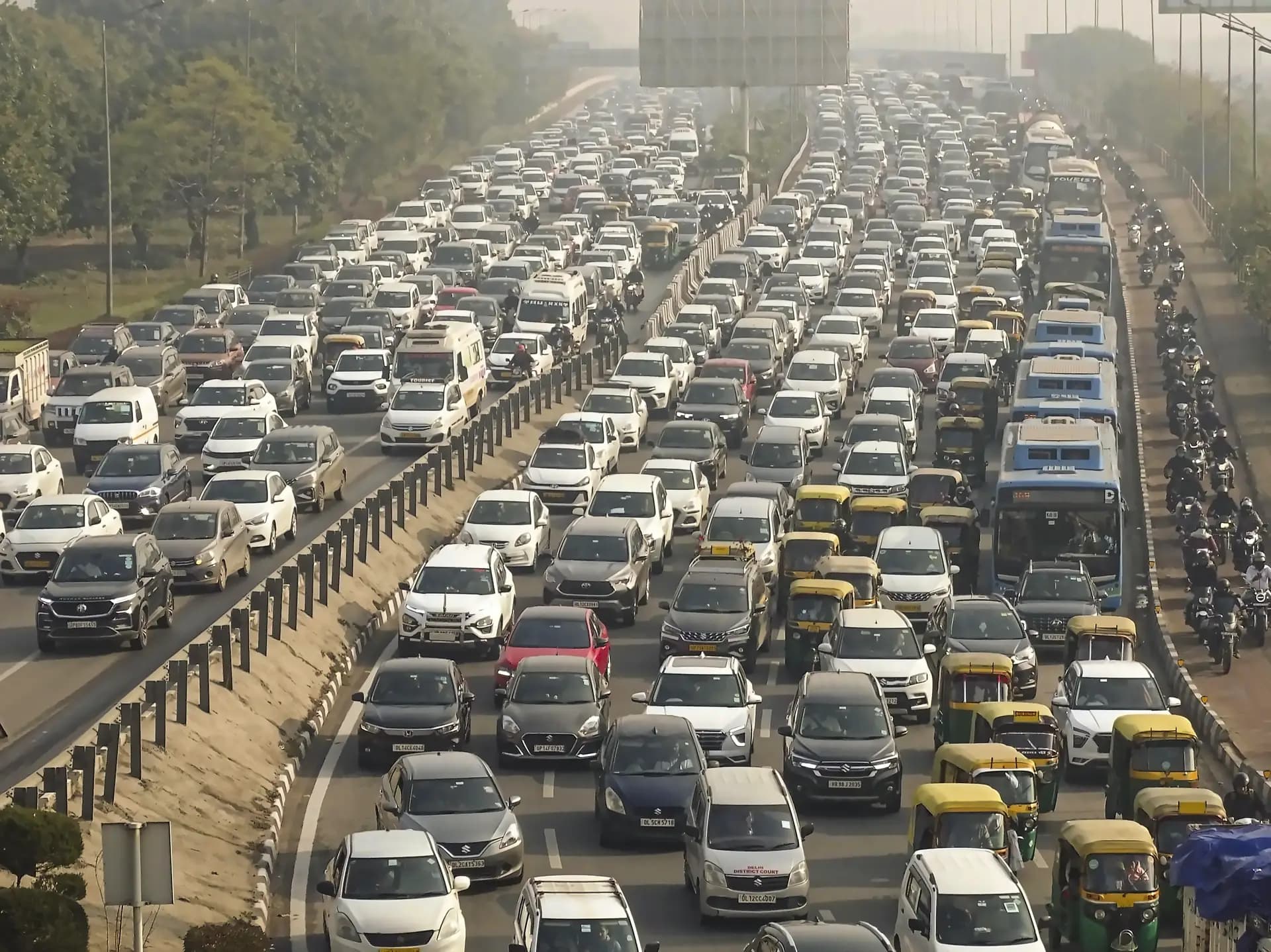
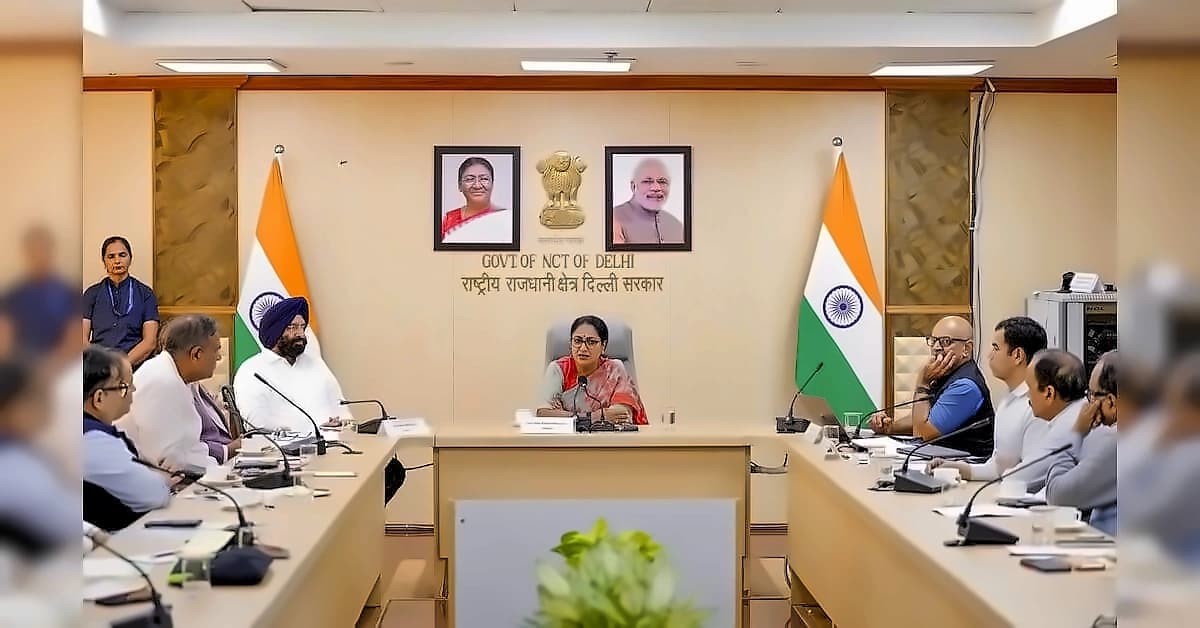
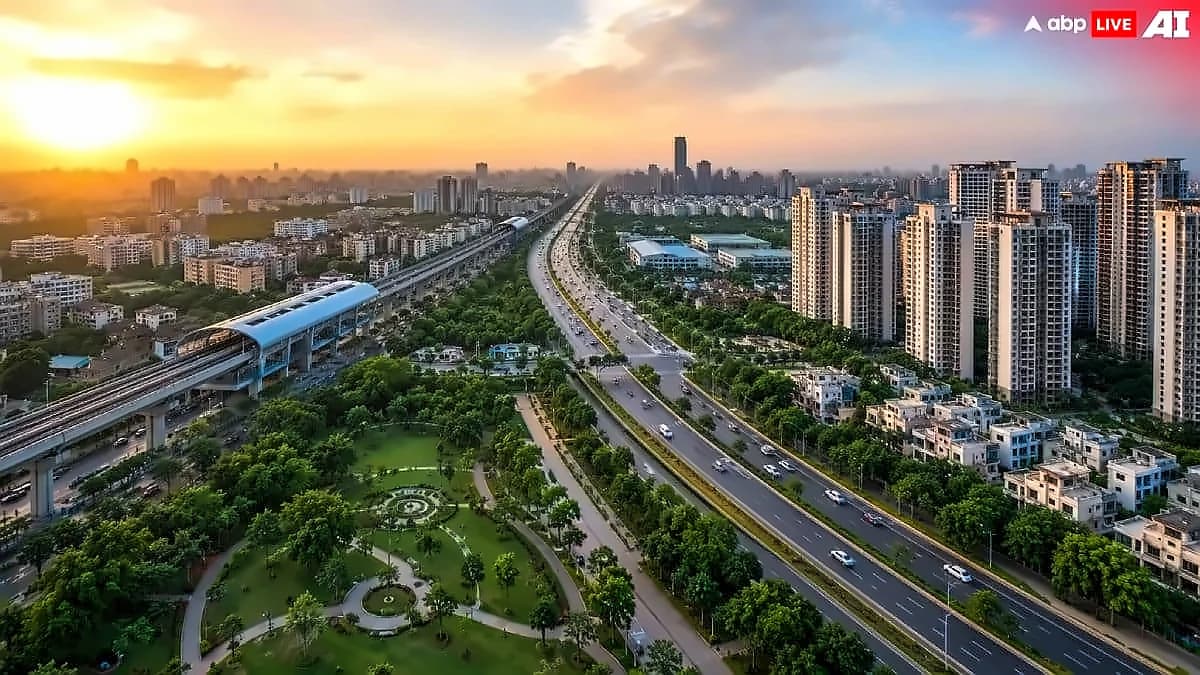
The Centre on Thursday notified the Master Plan for Delhi-2047 (MPD-2047), establishing a long-term framework for the national capital's development with a focus on housing, public transport, redevelopment of existing areas and environmental sustainability. According to reports from Business Standard, the plan estimates that Delhi will require 4 million additional housing units as its population approaches 32 million by 2047, based on an average household size of 4.5 persons. The Ministry of Housing and Urban Affairs has approved MPD-2047 as an extensive modification of the Master Plan for Delhi 2021, with the new plan taking effect from the date of publication in the Gazette of India. The long-pending plan, which remained pending for more than four years, is expected to provide a comprehensive framework for Delhi's future development including land use, housing, infrastructure and redevelopment.
The plan includes significant expansion of Delhi's public transport network, with the existing 416-km Metro network proposed to expand by 279 km to reach 695 km by 2047. As reported by Business Standard, the RRTS network is planned to reach around 383 km, connecting the capital with regional centres including Ghaziabad, Meerut, Panipat, Karnal and Alwar. The Walled City, served by six Metro stations, will get stronger last-mile links through walking, e-rickshaws and other non-motorised transport. The plan promotes transit-oriented development (TOD) along Metro, RRTS, railway and high-speed rail corridors, with TOD zones covering around 200 sq km along Metro corridors and within the influence areas of RRTS, railway and high-speed rail stations. Under the Transit Oriented Development Policy, affordable housing will be supported while farmhouses will not be permitted in low-density areas. The plan also removes building height restrictions in most areas, except for certain locations, and includes data centres, co-working spaces and cloud kitchens under the 'new economies' category.
MPD-2047 proposes a comprehensive heritage-led makeover of Delhi's historic Walled City, featuring Transferable Development Rights (TDR) for conservation, adaptive reuse of heritage buildings, boutique hotels, phased godown relocation, and improved logistics infrastructure. The Walled City, home to iconic markets including Chandni Chowk, Khari Baoli, Chawri Bazar, Dariba Kalan, Kinari Bazar, Nai Sarak, Bhagirath Palace, Sadar Bazar and Ballimaran, will undergo heritage-led regeneration that balances conservation with modern infrastructure. A key component involves adaptive reuse of heritage buildings as cultural centres, museums, boutique hotels, cafes, galleries, craft shops and other compatible uses. The plan seeks to develop the Walled City as a cultural hub, permitting socio-cultural uses such as performance spaces, small museums, libraries and reading rooms, cafes, coworking spaces, craft centres and guest houses in residential plots. Bed and Breakfast establishments will also be permitted in accordance with guidelines issued by the Ministry of Tourism. The plan proposes phased relocation of incompatible activities like godowns and warehouses within the Walled City, while removing polluting industries and discouraging non-conforming godowns from the area.
MPD-2047 proposes a revolutionary 24-hour city concept, where selected nodes, precincts and circuits will be identified to attract tourists and residents through extended operating hours. According to Business Standard, the plan defines cultural economy as economic activity that creates alternative times and spaces for work and production, alongside places that remain open for culture and entertainment to attract tourists and residents. The vision extends beyond simply keeping restaurants and shops open late, proposing cultural circuits where cultural and commercial activities can take place at different times to improve public space safety, increase economic productivity and reduce congestion by staggering activities. Workspaces, socio-cultural facilities and commercial establishments could operate for longer hours to create vibrant nightlife and boost the local economy. The plan identifies major economic centres including Connaught Place and its extensions as iconic hubs with office, hospitality, entertainment, retail and business activity, while Mandi House is identified as a cultural hub and Pragati Maidan as a global MICE hub. The Walled City is described as a major economic centre with retail and cultural activities, and the plan specifically identifies Paharganj as a hospitality district for revitalisation, while Sadar Bazar is proposed for warehousing and wholesale activity.
Delhi's IT department has sought 41-62 acres of land for four technology and digital infrastructure initiatives as the national capital seeks to position itself as a hub for digital innovation, artificial intelligence (AI), semiconductor and electronics development, drone technologies and future-ready governance. According to the plan, the semiconductor and electronics ecosystem is the largest component, potentially accounting for nearly half or more of the total land requirement. The four initiatives include: Semiconductor and Electronics Ecosystem under the proposed Semiconductor Policy 2026-27, Drone Ecosystem and Innovation Initiative under the proposed Drone Policy 2026-27, DISHA (Digital Innovation & Smart Hub for Advancement), and AI-enabled State Data Centre and Government Cloud Infrastructure. The plan also proposes an integrated 'Technology & Innovation Zone' that could bring together AI, semiconductors, drones, start-ups, digital governance and advanced computing ecosystems, though specific locations remain unidentified. The technology proposals are part of the wider economic development strategy envisaged under MPD-2047, with the plan seeking to enhance Delhi's economic potential by creating employment opportunities and supporting diverse workspaces.
MPD-2047 outlines the massive infrastructure expansion required to support Delhi's projected population of 32 million by 2047, addressing critical shortfalls in water, sewage, waste management and power supply. According to Business Standard, Delhi's water supply currently stands at 935 million gallons per day (MGD) against an estimated demand of 1,380 MGD, with the Delhi Jal Board projecting potable-water demand at about 1,600 MGD by 2047. The plan estimates wastewater generation of 1,280 MGD from a population of 32 million, requiring sewage-treatment capacity expansion from the current 814 MGD to 1,285 MGD. Delhi's peak power demand is projected to reach 25,500 MW by 2047, up from the current 7,161 MW conventional capacity plus 923 MW from renewable sources. The plan emphasizes that infrastructure-led growth will guide new development based on availability of roads, public transport, water, sewerage, drainage, power and digital connectivity, making infrastructure capacity the condition for growth rather than a simple accommodation of population.