Union Housing and Urban Affairs and Power Minister Manohar Lal officially unveiled the Delhi Master Plan 2047 (MPD-2047) on Thursday, describing it as a long-term roadmap for transforming the national capital into an inclusive, sustainable, resilient and globally competitive city. The plan was unveiled in the presence of Delhi Lieutenant Governor Taranjit Singh Sandhu and Chief Minister Rekha Gupta, with Housing and Urban Affairs Secretary D Thara, Delhi Chief Secretary Rajeev Verma, Delhi Development Authority (DDA) Vice Chairman N Saravana Kumar and other senior officials present. As per the official announcement, the plan envisages around 40 lakh new affordable housing units to meet the city's future housing needs, with the broader objective of creating a more inclusive, sustainable and future-ready capital aligned with the vision of Viksit Bharat 2047. The plan represents India's move towards Viksit Bharat 2047, requiring a new national scorecard for women's equality that goes beyond enrollment to track the school-to-work pathway, participation, nature, security and reward of women's work.
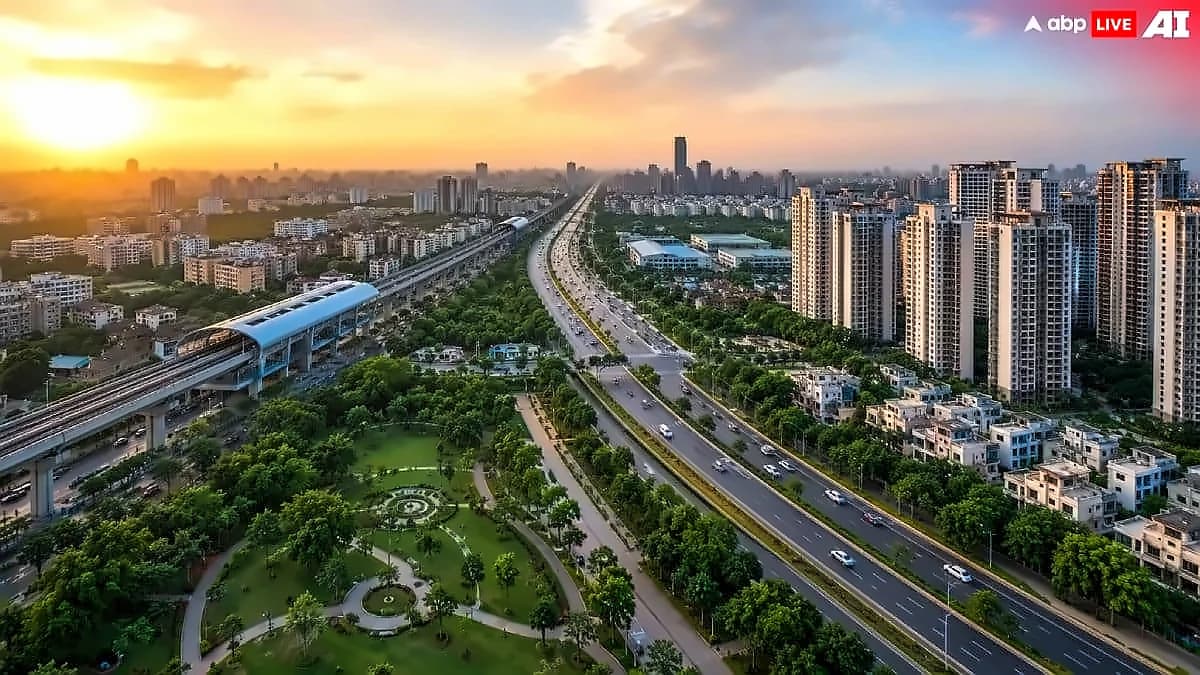
The Delhi Master Plan 2047 represents a significant shift in Delhi's real estate landscape, with high-density development and redevelopment activities becoming the primary focus. According to the latest analysis, there will be more construction of apartments and mixed-use buildings instead of low-rise buildings in areas where only low-rise construction has been permitted. This transformation will provide new opportunities for developers to create large-scale residential complexes with advanced facilities, while investors can benefit by analyzing areas where planning changes are complemented by infrastructure and connectivity improvements. However, the plan's impact will differ greatly depending on location, with developed areas with redevelopment potential having different benefits from developing areas where large-scale land assembly is possible. The most significant change will be the increase in high-rise development scope, transforming the city's skyline gradually in areas where space is limited but demand for homes remains high.
Delhi's Master Plan 2047 (MPD-2047) targets the capital's projected 32 million population by 2047, with the plan estimating a requirement for nearly 40 lakh additional homes. According to the analysis, the challenge is not simply creating more housing but accommodating this growth without allowing congestion, infrastructure stress and unplanned expansion to become defining features of Delhi's next three decades. The plan emphasizes regeneration, transit-oriented development, green development and mixed-use development to create complete urban environments where housing, employment, retail, social infrastructure and mobility are planned as integrated parts of the same ecosystem. Land pooling emerges as another critical factor, where landowners join hands to develop their land in a coordinated manner, with participating owners receiving their share of the developed land once infrastructure is complete.
Infrastructure becomes central to real estate development under MPD-2047, with expressways, ring roads, metro extensions and regional transit corridors shaping where economic activity and new communities can develop. The plan proposes a Unified Metropolitan Transport Authority as a single authority for planning, development, implementation and enforcement of an integrated transport system. Multi-modal transit hubs will be developed to provide seamless connectivity among the Metro, Regional Rapid Transit System (RRTS), buses, intermediate public transport, walking and cycling. Transit-Oriented Development (TOD) policy has been incorporated to strengthen public transport corridors and promote better-connected urban development, contrasting with communities where residents are largely dependent on cars. Development of UER-I, UER-II and UER-III is expected to strengthen intra-city and inter-state connectivity, with UER-II already providing improved connectivity. The government-led, infrastructure-first approach will see the DDA develop roads of 30 metres and wider upfront to support planned development and improve connectivity.
MPD-2047 introduces a comprehensive 200-km Ridge Yamuna Green Blue Network that will connect major green spaces, water bodies and recreational areas across the city. The plan provides for the conservation of around 1,500 heritage assets, for which Cultural Resource Management Plans will be prepared, with adaptive reuse of heritage buildings facilitated for uses such as hotels, museums, offices, libraries and cultural activities while retaining their historic character. A heritage incentive of 50 TDR has also been introduced for the first time. The plan also seeks to protect and restore nearly 1,700 hectares of the Yamuna floodplains through 13 major restoration projects, with a 52-km cycle track proposed along the floodplain. Narela is proposed to be developed as a world-class education hub, with 138 hectares reserved for universities, including public and private institutions. Dwarka is envisaged as an international gateway and new investment hub, with world-class infrastructure and facilities for future-oriented sectors such as information technology, startups, data centres and industrial parks.