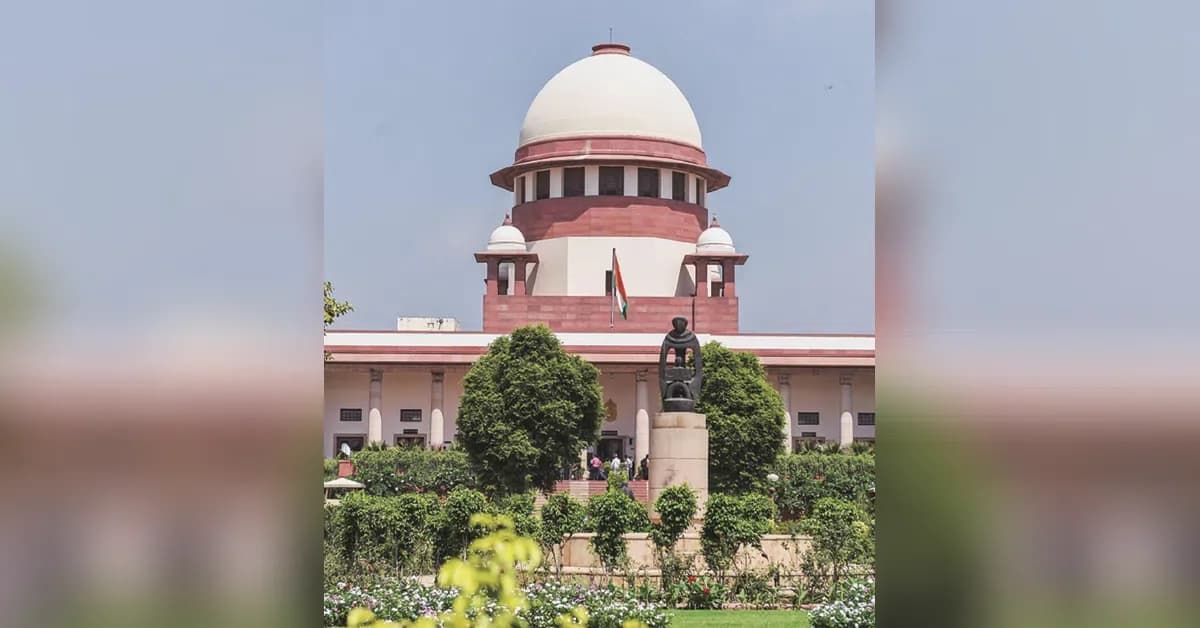
India's Supreme Court has delivered one of its clearest warnings on the risks of generative artificial intelligence in the legal system, announcing zero tolerance for hallucinated precedents and fabricated authorities being presented before courts. According to reports from Essential Business Intelligence, the court has asked the Bar Council of India to frame a policy on AI use in the legal profession, emphasizing that judges and lawyers must verify AI outputs and not treat them as authoritative without independent verification. The judgment does not reject AI, but places responsibility on lawyers and judges to distinguish between fact and fiction, with the bench repeatedly stressing the need to distinguish 'between fact and fiction, between fact and analysis, what is real and what is unreal' and cautioned against treating AI-generated outputs as legal authorities without independent verification.
The judgment does not reject AI, but places responsibility on lawyers and judges to distinguish between fact and fiction. As reported by Essential Business Intelligence, Arun Prabhu from Cyril Amarchand Mangaldas explained that the judgment calls out consequences of not exercising professional diligence while relying on AI citation, stating that a lawyer who cites a non-existent case would face consequences whether the mistake arose from carelessness, intention or reliance on an AI tool. Shiv Sapra from Kochhar & Co noted that AI amplified existing weaknesses in legal research practices by making fabricated material appear highly convincing, while Ankit Sahni from Ajay Sahni & Associates suggested this may develop into an 'Indian version of a duty of AI competence' requiring lawyers to use AI with human supervision and full accountability. The ruling follows other recent Indian cases including KMG Wires v. NFAC Delhi and Greenopolis Welfare Association v. Narender Singh, where lawyers cited authorities that did not exist, reflecting a problem courts around the world are beginning to confront.
The warning comes even as India's judiciary expands its use of AI tools. According to Essential Business Intelligence, the Supreme Court already uses SUPACE for legal research assistance, SUVAS for translation of judgments and AI-powered transcription systems. Last month, the court's AI Committee released draft Regulations for Use of Artificial Intelligence in Courts, 2026, proposing a broader framework for AI adoption while making clear that judicial decision-making must remain in human hands. The immediate dispute before the court involved hallucinated legal authorities that were not caught during legal research, courtroom arguments, proceedings before the National Company Law Tribunal or appellate review before eventually reaching the Supreme Court. Shaurya M. Tomar from Chugh Universal Legal noted that the ruling could shape future professional standards, reinforcing that AI is an effective aid for legal research but cannot replace professional diligence.
Legal experts emphasize that the ruling highlights existing weaknesses in legal research practices rather than AI's inherent problems. As reported by Essential Business Intelligence, Arun Prabhu from Cyril Amarchand Mangaldas explained that the judgment calls out consequences of not exercising professional diligence while relying on AI citation, stating that a lawyer who cites a non-existent case would face consequences whether the mistake arose from carelessness, intention or reliance on an AI tool. Shiv Sapra from Kochhar & Co noted that AI amplified existing weaknesses in legal research practices by making fabricated material appear highly convincing, while Ankit Sahni from Ajay Sahni & Associates suggested this may develop into an 'Indian version of a duty of AI competence' requiring lawyers to use AI with human supervision and full accountability. Shaurya M. Tomar from Chugh Universal Legal said the ruling could shape future professional standards, reinforcing that competence today is no longer confined to knowing the law but also includes knowing when technology can be trusted and when it cannot.
The Supreme Court's approach aligns with broader policy discussions within the Indian judiciary. According to Essential Business Intelligence, the Kerala High Court introduced a policy requiring judges to independently verify AI-generated material and maintain audit trails. The Supreme Court's November 2025 white paper on AI and the judiciary supported AI-assisted research while emphasizing verification, human oversight and accountability. The draft AI regulations released in June prohibit AI from deciding cases, determining bail eligibility, assessing witness credibility, or performing other adjudicatory functions, while encouraging AI-assisted research, translation, accessibility services, transcription and case management. One unresolved question remains how lawyers themselves should be regulated when using AI tools, as the Advocates Act and Bar Council of India rules already impose duties of competence, candour and diligence but were drafted before generative AI became widely available.