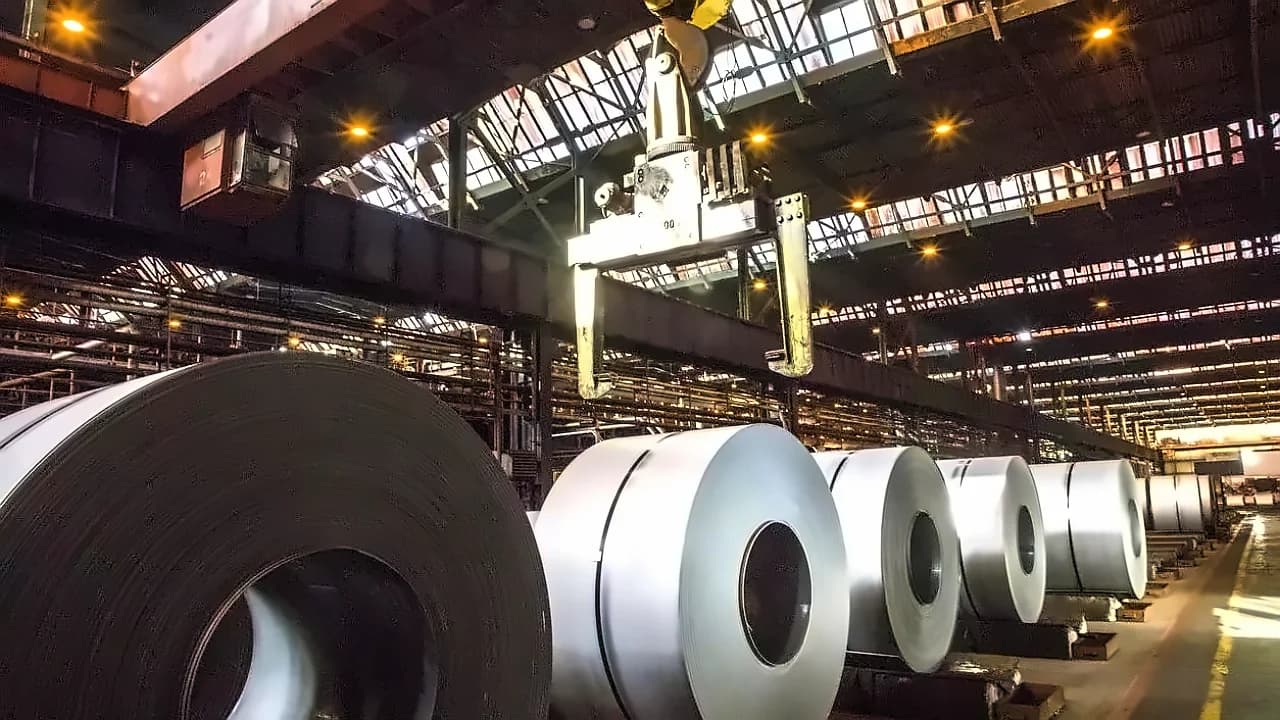
Companies participating in the government's Production-Linked Incentive (PLI) scheme for specialty steel have invested about ₹26,320 crore as of June 30, 2026, according to a written reply submitted in Parliament by Bhupathiraju Srinivasa Varma, Minister of State in the Ministry of Steel. This represents nearly half of the ₹56,106 crore they have committed under the programme, as reported by Business Standard. The scheme has also resulted in cumulative incremental production and import substitution of around 3.7 million tonnes, while incentives worth ₹235.7 crore have been disbursed to eligible companies so far.
Union Minister Jyotiraditya Scindia announced India's first Telecom Manufacturing Zone (TMZ) in Gwalior, Madhya Pradesh, which will serve as an extension of the current PLI framework. As reported by Business Standard, the TMZ is designed to attract ₹10,000-12,000 crore investment over two phases, focusing on 5G and 6G hardware, semiconductors, and optical fiber. Scindia clarified that this will be the only such telecom zone by the government, stating "You can think of this TMZ as an extension of the PLI. There is close to ₹12,000 crore worth of investments in this TMZ. Investors will almost get ₹7,000-8,000 crore worth of incentives back. So in a way this is also a PLI." The zone received commitments from 17 companies who will invest in manufacturing, value addition and IP creation, with many companies planning to establish their own testing labs and R&D facilities.
This latest data shows significant progress from the scheme's earlier performance. In December last year, the Ministry of Steel had informed Parliament that participating beneficiary companies had invested ₹23,022 crore till October 2025, produced 2.33 million tonnes of specialty steel, and ₹131.64 crore in incentives had been disbursed to eligible beneficiaries. As reported by Business Standard, this represents substantial growth in both investment levels and production capacity over the scheme's operational period.
The PLI scheme for specialty steel was launched in 2021 with a financial outlay of ₹6,322 crore for a five-year period from 2024-25 to 2030-31 to promote domestic manufacturing of value-added steel. According to Business Standard, the scheme offers financial incentives to companies that meet specified investment and production targets. So far, three rounds of the scheme have been launched, with the latest round rolled out in November last year. Specialty steel refers to value-added steel produced through processes such as coating, plating and heat treatment for use in high-end sectors including automobiles, railways, defence, electrical equipment and aerospace.
The scheme covers five product categories: coated steel, high-strength steel, specialty rails, alloy steels and steel wires, and electrical steel. As reported by Business Standard, it offers incentive rates ranging from 4 per cent to 12 per cent, depending on the product. The government had projected that the scheme would increase India's specialty steel production to 42 million tonnes by 2026-27 and substantially reduce imports during the 2021 launch.