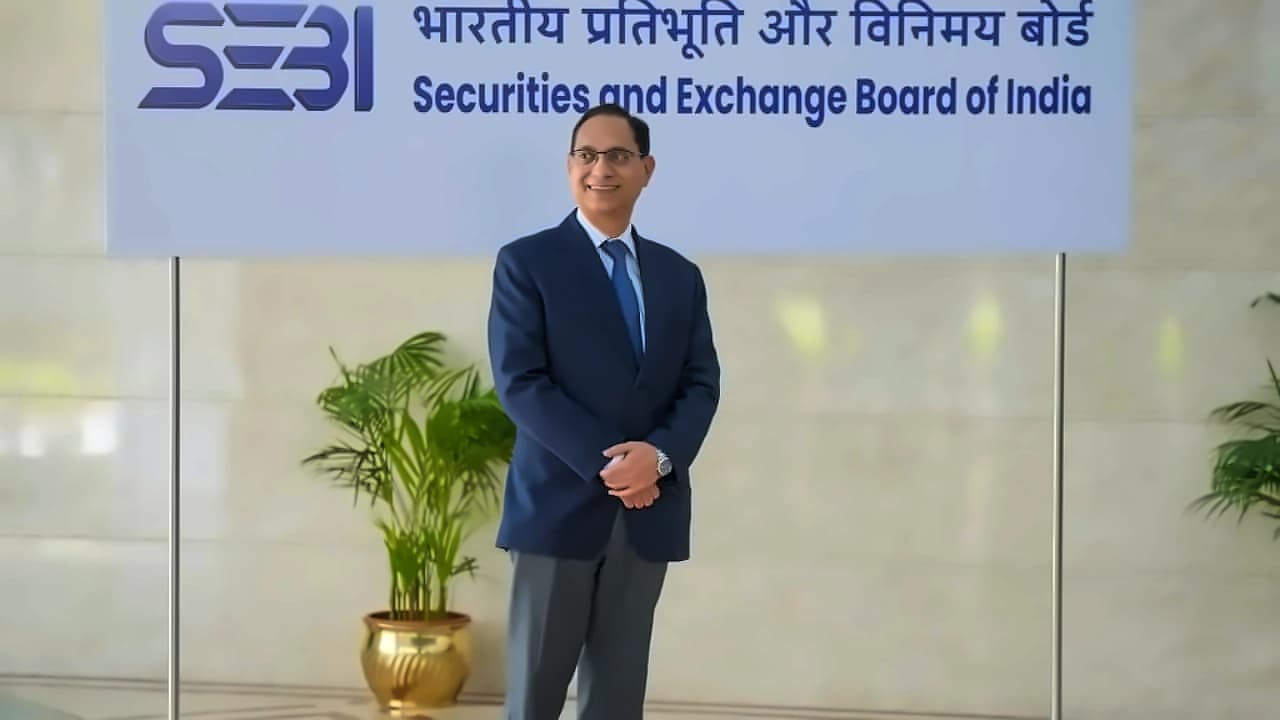
The Securities and Exchange Board of India (SEBI) Board is scheduled to meet on September 24, with several regulatory and market-related reforms likely to be taken up for consideration. According to reports from The Financial Express, the 215th board meeting took place in Mumbai on September 24, with the agenda focusing on a wide set of capital-market reforms, with the board expected to consider around a dozen proposals, many of which have already gone through the consultation route. The agenda comes at a time when the regulator is trying to widen market participation, reduce regulatory friction and deepen long-term capital pools, while keeping investor protection safeguards intact. SEBI Chairman Tuhin Kanta Pandey emphasized the regulator's commitment to facilitating smoother entry for global capital into India, noting that ongoing regulatory reforms are making onboarding significantly faster for Foreign Portfolio Investors (FPIs).
The SEBI Board has approved significant expansion of Foreign Portfolio Investor (FPI) access to commodity derivatives, with FPIs now permitted to trade non-agricultural commodity index derivatives and non-agricultural commodity derivatives that are not cash-settled. However, for physically settled non-agricultural commodity contracts, FPIs will have to square off their positions three days before expiry, before the start of the tender or staggered delivery period. Discretionary and non-discretionary PMS can now invest in foreign securities under the RBI's Liberalised Remittance Scheme (LRS), with derivative exposure limits for discretionary clients expanded up to 1.25 times client AUM. SEBI Chairman Tuhin Kanta Pandey highlighted the regulator's commitment to facilitating smoother entry for global capital into India, emphasising that ongoing regulatory reforms are making onboarding significantly faster for Foreign Portfolio Investors (FPIs).
The SEBI Board has approved a significant overhaul of the regulatory framework governing Portfolio Management Services (PMS), with the changes taking effect from the September 24 meeting. As reported by The Hindu BusinessLine, the new SEBI (Portfolio Managers) Regulations, 2026, replace the 2020 framework, introducing a new route called Portfolio Managers Route for Investment in Mutual Fund Units (PRIM), allowing portfolio management services (PMS) providers to invest clients' money directly in mutual fund schemes and specialised investment funds (SIFs). Existing PMS providers can offer the route through a separate investment approach, subject to a minimum ticket size of ₹25 lakh. The regulator has also permitted PMS providers to invest up to 10% of a client's assets under management in investment-grade unlisted debt securities under discretionary PMS, provided the client gives consent. Under the new framework, PMS providers will be allowed to participate in initial public offerings (IPOs), primary debt issuances and exchange-traded derivatives, with SEBI having also simplified the language of the regulations and removed provisions it considers redundant. The PRIM route covers direct plans, including ETFs, index funds and specialised investment funds, with fixed management fees capped at 1% of client assets and performance-based fees also permitted. Under the new framework, portfolio managers can invest up to 1.25 times the client's AUM in exchange-traded derivatives, with portfolio managers also allowed to invest in overseas securities under both discretionary and non-discretionary PMS, including listed equities, debt, REITs, overseas mutual funds, ETFs, index funds and foreign government debt.

The board has approved a proposal to allow managers of alternative investment funds (AIFs) and asset management companies (AMCs) offering specialized investment funds (SIF) and PMS to accredit investors, with the existing route through accreditation agencies continuing to operate. According to Mint, investors will now be eligible for accreditation based on their exposure to the Indian stock market with a threshold of ₹5 crore for individuals, HUFs, family trusts and sole proprietorships and ₹20 crore for body corporates and other trusts. The new securities market exposure criterion will also apply to HUFs, family trusts and sole proprietorships for the ₹5-crore threshold, while the ₹20-crore criterion will cover body corporates and other trusts. Accredited investors are individuals or entities deemed financially sophisticated enough to take on higher-risk investments, with individuals qualifying with an annual income of at least ₹2 crore or a net worth of ₹7.5 crore, with at least half in financial assets, among other criteria. Companies and trusts require a net worth of at least ₹50 crore. FPIs can also be accredited investors, a provision not currently available, with Mint reporting that this will enable sophisticated investors based outside India ease of access to eligible Indian securities market products and also facilitate inflow of foreign capital. The board also approved an additional, optional manager-led accreditation route, with managers of AIFs, asset management companies offering specialised investment funds (SIFs) and SEBI-registered portfolio managers permitted to accredit investors. Persons resident outside India, including foreign portfolio investors, will be deemed to be accredited investors, while Limited Liability Partnerships will also be eligible for accreditation if each partner is an accredited investor. Accreditation through either route will be valid for three years, and the manager-led accreditation will be portable across AIF, SIF and portfolio management services products within the same group, subject to safeguards. SEBI stated that the securities-market exposure criterion alone has the potential to expand the pool of eligible accredited investors to around 4 lakh, compared with the existing AIF investor base of around 1 lakh.
Beyond market structure reforms, Pandey emphasized that India's broader growth ambitions will require a significantly larger pool of capital to fund infrastructure, micro, small and medium enterprises (MSMEs) and businesses. As reported by CNBC TV18, he noted that India's financing requirements are becoming more diverse, making the role of both banks and capital markets increasingly important. Pandey highlighted that banks and capital markets are complimenting each other for India's capital requirement, with Reserve Bank of India Deputy Governor Poonam Gupta making similar points about the bond market's performance compared to equity markets. India's market cap has grown at around 17% annually since FY16 and now stands at about ₹481 trillion, while Indian companies have raised about ₹10 trillion every year on average through equity and debt issuances over the last decade. Mutual fund assets have grown from ₹12.3 lakh crore in FY16 to ₹87 lakh crore by August 2026, with the number of unique investors in the securities market more than tripling to around 150 million. Pandey also noted that policymakers will need to deliberate on simplifying taxation of debt instruments, as it plays an important part for investors. According to The Hindu BusinessLine, Pandey stressed that "We also need to ask: Are our markets becoming deeper and more liquid? Are we creating adequate pools of long-term capital?".