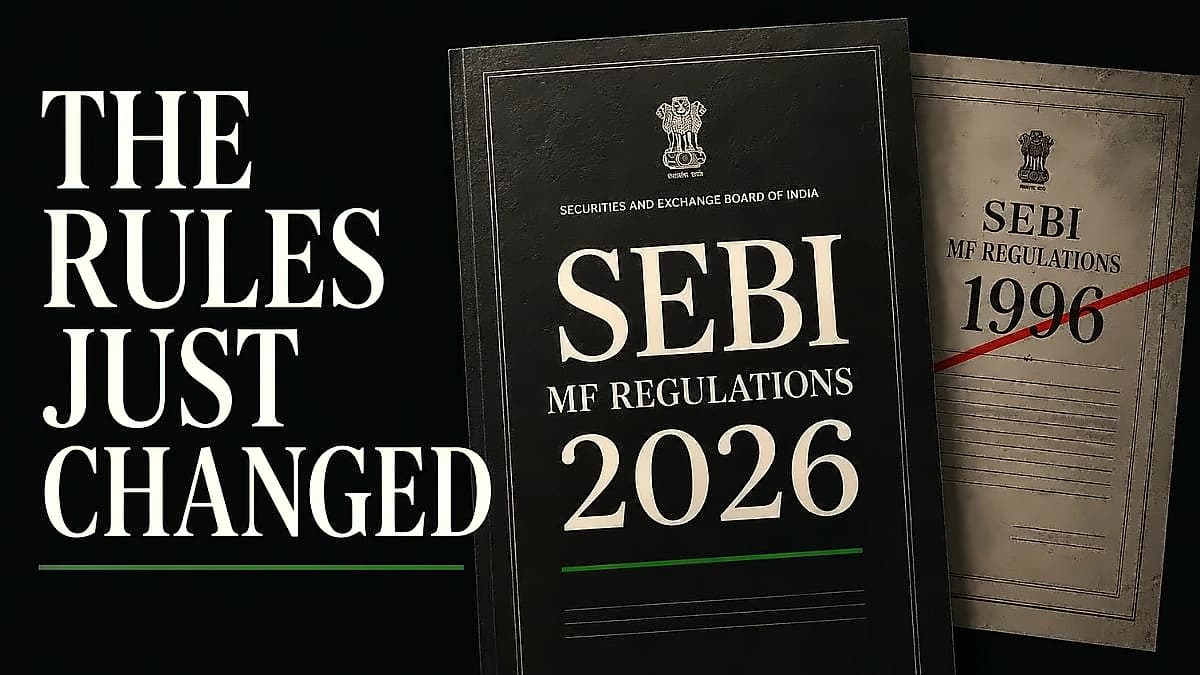
The Securities and Exchange Board of India (SEBI) has introduced comprehensive changes to mutual fund regulations through the Mutual Fund Regulations 2026. According to reports from SEBI, these new regulations represent a significant overhaul of the existing framework governing mutual fund operations in India. The regulations cover multiple aspects of mutual fund management, including fee structures, investment strategies, and governance requirements.
The Mutual Fund Regulations 2026 introduce new fee structures and enhanced cost transparency measures for mutual fund investors. As reported by SEBI, the regulations aim to provide clearer information about the total costs associated with mutual fund investments. The changes are expected to improve investor understanding of how fees are calculated and how they impact overall returns.
SEBI has proposed a mutual fund-only PMS (MF-PMS) category with a minimum investment threshold of ₹25 lakh, significantly lower than the traditional PMS requirement of ₹50 lakh. According to CNBC TV18, this framework could make professional portfolio management more accessible by allowing managers to build portfolios using mutual fund products rather than directly selecting individual stocks. The proposed MF-PMS managers can construct portfolios using products such as direct mutual fund plans, exchange-traded funds (ETFs), index funds and specialized investment funds (SIFs). SEBI has proposed a management fee of up to 2.5% of assets under management for the MF-PMS category. SEBI whole-time member Amarjeet Singh highlighted this consultation at the NJ Partners Business Training 2026 event, emphasizing the framework's potential to democratize professional investment management.
The regulations include provisions for Specialized Investment Funds (SIFs) and enhanced flexibility in investment strategies. As reported by CNBC TV18, SEBI has also proposed greater flexibility for portfolio managers to invest in overseas securities and use exchange-traded derivatives. These changes allow mutual funds to offer more specialized investment approaches while maintaining regulatory compliance, potentially expanding the range of investment options available to mutual fund investors. The proposed framework carries a ₹25 lakh minimum investment, compared with ₹50 lakh for conventional PMS, making it more accessible to retail investors.
India's mutual fund industry has experienced remarkable growth, with assets under management rising to around ₹85 lakh crore from ₹10 lakh crore in 2014, representing more than an eight-fold increase in just over a decade. According to SEBI's Amarjeet Singh, mutual fund folios have crossed 27 crore, while the number of unique investors has exceeded 6 crore, highlighting the growing participation of households in capital markets. The distribution network has expanded alongside this growth, with active AMFI-registered distributors increasing from 2.4 lakh to 3.4 lakh over the past five years. Distributors continue to account for around 71% of mutual fund assets held by retail and HNI investors, making their role central to investor outcomes.
SEBI's Amarjeet Singh has warned India's rapidly expanding mutual fund distribution industry that asset growth cannot come at the cost of investor trust, urging distributors to prioritize suitability, transparency and long-term investor outcomes over rapid customer acquisition. He emphasized that "Growth not built on investor trust will ultimately become difficult to sustain." Singh cautioned against mis-selling that investors may not immediately recognize, suggesting a simple test: whether a distributor would make the same recommendation to a family member. He also warned about "AI washing," where claims about artificial intelligence capabilities exceed what the technology actually delivers. While digital onboarding, mobile platforms and AI tools can reduce costs and improve access, Singh emphasized that they create concerns around accountability, transparency, suitability, cybersecurity and data protection, and cannot eliminate the importance of human interaction.
The Mutual Fund Regulations 2026 introduce MF Lite as a new category designed to enhance accessibility to mutual fund investments. As reported by SEBI, MF Lite is positioned as a simplified investment vehicle that could attract new investors to the mutual fund market. The regulations provide clearer guidelines for MF Lite operations and investor eligibility criteria.
SEBI will implement new nomination rules effective 1 September 2026, allowing investors to name up to three nominees for each demat account or mutual fund folio. Under the revised framework, single-holder accounts opened on or after 1 September must either add a nominee or formally opt out of the nomination facility. The new rules aim to make nominations easier and reduce problems related to investment transfer after an investor's death, while preventing the build-up of unclaimed assets. Investors can complete the nomination process online or offline, with online requests authenticated through digital signature, Aadhaar-based e-sign, or two-factor authentication. The changes are part of SEBI's wider effort to simplify investment transmission processes.