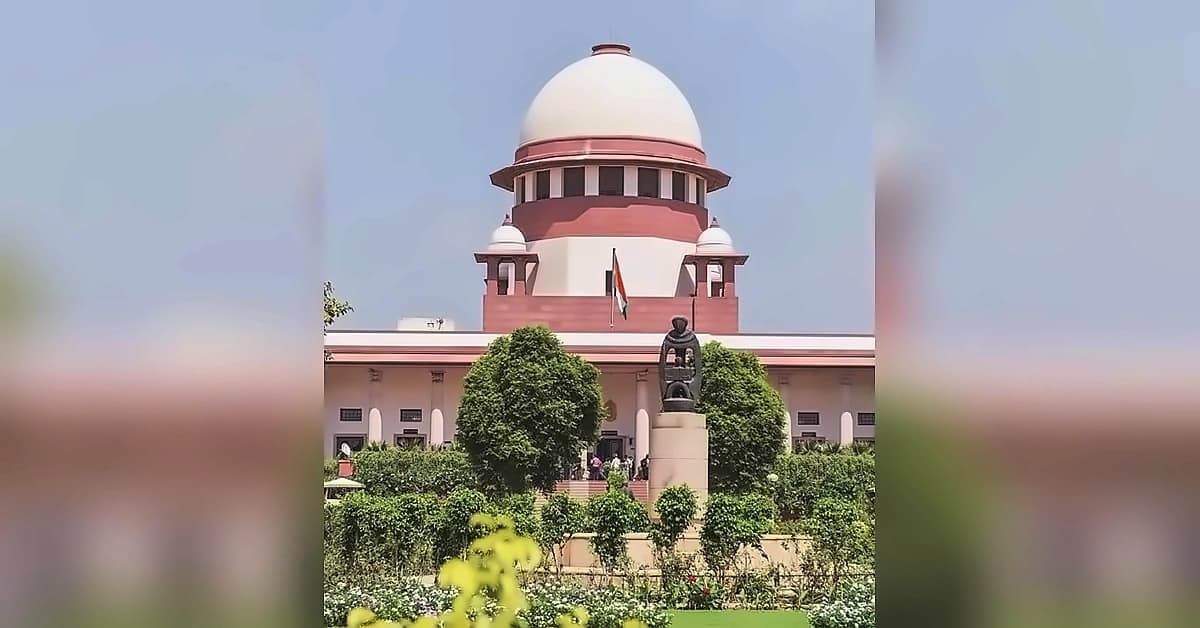
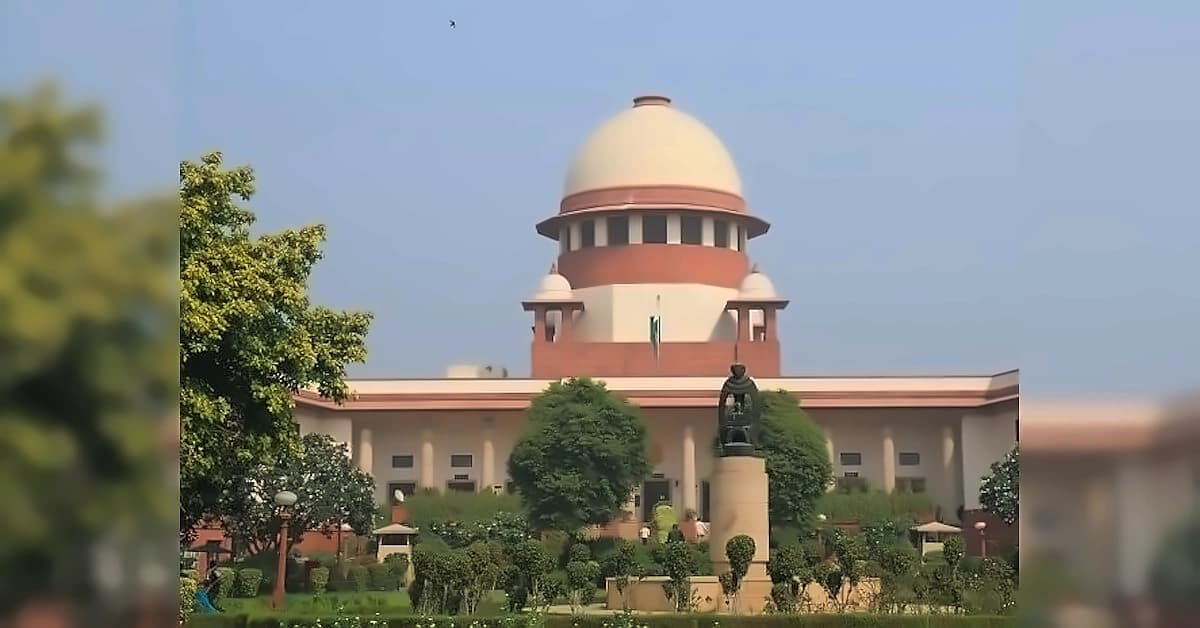
The Supreme Court on Friday granted the Centre two weeks to respond to petitions challenging amendments made to the Right to Information (RTI) Act through the Digital Personal Data Protection (DPDP) Act. According to reports from Business Standard, a Bench comprising Chief Justice of India Surya Kant and Justices Joymalya Bagchi and V Mohana said the court would examine the government's reply before proceeding further. Solicitor General Tushar Mehta sought the two-week extension to file the Centre's response, which the court accepted. The pleas specifically challenge the amendment to Section 8(1)(j) of the RTI Act, which deals with exemption from disclosure of personal information, with petitioners alleging the changes weaken transparency and public accountability by removing the public interest safeguard for disclosure of personal information. The solicitor general informed the bench that the Centre would file its reply within another two-three weeks.
During the hearing, the Supreme Court observed that the RTI Act and the Digital Personal Data Protection (DPDP) Act must be harmonised. As reported by Business Standard, the bench recalled its earlier observation that 'some balancing would have to be done regarding the kind of digital personal data that requires protection'. The court's emphasis on harmonisation suggests a broader approach to addressing the tension between transparency and privacy rights in the digital age. This development indicates the court's recognition that the current legislative framework may not adequately balance these fundamental rights, particularly as digital data protection becomes increasingly complex and comprehensive.
During the hearing on Friday, August 7, 2026, advocate Vrinda Grover submitted that the challenge was directed specifically against the amendment to Section 8(1)(j) of the RTI Act, which deals with exemption from disclosure of personal information. As reported by Business Standard, she argued that the earlier provision permitted the withholding of only limited categories of personal information and incorporated a public-interest test. The amendment, according to Grover, removes those safeguards and broadly exempts all personal information from disclosure, thereby restricting access to information protected under Articles 19 and 21 of the Constitution — the right to freedom of speech and the right to life and personal liberty. The deletion of the 'public interest' qualifier means that information relating to personal data is now exempt from disclosure without any balancing exercise, consequently, excluding a broad category of information protected under Articles 19 and 21 of the Constitution. The CJI noted that he had said earlier that 'some balancing would have to be done regarding the kind of digital personal data that requires protection'.
Appearing for one of the petitioners, senior advocate Nisha Bhambhani argued that the amendment could have serious consequences for investigative journalism. According to Business Standard, she submitted that journalists could face significant hurdles if the disclosure of information depended on the consent of the data principal or if individuals were later able to seek the erasure of information relevant to public reporting. Advocate Prashant Bhushan contended that the constitutional balance between the right to information and the right to privacy had already been settled by the Supreme Court in Central Public Information Officer, Supreme Court of India v Subhash Chandra Agarwal. Bhushan, appearing for one of the petitioners, said that the balance between the right to information and the right to privacy had already been settled by the top court in a judgment authored by then Justices DY Chandrachud and NV Ramana, which recognised both the right to information under Article 19(1)(a) and the right to privacy as fundamental rights, while holding that the original RTI Act struck a careful balance between them. The petitioners' challenge centers on whether the amendment's removal of public-interest safeguards for personal information disclosure violates constitutional rights to freedom of speech and privacy.
The court posted the matter for further hearing after the Centre files its response. According to Business Standard, the Supreme Court will examine the government's reply before proceeding further with the case. In February, the top court had refused to stay the impugned amendment, saying it was a complex issue involving balancing the fundamental right to privacy and the fundamental right to information that required careful consideration. The Supreme Court had on April 13 asked the Centre to respond to PILs challenging provisions of the Digital Personal Data Protection Act, 2023 that allegedly dilute transparency under the 2005 Right to Information Act. The petitioners have urged the court to restore the original Section 8 of the RTI Act with retrospective effect from November 13, 2025, and seek directions restraining authorities from dismantling transparency portals including the Jan Soochna Portal. The pleas were filed by Mazdoor Kisan Shakti Sangathan, activists Aruna Roy, Nikhil Dey and Shankar Singh Rawat and others, challenging Section 44 of the Digital Personal Data Protection Act, 2023, which substitutes Section 8 of the RTI Act. The transparency law provision was amended by Section 44(3) of the DPDP Act in 2023 to alter how personal data and privacy exemptions are handled in government information requests, removing key qualifiers and the 'larger public interest override' text, making personal information broadly exempt from public disclosure.