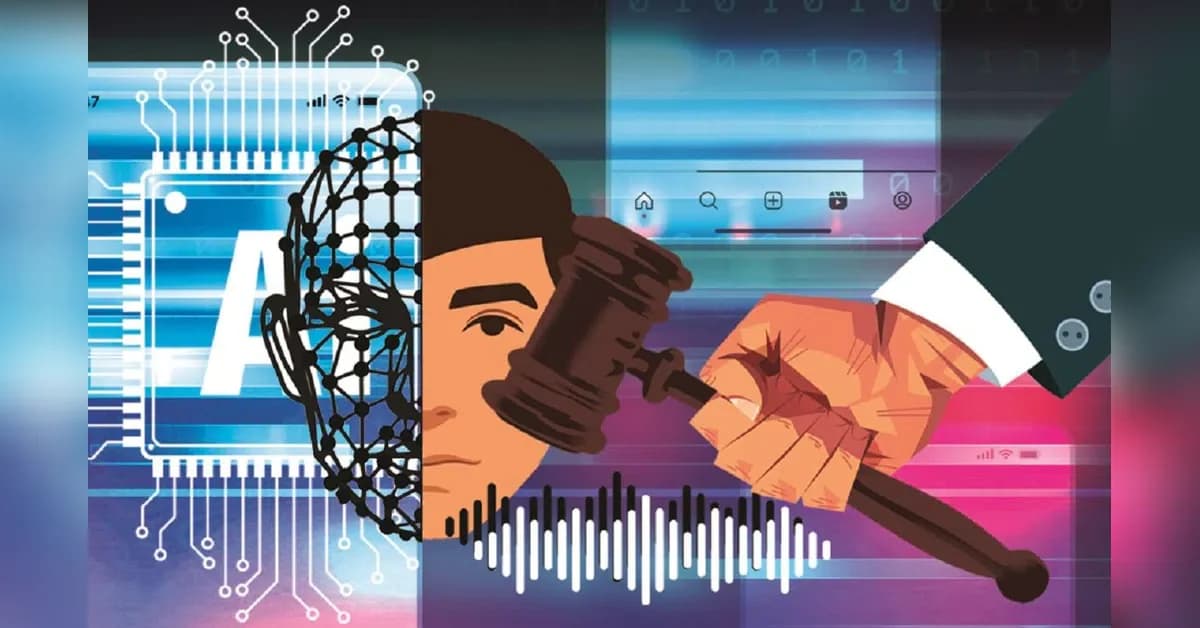
The Delhi High Court's May 29 ruling in the Laksh Singh Yadav versus Union of India case has opened significant legal and regulatory questions for artificial intelligence systems. According to reports from Business Standard, the judgment allows individuals to seek removal or masking of personal information from online judicial records where continued accessibility causes disproportionate harm to privacy, dignity or reputation. While the ruling is relatively straightforward for traditional search engines, it raises fundamental questions about whether AI systems can be forced to erase personal information once they have learned it through training data.
Most technical and legal experts indicate that the involvement of AI models in data erasure processes poses significant operational challenges. As reported by Business Standard, Kamesh Shekar, associate director at The Dialogue, explained that while personal data can be removed from databases and processing pipelines, there remains uncertainty regarding AI models trained on such data. The technical reality is that deleting underlying data does not automatically eliminate the knowledge embedded within the model once patterns, relationships, or inferences have been learned from personal information.
The ruling could have substantial implications for AI companies, particularly those using large-language models (LLMs) for training. According to legal experts cited by Business Standard, information used to train these models is not simply stored in databases but absorbed into complex systems that can continue generating or inferring information long after the original source is removed. Nikhil Narendran, partner at Trilegal, noted that the future of the right to be forgotten in the AI era will depend less on deleting data at the source and more on ensuring AI systems do not continue reproducing or amplifying personal information after valid erasure requests.
Machine unlearning techniques, aimed at reducing a model's reliance on specific data, have emerged as a possible solution to the AI privacy challenge. However, as reported by Business Standard, experts indicate that this technology remains under development and cannot yet guarantee complete removal of information from trained models. Anshul Verma, partner at SKV Law Offices, emphasized that the legal obligation for AI companies must extend beyond removing data from future training sets to include implementing output-level filters, maintaining auditable compliance records, and evaluating machine-unlearning measures where feasible.
The ruling raises significant questions about the adequacy of existing data protection laws, particularly the Digital Personal Data Protection (DPDP) Act. According to Business Standard, the DPDP Act excludes certain categories of publicly available information, including information disclosed through judicial proceedings. Shiv Sapra, partner at Kochhar & Co, noted that enforcement may prove the biggest challenge as regulators struggle to determine whether models were trained on personal data or whether erasure requests have been effectively implemented. The future debate is likely to center on accountability rather than perfect deletion, with courts potentially being asked to make AI systems forget what they have already learned.