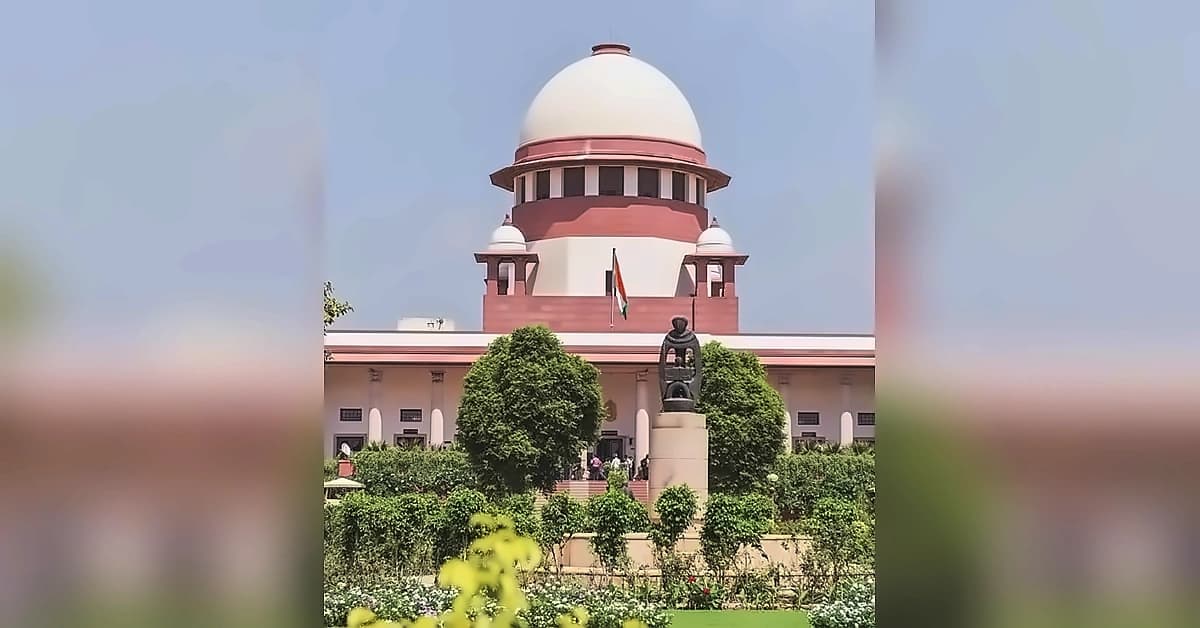
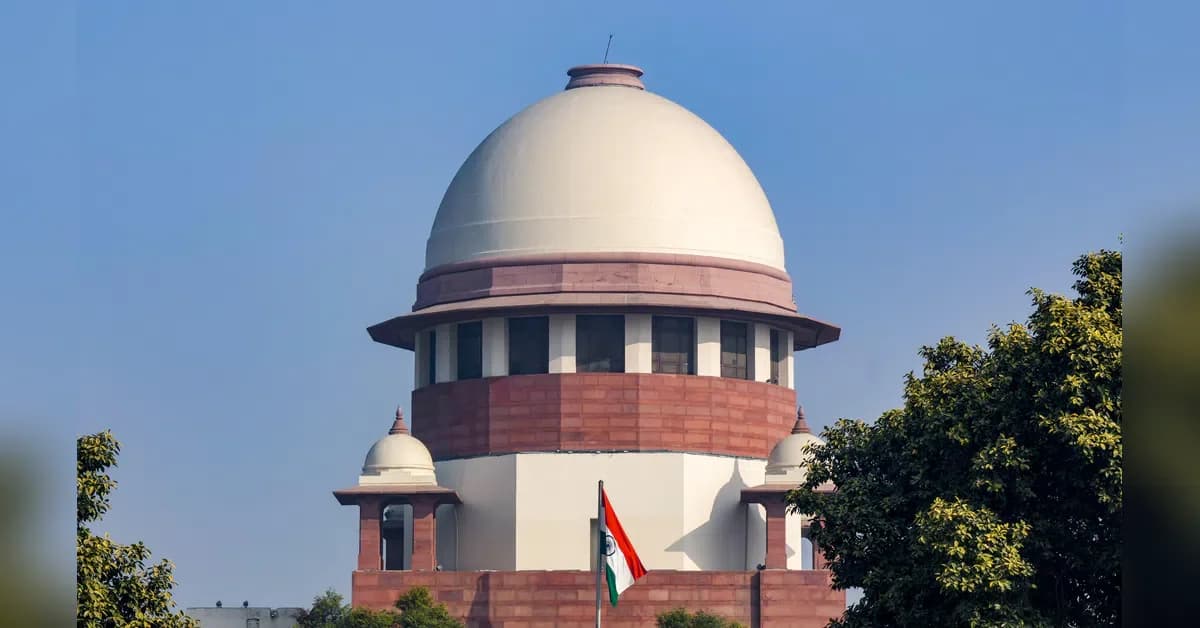
The Supreme Court on Friday stayed a Delhi High Court ruling that brought the National Stock Exchange of India (NSEI) within the ambit of the Right to Information (RTI) Act, giving the bourse interim relief as it pursues an appeal against the decision. According to reports from Business Standard and The Economic Times, a two-judge bench comprising Justice Vikram Nath and Justice Sandeep Mehta issued notice on NSE's appeal and granted interim protection against both the Delhi High Court's judgment and the Central Information Commission's 2007 order until further orders. The bench stated that 'the order passed by the Central Information Commissioner dated 7 June 2007 shall remain stayed' in its oral order. During the hearing, the apex court observed that 'these are days of transparency' and orally indicated that the protection enjoyed by the NSE against the CIC order may not continue indefinitely, stating 'this shield is not going to stand for very long anyhow'. The Supreme Court has now agreed to hear a petition filed by the NSEI and sought responses from the Central Information Commission and others within four weeks.
Solicitor General Tushar Mehta, appearing for NSE, argued that the exchange cannot be treated as a government-controlled body merely because it performs regulatory functions in the securities market. As reported by Business Standard, Mehta contended that stock exchanges do not satisfy the statutory definition of a 'public authority' under Section 2(h) of the RTI Act, arguing that it applies only to bodies established under the Constitution or by law, or those that are substantially financed or controlled by the government. NSE's counsel emphasized that the exchange is a private company with no government shareholding, with around 40 per cent of its shareholding held by domestic investors and 27 per cent by foreign investors. Relying on the Supreme Court's ruling in Thalappalam Service Cooperative Bank Limited v. State of Kerala, NSE contended that it does not satisfy any of the conditions under Section 2(h) for being classified as a public authority. The NSEI had specifically challenged the July 1 verdict of the division bench of the Delhi High Court, which had dismissed the NSEI's appeal against its single judge's April 2010 decision that ruled that NSEI qualified as a 'public authority' under section 2(h) of the RTI Act.
The case stems from a 7 June 2007 order of the Central Information Commission, which held that stock exchanges discharge public functions and should therefore be treated as public authorities under the RTI Act. According to Business Standard and The Economic Times, the Delhi High Court in its 1 July 2026 judgment upheld that position, holding that NSEI satisfies the definition of a public authority under Section 2(h) of the RTI Act. The court stated that 'not only the Central Government but also a statutory authority exercises deep and pervasive control over the Stock Exchange'. The dispute dates back to 2007, when a full Bench of the CIC ruled that stock exchanges fell within the RTI Act. The Commission had also directed the NSE and the Jaipur Stock Exchange to establish a mechanism for processing RTI applications. The NSE challenged that order before the Delhi High Court and secured an interim stay on July 4, 2007. On April 15, 2010, Justice Sanjiv Khanna dismissed the NSE's petition and upheld the CIC's conclusion, holding that although the NSE was incorporated as a private company, its recognition under the Securities Contracts (Regulation) Act, 1956 transformed it into an authority performing public functions. The NSE then filed an appeal before a Division Bench, which stayed the single-judge's judgment on May 4, 2010, and that appeal remained pending for nearly 16 years until it was dismissed on July 1 this year by a Division Bench of Justices C Hari Shankar and Om Prakash Shukla.
The Supreme Court's interim stay comes as NSE awaits regulatory approval for what could be India's biggest initial public offering (IPO). According to its draft red herring prospectus filed with Sebi, as reported by Mint, the proposed IPO is an entirely offer-for-sale (OFS) exercise, allowing existing shareholders to sell up to 148.9 million shares. NSE will not receive any proceeds from the issue, highlighting the significance of the RTI Act classification for the exchange's future operations. The RTI Act classification allows citizens to enforce their right to ask for information only from a 'public authority', making the Supreme Court's interim relief particularly crucial for the exchange's operational framework.