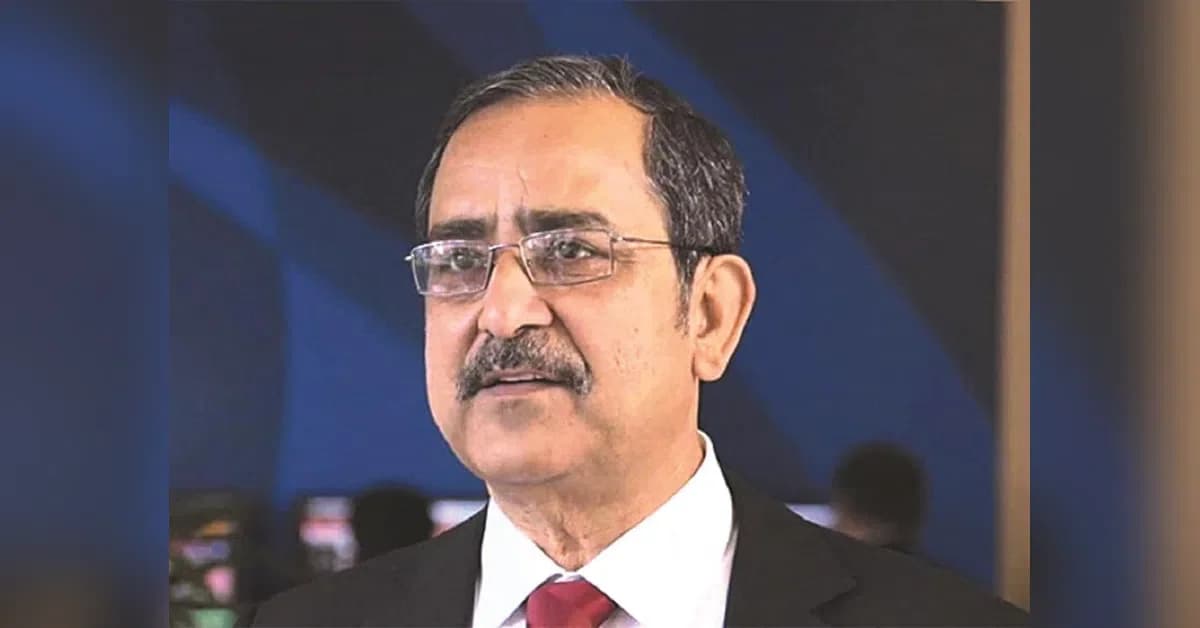
NITI Aayog Vice-Chairman Ashok Lahiri outlined India's urgent need to address the fundamental imbalance in agriculture, where the sector contributes about one-sixth of GDP while nearly half the population depends on it for livelihoods. Speaking at the launch of the book Getting Agriculture Markets Right, Lahiri emphasized that 'If half the people are dependent on one-sixth of GDP, distress is inevitable'. He advocated for shifting surplus labour from agriculture to industry and services while simultaneously raising farm productivity to address the structural challenges facing the farm sector.
Lahiri argued in favour of gradually replacing commodity-linked subsidies with direct income transfers, noting that 'Most wise people will agree that transfers are a better method than subsidies'. However, he cautioned that the transition would be politically difficult because beneficiaries often perceive commodity-based support as more secure than cash payments. The vice-chairman questioned India's continued reliance on subsidies while acknowledging that productivity gains remain possible despite the country's status as a major foodgrain producer.
Lahiri raised significant concerns over the minimum support price (MSP) regime, citing findings that fewer than 10% of farmers and less than 10% of the gross value of agricultural output directly benefit from MSP operations. Despite this limited impact, the policy continues to shape cropping decisions across large parts of the country. Procurement remains heavily concentrated in wheat and rice, which account for nearly 78% of the total procurement value. The expansion of procurement into states like Telangana, Chhattisgarh and Odisha has encouraged cultivation of water-intensive cereals while discouraging diversification towards pulses and oilseeds.
Lahiri highlighted that marketing remains the biggest challenge for many producer groups despite their success in production, noting that in many rural areas, markets simply do not exist for small farmers, self-help groups and farmer producer organisations (FPOs). He emphasized the need for efficient agricultural markets and aggregators capable of linking farmers to consumers to improve price realisation and reduce supply chain inefficiencies. A Reserve Bank of India survey shows that farmers' share in the final consumer price ranges from 33% to 70% across crops, underscoring the need for better supply-chain management.
S Mahendra Dev, Chairman of the Prime Minister's Economic Advisory Council, argued that India needs to shift agricultural policy focus from production-centric interventions to post-harvest management, marketing and agro-processing. He noted that sectors such as horticulture, livestock and fisheries, which largely operate outside the MSP framework, have recorded faster growth with livestock and fisheries expanding at more than 7% annually. Dev emphasized that future farm policy should focus on strengthening post-harvest infrastructure, expanding food and agro-processing, and supporting small and marginal farmers through FPOs and cooperatives.