NITI Aayog's latest report, Reimagining Skilling for Viksit Bharat@2047, places states as the primary drivers of transformation in India's skilling ecosystem, marking a significant shift from centralised policy implementation. The report identifies 8.7 crore Indian youth as NEET (Not in Education, Employment or Training) and calls for a reimagined skilling architecture that cannot be delivered through uniform, centrally designed models. According to the report, national policies and frameworks must be coupled with state-level planning and localised execution, with states tasked to adapt national frameworks to local labour markets, infrastructure and learner realities. The Centre will provide broad policy direction while states implement the transformation, addressing long-standing complaints from state governments that national skilling initiatives are designed in centralised silos without consulting local industrial ecosystems or matching regional employment demands.
NITI Aayog has proposed a comprehensive shift from traditional skilling funding to outcome-linked financing that ties government spending directly to measurable employment results. The proposed model would make funding for skill training providers conditional on verified outcomes like placement rates, employment retention, and wage growth, as reported by NITI Aayog's August 2026 report, Reimagining Skilling for Viksit Bharat@2047. This represents a fundamental departure from the current system where training numbers alone serve as poor measures of success in addressing employment gaps. The think tank cited Skill Impact Bonds as an example of a "pay-for-results" model, where private institutions finance training programmes upfront and the government reimburses them when they meet predefined employment benchmarks. According to Shantanu Rooj, founder and CEO of learning and employability solutions provider TeamLease Edtech, this policy will ensure competition between service providers for the largest share of money from learners, leading to improved quality when providers have performance management and outcome accountability.
India's employment landscape is experiencing a significant shift in work arrangements, with 62.4% of workers now engaged in own-account work in the first quarter of 2026-27, up from 60.2% a year earlier, according to reports from Business Standard. Meanwhile, the share of hired workers declined from 24.4% to 22.8% during the same period. This trend should not be interpreted as a rise in entrepreneurship, as it often represents workers unable to find wage employment opportunities in an economy with inadequate wage employment opportunities. The proposed reforms come against the backdrop of India's expanding working-age population and the growing need to improve employment quality. According to NITI Aayog, India has a median age of 28 years and a labour force of 65.4 Cr individuals.
The NITI Aayog report reveals two major employment challenges facing India. Only 8.25% of graduates are employed in roles aligned with their qualifications, according to the Economic Survey 2024-25 cited in the report, highlighting a significant mismatch between education and employment opportunities. Additionally, 87 million young Indians aged 15-29 are classified as NEET (Not in Education, Employment or Training), indicating substantial challenges in achieving smooth transitions from education to employment. The report emphasizes that these challenges require comprehensive skilling and upskilling initiatives to improve employability across the country. Affordability remains a major barrier, with more than 80% of workers pursuing programmes that are either free or cost less than ₹10,000, reflecting financial constraints rather than learner preference. These constraints can be particularly acute for primary earners who cannot afford to give up wages for extended periods to acquire new skills, as well as women who may lack control over household finances.
Alongside outcome-linked funding, NITI Aayog has proposed Digital Skills Vouchers hosted on Digital Lifelong Learning Accounts, or Skill Passports, as reported by NITI Aayog's August 2026 report. The vouchers would be redeemable only at government-accredited training institutions, allowing learners to effectively choose where they want to spend their skilling allocation. The vouchers could be issued through programmable digital payment rails such as e-RUPI and Central Bank Digital Currency (CBDC) wallets, enabling the government to track their use and direct funding towards specific beneficiaries or sectors. Depending on the learner's profile, the funding could either fully subsidise a course or operate via a co-pay model, shifting the flow of funding from a largely provider-led model towards one in which learners have greater purchasing power. NITI Aayog believes the vouchers could also be used to target priority groups, including women and people from tribal regions, while steering workers towards sectors such as semiconductors, green energy and advanced manufacturing. For training providers, this could mean significant changes to existing business models, as most providers' courses have remained largely unchanged over recent years because they have been able to fill seats regardless of quality.
The report calls for State-level Skills Digital Registries and Exchanges to consolidate learning, jobs and scheme data, alongside a Skills Passport anchored on APAAR (Automated Permanent Academic Account Registry) ID. These systems are intended to support job matching, informed choices and alignment between training and labour-market demand. NITI Aayog proposes a State or National Shared Skills Infrastructure Network to identify, map, digitise and enable shared use of existing training facilities, workshops, laboratories, hostels and community spaces. Implementation should follow a "district-first" approach, with accountability at the district Collector level and executional responsibility at the Panchayat or Ward level. The report also envisages community-based hubs, institutional counselling and digital guidance tools to help learners navigate education, skilling and career transitions, with safe and women-centric support systems for women. For tertiary education, states are expected to facilitate stronger industry participation through public-private partnership models and apprenticeship-embedded degree or diploma programmes.
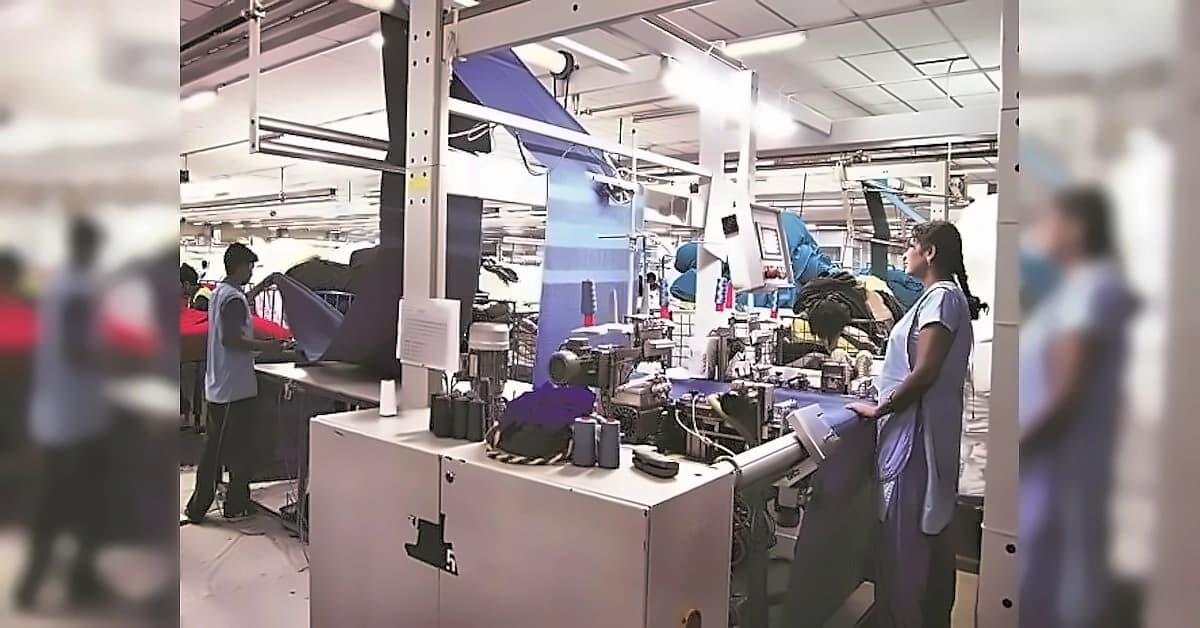
The effectiveness of these policy interventions will significantly impact India's medium to long-term growth trajectory, particularly as the country's demographic advantage may begin to close sooner than previously expected, according to Business Standard. The NITI Aayog report provides a timely framework for addressing employability concerns, with the need for reimagining skilling being reinforced by rapidly changing technology, especially artificial intelligence. The proposed shift would introduce greater competition among training providers, as funding would follow outcomes rather than the number of students skilled. The government allocated ₹34,000 Cr towards skilling in FY26, while PM Modi launched a scheme to train 1 Cr youth with AI skills over the next one year earlier this month. The report identifies five core reforms around which states are expected to help build the new architecture: Integration of skills in schools; stronger public-private partnership and private-sector engagement in technical and higher education; outcome-linked, industry-backed skilling programmes; expansion of apprenticeships; and continuous guidance and perception-building. The policy framework ensures that existing funding produces measurable results, shifting the focus from simply increasing spending to ensuring that government spending is more accountable and produces tangible employment outcomes.