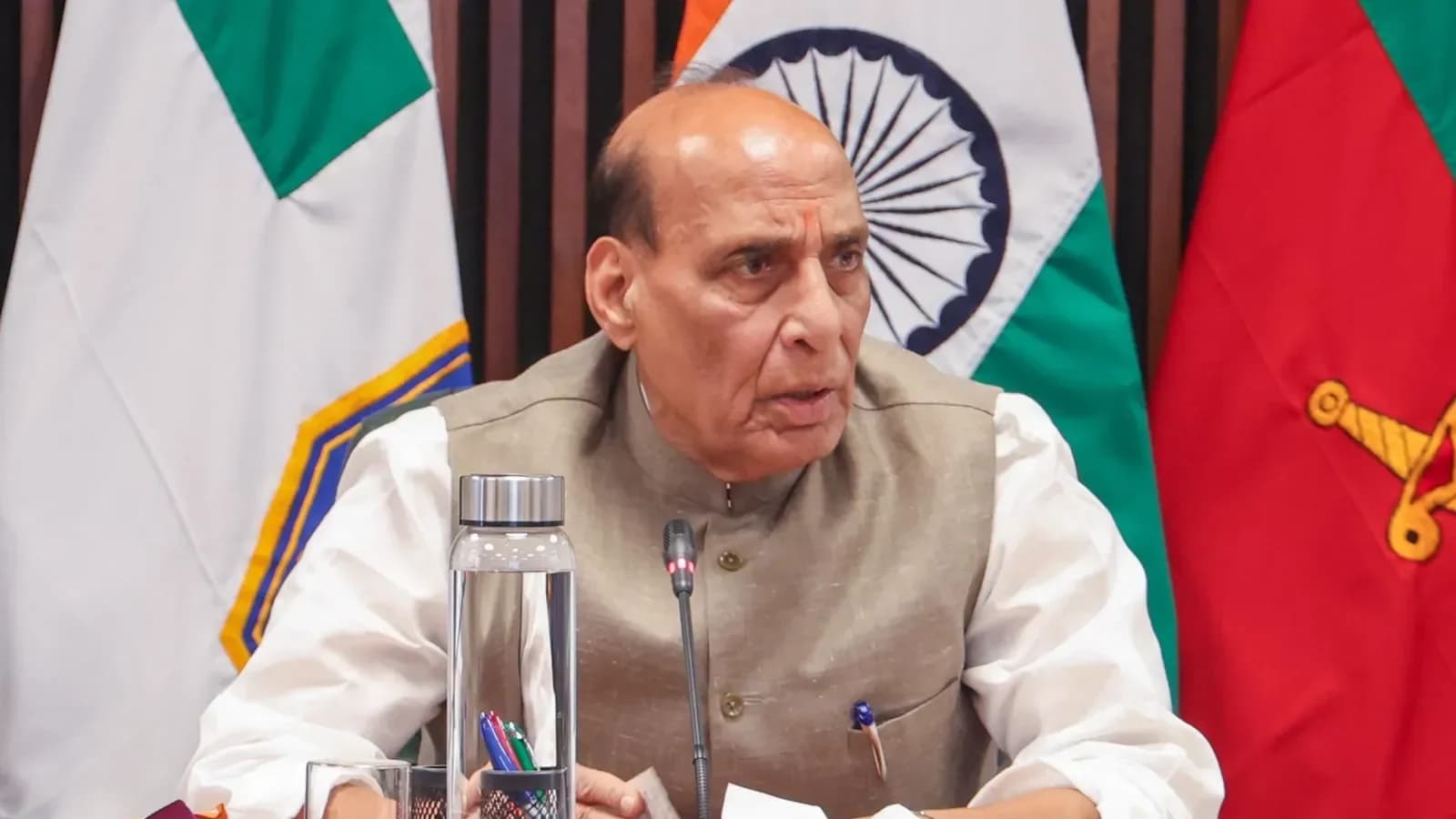
The government is considering liberalisation of foreign direct investment (FDI) norms in the defence sector to further attract overseas investors, according to an official statement on Monday. The Department for Promotion of Industry and Internal Trade is holding stakeholder consultations on the subject, with an official confirming that 'some easing in norms is under consideration'. Currently, FDI up to 74 per cent is permitted through the automatic route, while beyond that foreign direct investment is allowed through government approval route wherever it is likely to result in access to modern technology.
Foreign investment in the defence sector is subject to security clearance by the Ministry of Home Affairs and as per the guidelines of the Ministry of Defence. As reported by Business Standard, India has attracted USD 32.29 million FDI in defence industries between April 2000 and March 2026. The government has implemented a series of measures to boost manufacturing in the sector, with India's defence budget increasing from ₹2.53 lakh crore in 2013-14 to ₹7.85 lakh crore in 2026-27.
Exports from the sector grew from ₹686 crore in 2013-14 to ₹38,424 crore in 2025-26, demonstrating significant growth in the defence manufacturing sector. According to the latest data, the private sector contributed ₹17,353 crore or 45.16 per cent of defence exports in 2025-26, while defence public sector undertakings contributed ₹21,071 crore or 54.84 per cent. The government is targeting ₹3 lakh crore in annual defence production and ₹50,000 crore in exports by 2029.
Despite India's 7.3% growth rate last quarter, achieving Prime Minister Modi's Viksit Bharat target of 9.25% annual growth for 21 years remains challenging. As per Bloomberg, the country's per-capita income of USD 2,813 in 2025 would need to rise to around USD 18,000 by 2047 to reach developed nation status. Economists warn that growth below 8% could leave India vulnerable to the middle-income trap, where rising wages erode low-cost advantages before productivity improves. The manufacturing sector has remained stagnant at 16-17% of GDP for over a decade, far from Modi's 25% target.
Indian banks are actively reducing costly bulk deposits after strong foreign currency non-resident (FCNR-B) mobilisation reduced the requirement for expensive domestic funds. Large banks are saving 25-40 basis points as they replace bulk deposits by the FCNR-B deposits as there are no hedging costs and CRR and SLR requirements. According to PwC India, this could lead to improvement in net interest margins if banks maintain their lending rates. Canara Bank mobilised $4.8 billion under the special mobilisation scheme, surpassing the $1.5 billion target, while in the first 15 days of August, outstanding deposits with the banking sector contracted by about ₹6,500 crore despite massive overseas inflows. Bank of India managing director Rajneesh Karnatak told ET last month that there could be savings of 50-60 bps as banks won't renew bulk deposits. Analysts believe this strategy is helping optimise funding costs and could potentially improve second-quarter net interest margins at several lenders.