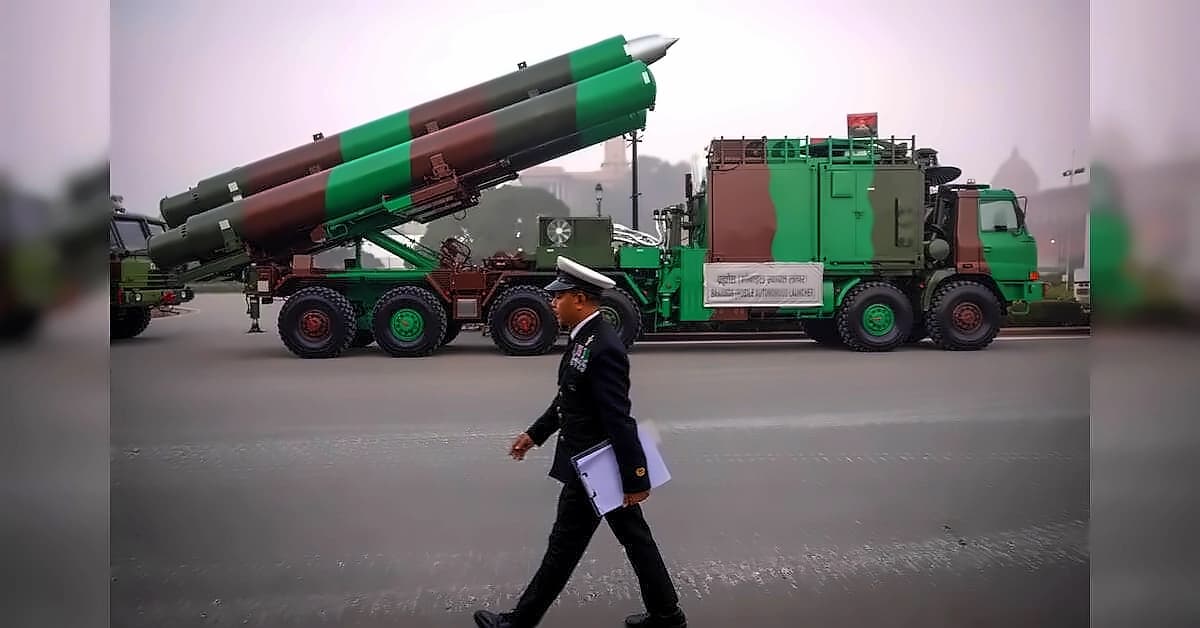
India's defence sector has attracted minimal foreign direct investment despite significant policy liberalisation efforts. According to Business Standard reports, cumulative FDI inflow stood at ₹6,670.59 crore as of March 2026, while DPIIT data shows defence industries received only ₹247.97 crore in FDI equity inflow from April 2000 to March 2026. This represents just 0.004% of the total FDI inflow of ₹52.86 trillion during the same period. The modest performance contrasts sharply with the BrahMos Aerospace joint venture, which has delivered successfully since its establishment in 2001 with an authorised capital of $300 million.
The defence FDI policy has undergone significant liberalisation since its opening in 2001. As reported by Business Standard, the policy began with 26% FDI allowed through industrial licensing, then permitted 49% composite foreign investment through government route in 2014. The current framework allows 74% FDI through automatic route for new defence industrial licences, with 100% FDI permitted above that level subject to Cabinet Committee on Security approval. The latest revision in September 2020 enhanced the automatic route limit to 74% for companies seeking new defence industrial licences, favouring greenfield investments.
Defence industrial licensing remains a critical barrier to foreign investment, with approval processes taking significantly longer than the mandated six months. According to Business Standard reports, Defence Secretary Rajesh Kumar Singh described the defence industry as the last vestige of the licence-permit Raj, with actual approval times extending to one to two years due to multiple clearances required from the Department of Defence Production, MHA, and state Home Departments. Only four industries remain subject to compulsory licensing: electronic aerospace and defence equipment, industrial explosives, cigars and cigarettes, and specified hazardous chemicals.
Foreign OEMs require clear demand visibility before committing substantial investments, creating additional barriers to FDI. As reported by Business Standard, Cchavi Vasisht from Chintan Research Foundation noted that foreign defence companies are hesitant to share highly sensitive technology without absolute control over manufacturing operations to protect intellectual property. The successful 100% FDI approval for Swedish company Saab's Carl-Gustaf M4 weapon system facility in Haryana represents the only instance of complete foreign ownership in the defence sector, reflecting the challenges in attracting major technology transfers.
Industry experts suggest several reform measures to enhance defence FDI attractiveness. According to Business Standard reports, Commander Gautam Nanda from EY India recommends raising the FDI cap to 100% through automatic route, while Cchavi Vasisht from CRF suggests implementing a single-window clearance mechanism with 60-90 day approval timelines and greater demand visibility through simplified procurement processes. The Ministry of Defence's 'Year of Reforms' initiative has already compressed procurement timelines, with the draft Defence Acquisition Procedure 2026 proposing further acceleration to reduce acquisition timelines from the current five to seven years.