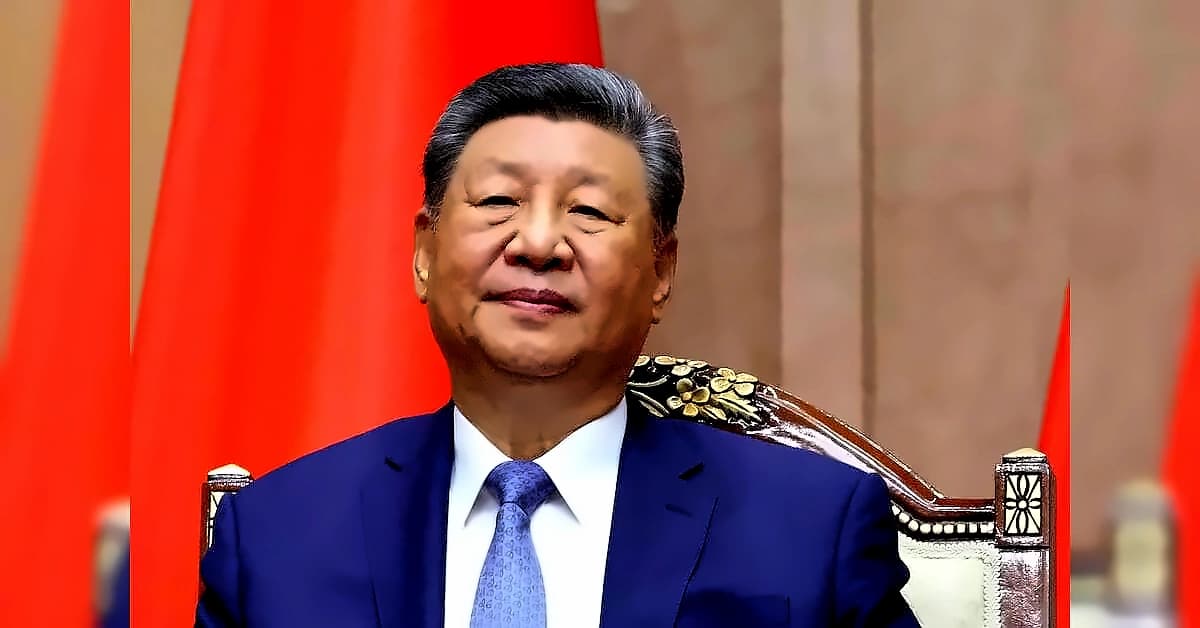
Chinese President Xi Jinping positioned China's rapid industrialisation as a new pathway for developing nations during a speech on Wednesday. According to reports from Business Standard, Xi noted that China achieved in a few decades what it took centuries for rich countries to accomplish. Speaking at an event marking the 105th anniversary of the founding of the ruling Communist Party, Xi stated that China advocates building a community with a shared future for humanity, providing Chinese wisdom, Chinese solutions and Chinese strength for addressing major global issues. This vision, which Xi first propounded at the Moscow State Institute of International Relations in 2013, was later enshrined in the Chinese Communist Party Constitution in October 2017 and the Constitution of the People's Republic of China in March 2018, elevating it from a passing slogan to formal doctrine.
China, which has long opposed US dominance of the international system, emphasized its commitment to changing rather than replacing the global order. As reported by Business Standard, Xi's government engaged in direct confrontation with the US last year, successfully forcing President Donald Trump to scale back import tariffs that he had imposed on Chinese imports. The Chinese leader stated that the world has entered a new period of turbulence and transformation, putting humanity at a crossroads, while repeating pledges to push forward the construction of a new type of international relations to promote world peace and development. Xi's vision challenges the existing Western-dominated international system, criticising it rightly as unjust and unsustainable in the long course of history, while cultivating the emergence of a more pluralistic world order where countries share equal sovereignty and follow the principle of non-interference in each other's internal affairs.
Xi emphasized the need to elevate China's military to world-class standards while upholding the Communist Party's leadership of the armed forces. According to Business Standard, several senior generals have been removed in recent years as part of a corruption purge that is also viewed as ensuring military loyalty. These remarks at the Great Hall of the People in Beijing echoed many of the themes from Xi's speech on the party's 100th anniversary in 2021, including the importance of a strong military and bringing Taiwan under China's control.
Xi Jinping's global vision operates through an architecture of five major initiatives that address different aspects of international cooperation. The earliest initiative was the Belt and Road Initiative (BRI), launched in 2013, which aims to tether global trade networks to the Chinese economy through building physical and digital infrastructure to link Asia, Europe, Africa, and Latin America. The Global Development Initiative (GDI) followed in 2021, focusing on Economic Growth & Green Transition with priorities including poverty alleviation, food security, and green technology cooperation. The Global Security Initiative (GSI) was launched in 2022, emphasizing the "indivisibility of security" principle that global security cannot be divided into military alliances like NATO. The Global Civilisation Initiative (GCI) was unveiled in 2023, championing cultural relativism and governance based on the understanding that there is no universal model for democracy and human rights. Most recently, in September 2025, Xi unveiled the Global Governance Initiative (GGI), advocating for sovereign equality, international rule of law, multilateralism, and pragmatism to achieve just participation in global affairs.
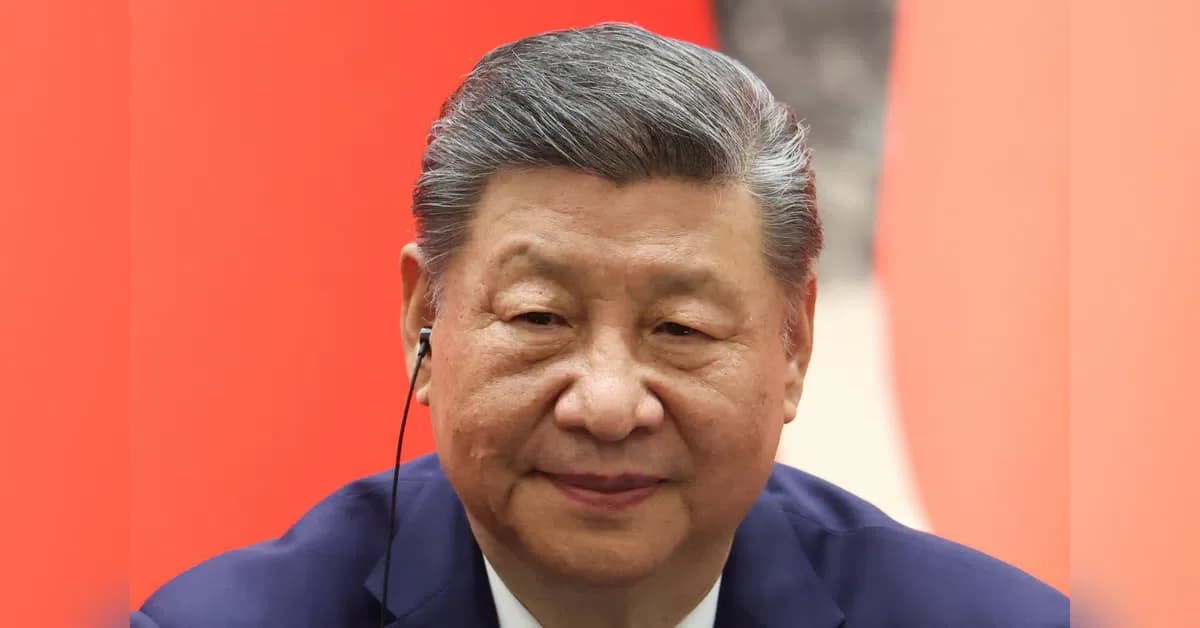
The Chinese President has demonstrated remarkable influence on the international stage, hosting almost all leaders of the most powerful countries within the first five months of the current year alone. According to recent analysis, Xi Jinping's worldview has become systematised in the shortest period of any previous Chinese leader, with his governance thought gaining significance even within the Chinese Communist Party. His personal grasp over China's political dispensation is compared to Mao Zedong and Deng Xiaoping's strongman models, while his sense of historical mission and timely urgency has rarely been exhibited in a world leader. His vision centers multi-country collaboration to address global issues and achieves the modernisation of underdeveloped countries through consensus-driven, state-centric approaches, positioning China primarily as a champion of developing nations in the Global South while pushing for greater representation and extended voting power for Global South nations within multilateral bodies.