US President Donald Trump on Tuesday claimed that 19 million barrels of oil flowed through the Strait of Hormuz in a single day, describing it as an unprecedented surge linked to the recently signed US-Iran agreement. "Yesterday, 19 million barrels of oil flowed out of the Strait of Hormuz, a very beautiful place... You've never seen anything like it. It's called an oil gush... I did it for this reason, 99% for this. Iran will never have a nuclear weapon, and they've agreed to that," Trump said while lauding the outcome of the diplomatic agreement finalised with Iran last week. The comments come a day after Trump stated on Truth Social that "19 Millions barrels of oil flowed out of the Hormuz Strait" on Monday, calling it "an all-time RECORD," and adding that "oil prices are tumbling down, and the world is a much safer place."

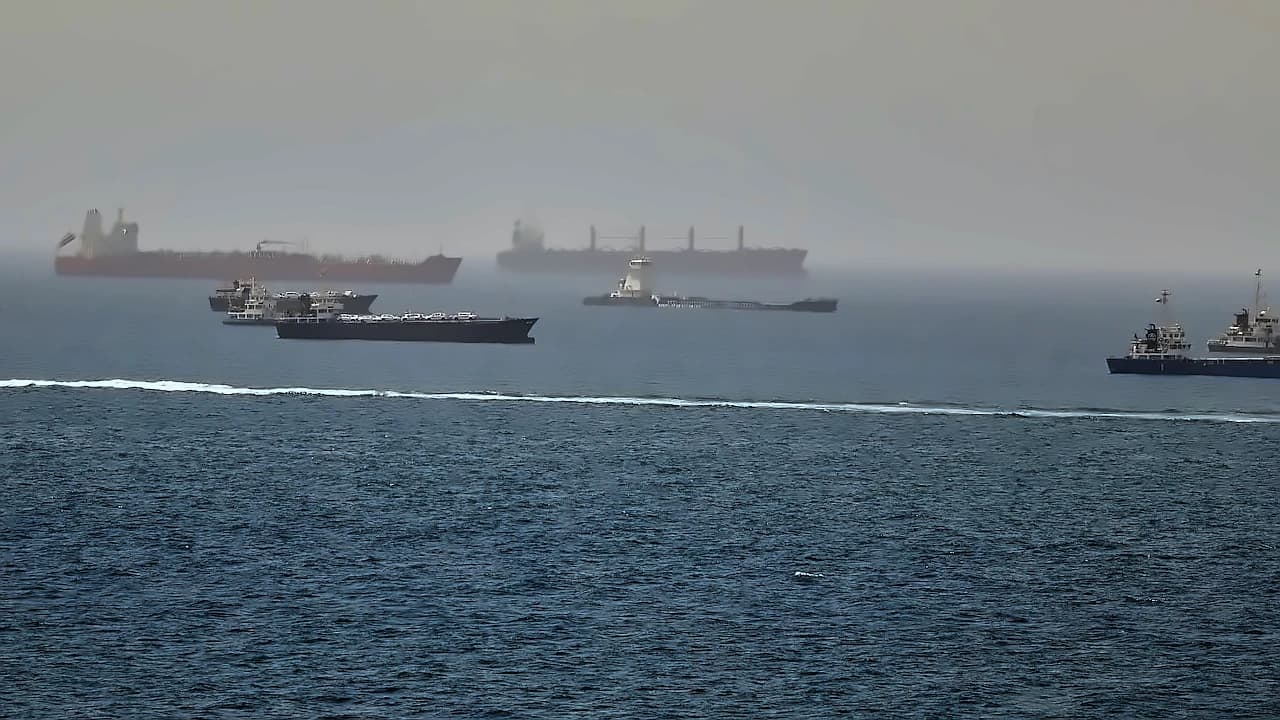
Tanker traffic through the Strait of Hormuz has begun to recover significantly, with 71 confirmed transits recorded over the weekend according to data analytics firm Kpler. The peak activity occurred on Saturday with 35 crossings, though this remains well below the pre-war average of 100-130 vessels per day. Ships are avoiding the central route due to mines and instead using the smaller northern route through Iranian waters and the southern route through Omani waters. The recovery comes as the US Treasury issued a 60-day license on Monday waiving sanctions on Iranian oil as part of the interim agreement, allowing Iranian oil to be imported into the US for the first time since the 1990s.
Iran's parliamentary speaker Mohammad Bagher Ghalibaf, who led the Iranian delegation, confirmed that the Strait of Hormuz will be managed by Iran but following international laws. "Hopefully we can activate the strait again, in terms of passage, and bring prosperity back to regional and global economy," Ghalibaf told Iranian state media on his return from Switzerland. Ghalibaf and Foreign Minister Abbas Araghchi arrived in Oman on Monday night to meet with Foreign Minister Badr al Busaidi to discuss peace efforts and ensure safe navigation. The lead negotiator's comments provide clarity on Iran's position regarding the strait's management, which had been a key point of contention during the negotiations.
Oil prices have shown significant recovery as the Strait of Hormuz situation stabilizes. Brent crude oil fell 3.2% to $77.52 per barrel, moving closer to its roughly $70 price level before the war. Benchmark US crude oil declined 2.6% to $73.86 per barrel. The price recovery reflects market confidence in the interim agreement's ability to restore normal oil flows through the strategic waterway. The Strait of Hormuz normally carries about a fifth of the world's oil, nearly 20 million barrels a day, making its reopening crucial for global energy markets.
The parties had established a framework to support a regional ceasefire and manage potential future tensions, with the next phase of negotiations focusing on full implementation of the interim agreement. Switzerland welcomed the constructive progress achieved through the intensive diplomatic exchanges hosted at Burgenstock involving the United States, Iran, Pakistan and Qatar. The Swiss Ministry of Foreign Affairs noted that the establishment of a High-Level Committee under a Memorandum of Understanding and an agreed roadmap towards a final agreement within 60 days represented important progress. Responding to questions regarding the possible release of frozen Iranian assets, Vance said any decision would depend on continued progress in negotiations, with the success of any agreement ultimately depending on Iran's actions rather than commitments.