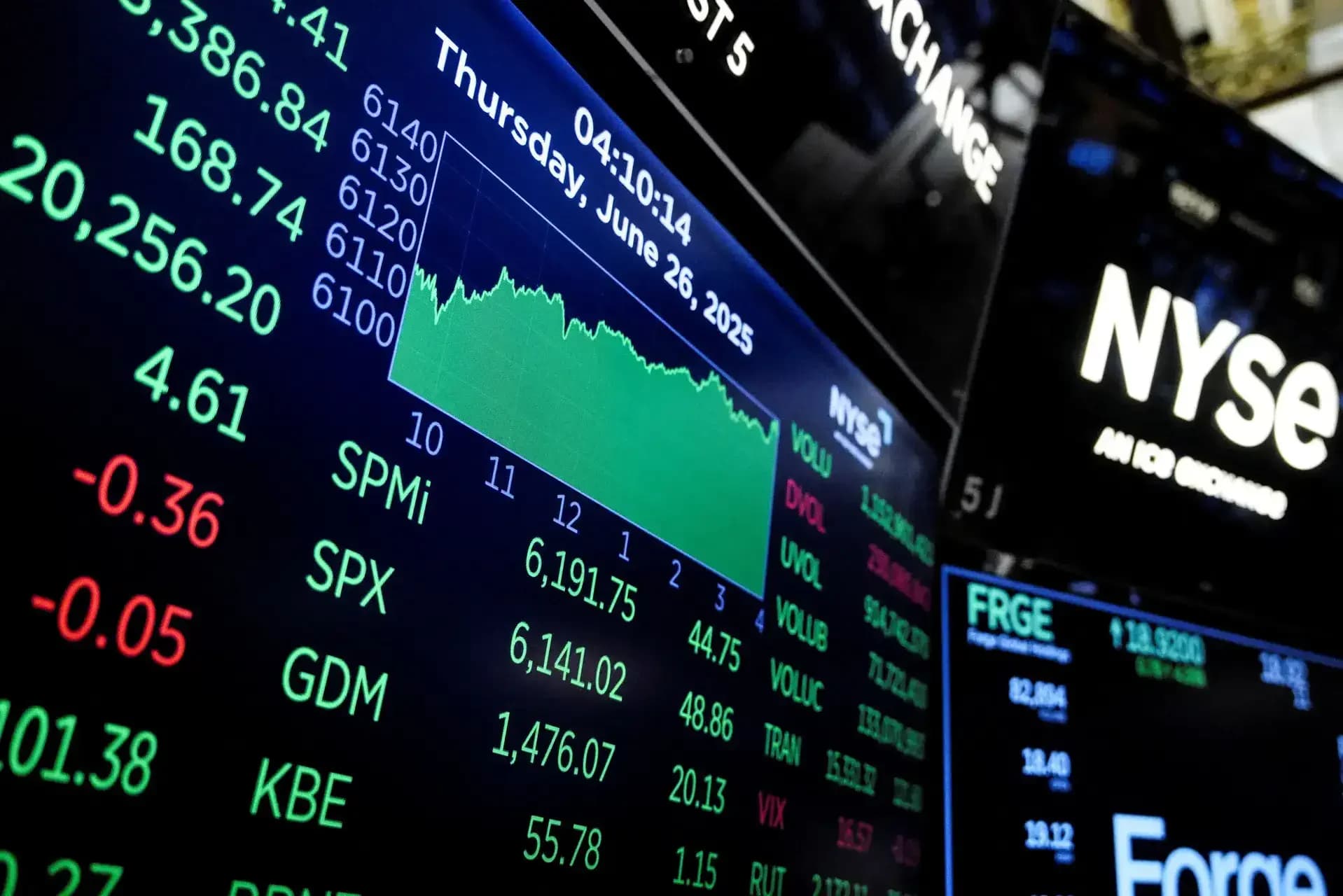
The S&P 500 gained 13.33 points, or 0.18%, to 7,414.29 while the Nasdaq Composite rose 185.49 points, or 0.71%, to 26,274.14, as reported by Associated Press. The Dow Jones Industrial Average fell 268.56 points, or 0.53%, to 49,494.88, with seven of the eleven major S&P sectors trading lower, led by utilities which dropped 1.7%. The Philadelphia Semiconductor Index climbed 2.3% and was testing a fresh record high after rebounding from losses in the previous session. Declining stocks outnumbered advancing shares by a ratio of 1.77-to-1 on the NYSE and 1.35-to-1 on the Nasdaq, with the S&P 500 recording 23 new 52-week highs and 44 new lows, while the Nasdaq posted 79 new highs and 163 new lows. Shares of Alphabet and Tesla rose 2.6% and 3.6%, respectively, providing significant support alongside chipmakers and megacap technology stocks.
Technology shares continued their recovery after a weak previous session, with Micron Technology rising 4.4% and On Semiconductor gaining 10%, as reported by Associated Press. Nvidia, the chip company that was among the first faces of the AI boom, rose 2.6% and was the strongest force pushing upward on the S&P 500 because of its immense size. Nvidia closed at a record high on Tuesday and hit an intraday record shortly after the open today, along with several other chip stocks. Nvidia chief executive Jensen Huang was reportedly added to President Trump's delegation at the last minute, helping lift sentiment across the semiconductor sector before the opening bell. Apple crossed $300 for the first time, also hitting a record high as CEO Tim Cook traveled to China with President Trump's delegation. The six winners have added roughly $516 billion in market value today, versus a $26 billion loss for the broader market, demonstrating the sector's resilience despite broader inflation concerns.
Investor sentiment remained cautious after US producer prices increased more than expected in April, recording their biggest rise since early 2022, according to Associated Press. Producer prices rose 1.4% in April over the previous month, far above the 0.5% increase expected by economists, with headline wholesale inflation coming in at 6% year-over-year, above estimates of 4.8%. The producer price index for final demand increased 1.4% in April after an upwardly revised 0.7% rise in March, with annual producer inflation accelerating to 6.0% in April from 4.3% the previous month, exceeding forecasts for a 4.9% increase. This follows Tuesday's data that showed consumer inflation rising at its fastest pace in more than three years in April. Steve Wyett, chief investment strategist at BOK Financial, said inflationary risks had been building even before the Iran conflict escalated, noting that "inflation pressures were already percolating before the Iran conflict, and while much of the damage can be undone if we get a quick resolution, today's PPI print is a reminder of the level and intensity of the coming price pressures at the consumer level." Oil markets continued to react to uncertainty surrounding negotiations between the United States and Iran over ending the conflict and reopening the Strait of Hormuz, with U.S. crude futures climbing more than 4% and moving back above $100 per barrel.
Traders are now expecting the Federal Reserve to keep interest rates unchanged throughout the year, with the CME FedWatch Tool pricing in a 34.3% chance of a rate hike by December, compared with roughly 15% a week earlier, as reported by Associated Press. Markets are also watching developments at the Federal Reserve closely after the Senate confirmed Kevin Warsh to the Fed board on Tuesday, with investors expecting a potentially more hawkish central bank leadership, with Jerome Powell's term as Fed chair ending on Friday. The jump in oil prices has forced traders to give up most hopes for a cut to interest rates this year, with the 10-year Treasury yield edging up to 4.47% from 4.46% late Tuesday and is well above its 3.97% level from before the war. The 30-year yield remained above 5%, with all three bond yields moving up between 2%-4% over the past five days as markets began to price in higher inflation expectations.
Investor sentiment also received support after Japan's SoftBank Group Corp. said its profit for the 12 months through March zoomed by nearly five-fold from the previous year as its AI investments paid off, as reported by Associated Press. China's Alibaba Group said its AI and cloud growth accelerated in the latest quarter, with its stock that trades in the United States rising 8.2% even though its overall results fell short of analysts' expectations. Cisco Systems and Alibaba both reported beats on revenue and earnings per share during Wednesday's earnings season, while Birkenstock missed analyst expectations on both the top and bottom lines, with Birkenstock Holding dropping 13% after the British company said its results for the latest quarter were hurt by U.S. tariffs and other factors. First quarter profits for companies in the S&P 500 have grown 27% throughout the season, far above the 12% analysts had expected, with roughly 83% of the 440 S&P 500 companies that reported earnings up to May 8 beating analyst estimates. Morgan Stanley also raised its year-end target for the S&P 500 to 8,000 from 7,800, citing strong corporate earnings and room for further gains in US equities.