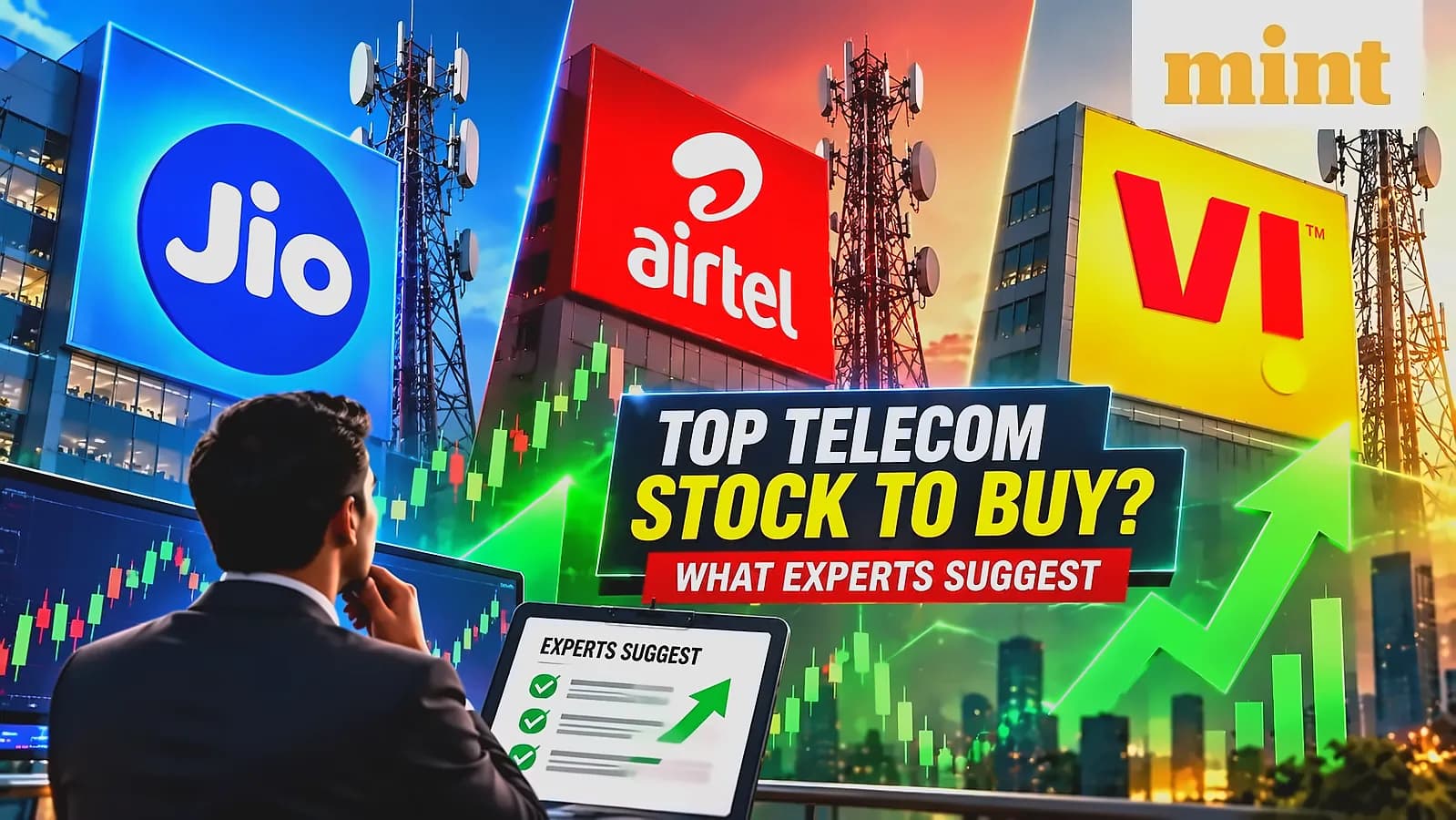
Jio Platforms Ltd's ₹30,213 crore IPO opened for subscription on October 21, 2026, marking India's largest-ever public offering and surpassing Hyundai Motor India's record set in 2024. The IPO comprises an entirely fresh issue of 27 crore shares with a price band of ₹1,065-1,119 per share. As reported by The Economic Times, anchor investor bidding began on October 19, 2026, with the offering set to raise more than ₹30,000 crore at the upper end of the band. Jio's listing will mark a significant milestone for Reliance Industries, bringing its telecom and digital business to public markets amid a broader generational transition at the conglomerate. Bharti Airtel shares gained 3.88% to ₹1,869 on Thursday as investors weighed the IPO's implications for the sector, with the stock being the top gainer among the 30-share BSE Sensex.
Jio commands a 15-17% valuation premium over Bharti Airtel's India business, according to latest analysis from The Economic Times. Jio's forward EV/EBITDA is estimated at 10.9 times versus Airtel's 9.2 times, while Airtel commands higher ARPU of around ₹264 versus Jio's ₹216, supporting stronger monetisation potential. Nomura estimates Jio's equity value at ₹9.8 lakh crore to ₹10.3 lakh crore, with its analysis suggesting Bharti Airtel trades at a discount despite stronger subscriber trends and tariff-hike prospects. Including net debt, spectrum liabilities and lease liabilities, Jio's estimated enterprise value comes to ₹10.9 lakh crore to ₹11.4 lakh crore. For Reliance Industries, the listing will put a market value on its 66.4% stake in Jio, with Nomura estimating the stake would be worth ₹481-506 per Reliance share before a holding company discount.
Choice Capital's Ratiraj Tibrewal noted that Jio's P/E multiple is lower than Airtel's, limiting the scope for immediate valuation-led upside, with the investment case resting on its larger subscriber base, strong profitability, 5G and broadband monetisation, and growth in digital and AI-led services. Airtel has demonstrated stronger ARPU and return ratios, while Jio offers scale-driven growth potential through 5G adoption, fixed broadband expansion and digital services. MOFSL builds in a smartphone tariff hike of 15% in December 2026, which should provide visibility on delivering 15% EBITDA CAGR over FY26-29E. For investors, the decision goes beyond headline valuation multiples, with earnings growth, scope for tariff hikes, broadband adoption and cash generation being critical factors in determining which company can justify its valuation.
The valuation comparison presents a mixed picture, as noted by analysts, with Jio's EV/EBITDA valuation appearing higher than Airtel's, though differences in network infrastructure costs and accounting treatment may affect comparability. Jio's investment case will depend on sustained earnings growth, debt reduction and effective monetisation of its network investments, while Airtel provides an established telecom franchise with a track record of stronger returns on capital. Both companies' earnings growth depends significantly on future tariff hikes, with tariff hikes becoming an important earnings driver for Jio after its listing. For the wider telecom sector, the IPO comes at a time when investors are watching subscriber growth, tariffs and earnings more closely, making the valuation debate particularly relevant for sector positioning.