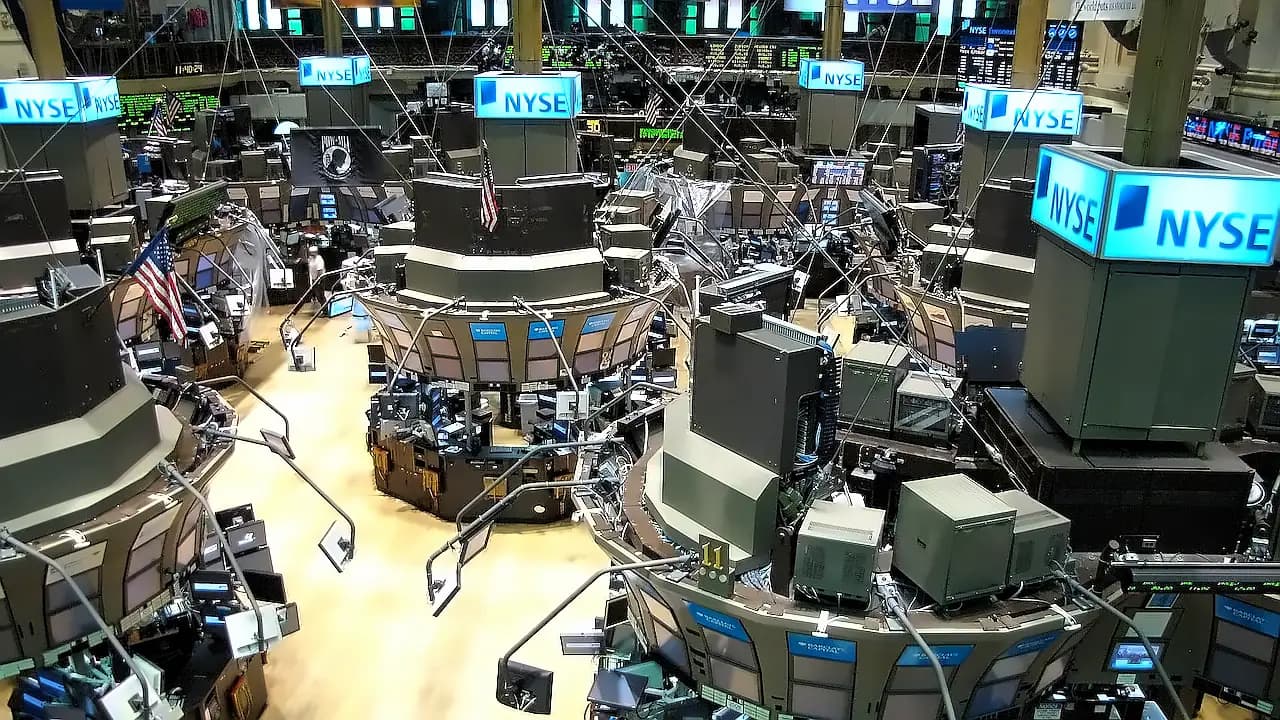
US stocks ended nearly flat on Thursday as hopes for an agreement to revive the Strait of Hormuz spurred a recovery from session lows, according to Reuters. The S&P 500 lost 2.20 points, or 0.03%, to end at 7,703.83 points, while the Nasdaq Composite gained 1.76 points, or 0.01%, to 26,937.79. The Dow Jones Industrial Average fell 162.41 points, or 0.32%, to 51,349.18. This recovery came after Microsoft declined, while Meta Platforms recorded gains, with the S&P 500 erasing its decline after Reuters reported that US and Iranian negotiators are exploring a phased path out of war that would involve Tehran reopening the waterway and Washington lifting its economic blockade. As per Edward Jones analyst Angelo Kourkafas, "Any easing of geopolitical tensions that helps relieve pressure on energy prices could go a long way toward stabilizing the bond market."
Oil prices surged significantly following geopolitical tensions and a missile attack on Saudi Arabia, with Brent crude climbing about 4% to $107 a barrel after a Houthi missile attack on Saudi Arabia revived concerns about supply disruptions. This represents a significant increase from earlier levels when Brent crude trading around $104 had initially driven market volatility. The oil price surge is contributing to market uncertainty as investors grapple with the impact of higher energy costs on inflationary risks. Data from shipping analytics firm Kpler showed that Saudi oil exports had bounced back to a little over 4 million barrels per day so far in September, up from a 2.4 million bpd in August. As Bill Northey, senior investment director at US Bank Wealth Management, told Reuters, "This just reinforces the view that we're dealing with one major market catalyst right now. It's really all about oil and inflation and the effect on interest rates, and then the interest rate cascading across the capital markets."
Treasury yields climbed significantly, with the 30-year bond yield reaching its highest level since 2004, creating additional pressure on financial markets. This represents a shift from earlier sessions when Treasury yields were low, with the 10-year rate down two basis points to 4.93%. The combination of rising oil prices and Treasury yield increases is tightening global financial conditions, creating an uncomfortable backdrop for Brazil and Latin America, where strong US growth supports commodity demand but expensive dollar funding raises the bar for local-currency debt and equities. As per Edward Jones, "Until then, we believe upward pressure on yields is likely to persist as expectations for additional Fed tightening remain elevated."
Traders are pricing in a nearly 70% chance of another Federal Reserve interest rate hike next month, according to the CME FedWatch Tool, following data released on Wednesday pointing to strong business activity. New York Fed President John Williams, a voting member of the Federal Open Market Committee, said on Thursday that it was reasonable to expect the central bank might need to raise rates again before the end of the year. This represents a significant shift from earlier expectations when the 10-year Treasury rate had been down two basis points to 4.93%. The prospect of continued Fed tightening is contributing to market volatility as investors assess the impact on global financial conditions.
Major AI stocks were mixed during the session, with Microsoft and Broadcom falling about 1%, while Advanced Micro Devices gained 1%. Meta Platforms rose 3.4%, a day after the social media company unveiled a small handheld device designed for use with its recently launched AI assistant, providing the biggest boost to both the S&P 500 and Nasdaq 100. Oracle dropped 4.1% after a report said the company had issued a "force majeure" notice concerning a New Mexico data center, with Blue Owl, the project's developer, falling 5%. MGM Resorts tumbled 11% after media mogul Barry Diller's People Inc. withdrew its proposal to acquire the casino operator. The S&P 500 has traded just below 19 times expected earnings this week, its lowest valuation since 2023, according to LSEG data, with AI-related heavyweights accounting for much of the recent increase in earnings expectations.