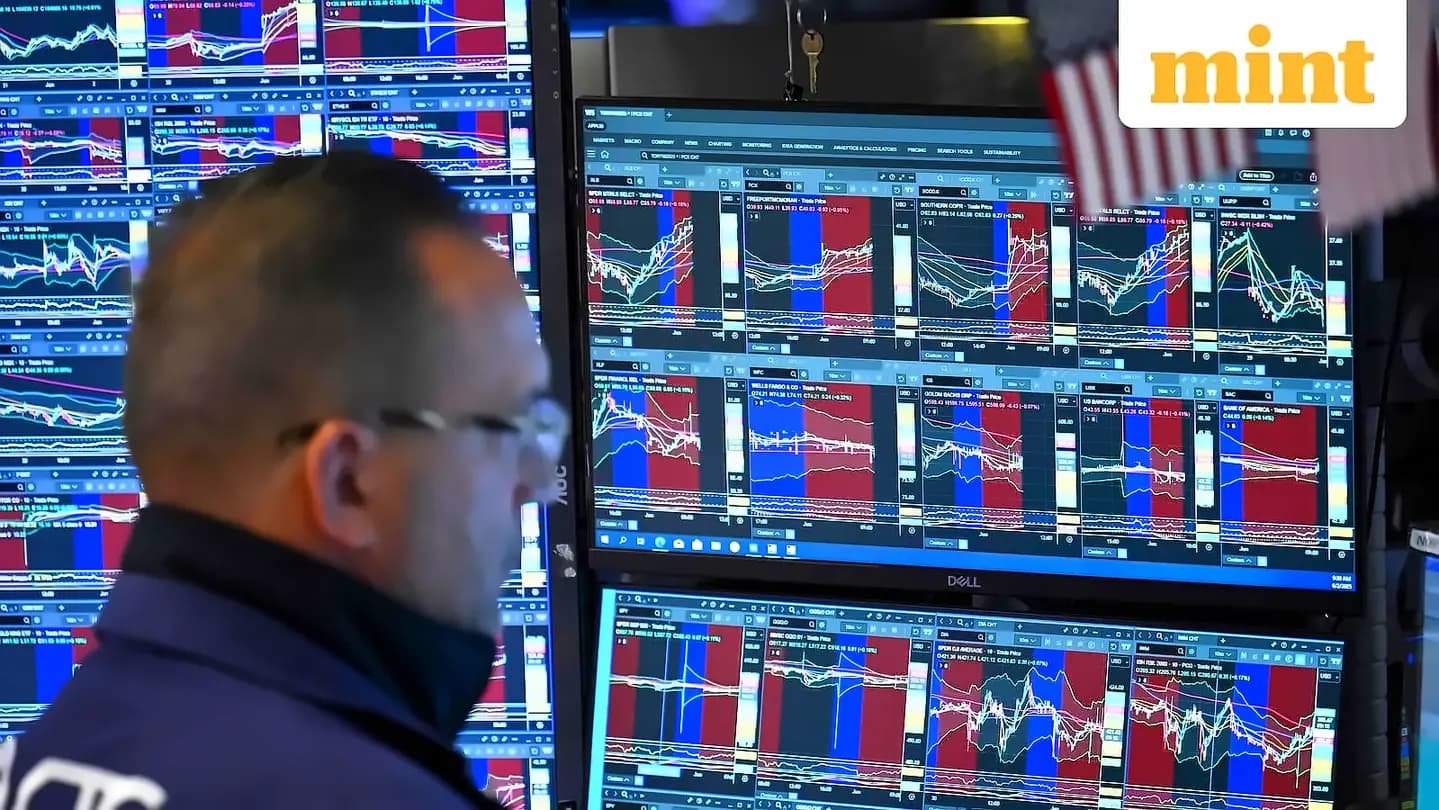
US equity markets experienced a modest decline on Thursday as the Dow Jones Industrial Average fell 0.05%, the S&P 500 dropped 0.30%, and the Nasdaq Composite declined 0.48%. At the opening bell, the Dow Jones fell 25.5 points to 49,983.8, the S&P 500 dropped 22.2 points to 7,410.78, while the Nasdaq Composite declined 126.7 points to 26,143.616. The decline came as crude oil prices surged following a report that Iran's Supreme Leader Ayatollah Mojtaba Khamenei ordered the country's near-weapons-grade uranium not be sent abroad, dimming hopes for progress in talks between Washington and Tehran. This represents a shift from Wednesday's rally when markets had gained over 1% on Middle East peace optimism.
Nvidia delivered mixed results that drew a tepid reaction from investors, even as the chipmaker reported sales forecast that exceeded Wall Street expectations. For the second quarter, the company anticipates revenue between $89.1 and $92.8 billion, significantly above Wall Street expectations of $87.3 billion. However, sales in the three months ending in July will be about $91 billion, the chipmaker said, with analysts estimating $87 billion on average and projections ranging as high as $96 billion. The company also increased its quarterly dividend to 25 cents a share from a penny and announced $80 billion in stock repurchases. Nvidia shares closed up 1.3%, but after-hours trading was volatile after the company forecast second-quarter revenue above Wall Street expectations and announced an $80 billion share buyback program. The company's strong performance comes as investors look for a strong signal on AI demand, with the Philadelphia SE Semiconductor index (.SOX) rallying 4.5% before the results, including Astera Labs up 17.7% and ARM Holdings U.S. traded shares up 15%. Technology is driving the bus again today, and the AI theme, according to Carol Schleif, chief market strategist at BMO Private Wealth.
Crude oil prices experienced dramatic surges as developments regarding Iran's nuclear program weighed heavily on energy markets. West Texas Intermediate crude rose sharply following reports that Iran's Supreme Leader Ayatollah Mojtaba Khamenei ordered the country's near-weapons-grade uranium not be sent abroad, providing substantial relief to markets that had been pressured by rising energy costs. This represented a significant shift from earlier trading when West Texas Intermediate crude fell 5.5% to $98.47 a barrel on Middle East peace optimism. Futures on Brent crude, the international benchmark, gained roughly 2.4% to trade above $109 per barrel, while US WTI crude futures rose 2% to trade at $102. The oil price strength provided relief to markets that had been pressured by rising energy costs, with the decline helping to improve overall investor sentiment during the trading session. Falling oil prices had previously boosted sentiment around airline stocks with Delta Air Lines, United Airlines, Southwest Airlines and Alaska Air advancing between 6% and 10%, while cruise companies Carnival Corp and Norwegian Cruise Line Holdings led the discretionary sector's percentage gains with both adding more than 8%.
Treasury yields experienced significant declines following the Middle East developments, providing relief to markets that had been under pressure from rising bond yields. The 10-year Treasury yield declined nine basis points to 4.57%, while Germany's 10-year yield declined 10 basis points to 3.10% and Britain's 10-year yield declined 14 basis points to 4.99%. This marked a notable improvement from recent sessions when the 30-year US Treasury yield hit its highest level in nearly 19 years, while the 10-year Treasury touched its highest level since January 2025. The bond market had been a key concern for investors, with the 30-year yield hitting its highest level since 2007, and the 10-year yield nearing multi-year highs. Stocks gradually added to gains following the release of minutes from the Federal Reserve's last meeting, which showed more officials saying the central bank should lay the groundwork for a possible rate hike. Bets for a Fed rate hike in December were choppy after the meeting and recently showing a 36.8% probability, down from 42% on Tuesday, according to the latest data from CME Group's FedWatch tool. Advancing issues outnumbered decliners by a 3.39-to-1 ratio on the NYSE, with 18.73 billion shares changing hands compared with the 18.55 billion moving average for the last 20 sessions.
Among the 11 major S&P 500 sectors, eight advanced on Wednesday with the biggest gains in consumer discretionary (.SPLRCD), up 2.5%, followed by technology (.SPLRCT), which rallied 2.5%. On the flip side, energy (.SPNY) dropped 2.6%, while consumer staples (.SPLRCS) slipped almost 1% with pressure from Target shares sinking 3.9% after it warned of a challenging macroeconomic backdrop even as it doubled its annual sales growth forecast. Intuit shares declined 3.9% after Reuters reported that the company is laying off about 3,000 employees. On the Nasdaq, 3,711 stocks rose and 1,144 fell as advancing issues outnumbered decliners by a 3.24-to-1 ratio, with the S&P 500 posting 19 new 52-week highs and 15 new lows. Advancing issues outnumbered decliners by a 3.39-to-1 ratio on the NYSE, where there were 220 new highs and 119 new lows. Carol Schleif noted that "they really want to look beyond what's going on in the Middle East" and focus on the potential of AI, with investors swapping concerns about rising rates and potential inflation for optimism about the all-things-AI story. "Everyone wants to see this end, but negotiations so far have been far apart on key issues, with both sides expecting each other to blink first," said veteran strategist Louis Navellier. "Even if a deal is struck, it may take some time to be sure it won't be violated for things to fully return to normal."