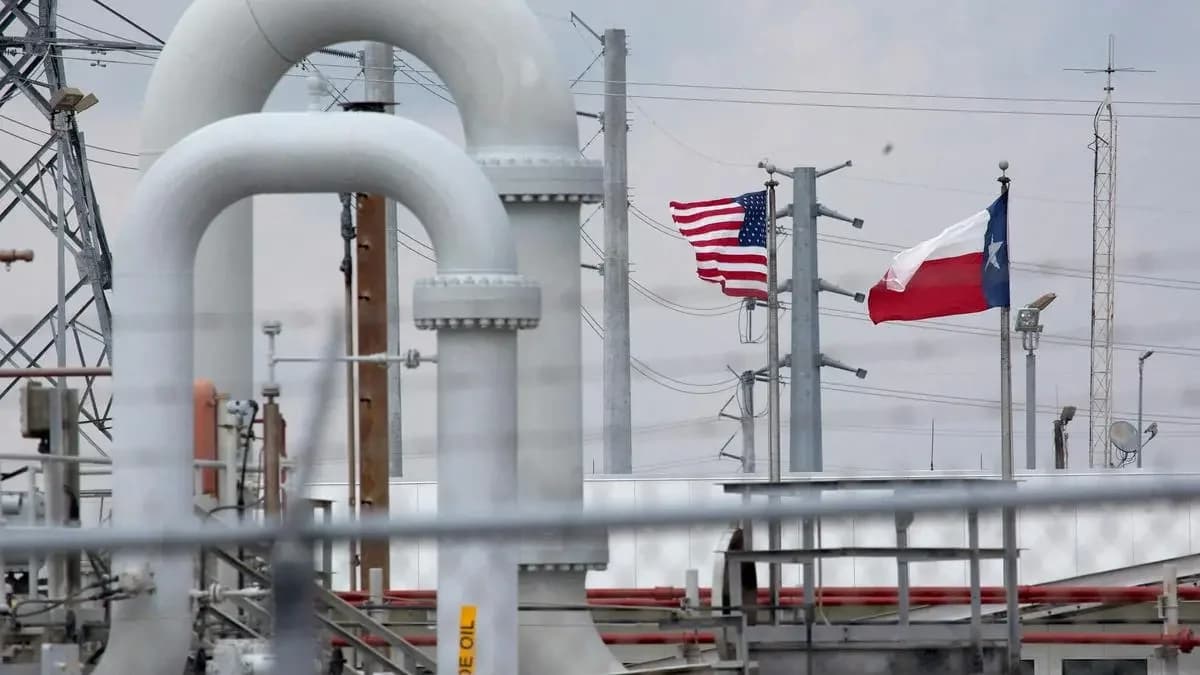
After weeks of declining fuel costs, average petrol prices in the United States have climbed back to $4 per gallon, with the national average price reaching $4.0030 per gallon on Monday, according to motor club federation AAA. The latest increase represents a significant escalation from $3.14 per gallon during the same period last year, with national average retail gasoline prices climbing more than 30% since the US and Israel attacked Iran at the end of February. As reported by Reuters, the $4 per gallon mark, a price point of financial pain for many households, was last reached in late March, after Iran halted traffic through the Strait of Hormuz. The average price is up around 13 cents over the past week, with gasoline prices rising alongside oil prices as fighting between the United States and Iran intensified. Brent crude briefly climbed above $90 a barrel for the first time since early June on Monday, rising roughly 16% over the past week, while West Texas Intermediate is up around $12 a barrel this month. Gasoline prices rose alongside oil prices, with the war with Iran and renewed closure of the strait not being the only factors driving prices higher.
The $4 per gallon average masks significant differences across the country, with motorists in several states already paying more than $4 per gallon for some time, while prices remain lower elsewhere. According to The Times of India, the variation is driven by factors including local fuel supply and state tax rates. About half of America's states still have an average price below $4 a gallon, with Indiana having the lowest average price at $3.35 a gallon and California being the most expensive at $5.49 per gallon, according to AAA. Washington state and Hawaii also have average prices above $5 per gallon. Low U.S. fuel inventories also boosted prices, with U.S. stockpiles standing at 210.5 million barrels last week, about 1.5 million barrels below the five-year average, as reported by Reuters.
With no progress on the reopening of the strait, which usually sees roughly a fifth of the world's seaborne oil flows, shipping through the critical waterway has fallen once more. Traffic hit a three-week low on Friday, July 17, with only eight crossings, as reported by Bloomberg. The US launched a fresh round of airstrikes targeting military and communications targets in Iran, while Iran continued its own wave of strikes against US military installations inside Gulf nations, including Kuwait, Bahrain, and Jordan, killing at least three US service members. Prices pulled off their highs overnight after Iran said mediators from countries including Pakistan and Qatar contacted leaders in Tehran, as the market watches for any sign of diplomatic progress. Before the Iran war about 20% of global oil supplies flowed through the strait, making its closure a critical disruption to global energy markets. The latest escalation has pushed oil prices to new highs, with Brent crude topping $126 a barrel in late April before retreating as strategic stock releases and weaker demand eased market tightness.

Roughly 2.1 million barrels per day of the 3 million bpd of refinery capacity remain offline, while Russia's refinery exports continue to fall amid bombardment by the Ukrainian military. The 3-2-1 crack spread, a commonly cited benchmark for the refining market, reached an all-time high above $70 per barrel on Friday, per Bloomberg data. Distillate cracks in both the US and Europe have surged toward record highs — an indication that the shock is increasingly becoming a refining story rather than simply a crude supply story, according to JPMorgan head of global commodities Natasha Kaneva. In the US, where the inflationary impacts of the war have become a key economic issue, gasoline prices at the pump crossed $4 per gallon again, reapplying pressure to the American domestic economy only three months ahead of the US midterm elections. Energy prices have also been supported by the loss of Russian refining capacity due to Ukraine intensifying attacks on energy infrastructure, as reported by Reuters.
High pump prices have become a political flashpoint for US President Donald Trump and his Republican Party, which will soon be campaigning to hold on to thin majorities in the US Congress in November midterm elections. The escalating fuel costs have created additional pressure on the Trump administration as it faces mounting political challenges ahead of the midterm elections. Retail fuel prices and crude oil typically move in the same direction because crude feedstock is the dominant cost for producing the fuel, with the current conflict creating a perfect storm of supply disruptions and geopolitical tensions that continue to drive prices higher across the energy complex. Market analysts warn of potential further escalation, with Goldman Sachs' chief economist Jan Hatzius noting that more attacks on tankers and Middle East infrastructure could push prices back to the $100+ range, while the market may still be underestimating risks from the latest escalation.