China and the United States have reached a comprehensive reciprocal tariff-reduction arrangement covering $30 billion worth of non-sensitive goods in each direction, according to China's state news agency Xinhua. The agreements were part of an eight-point consensus reached during Xi's meetings with US President Donald Trump. Under the newly operationalised US-China Board of Trade, the two countries agreed on recommendations covering $30 billion of non-sensitive goods in each direction. According to the White House, products covered on the US export side include agricultural products, fish and seafood, logs and wood products, and cosmetics and medical devices. For Chinese exports to the US, the list includes consumer products such as small appliances, toys, holiday decorations, and children's car seats. The $30 billion figure refers to the value of goods receiving more favourable tariff treatment, rather than a $30 billion reduction in tariff revenue.
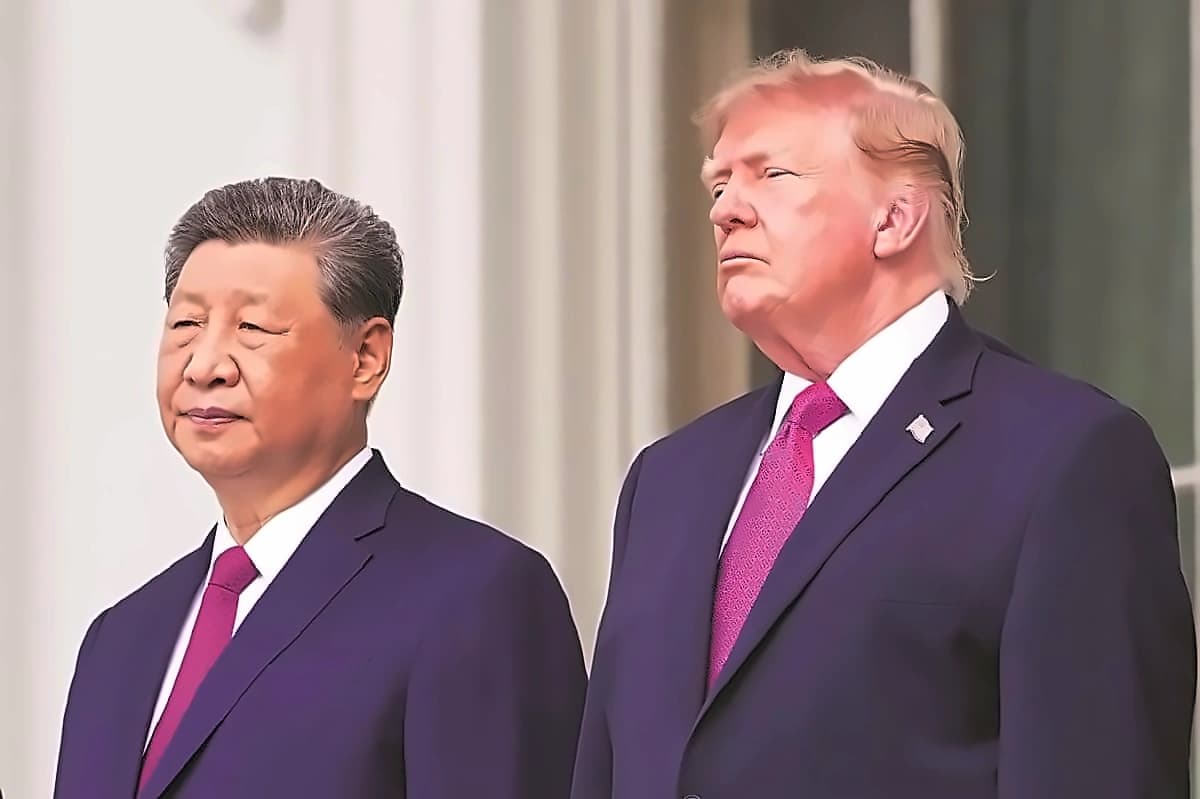
The much-anticipated summit between US President Donald Trump and Chinese President Xi Jinping displayed more pomp and circumstance than substantive progress. According to Business Standard, the event, which critics described as 'diplotainment', did not resolve deep differences over trade, artificial intelligence (AI), rare earths, technology controls and transfer, Taiwan, and Iran. There was no joint statement after the three-day visit — the first visit by a Chinese President to the White House in a decade — nor a joint press conference. The White House also chose to highlight the personal tour Mr Trump gave Mr Xi of the new helipad on the White House South Lawn, with Mr Trump choosing to break protocol and travel to Maryland to meet Mr Xi at the Andrews Air Force Base.
Beyond the trade agreement, China and the United States have decided to create a new bilateral dialogue on artificial intelligence after Chinese President Xi Jinping's three-day state visit to the US. As per Reuters, the latest arrangement was carried out by the creation of a bilateral trade council and an agreement to extend the outcomes of earlier negotiations in Kuala Lumpur. This new dialogue framework represents a significant development in managing the competitive relationship between the world's two largest economies in the critical AI sector. The agreement comes as AI has become one of the most important areas of competition between Washington and Beijing, with neither side showing much willingness to slow technological development despite concerns from technology executives about the potential dangers of advanced AI.
The summit comes after Washington and Beijing agreed to extend their trade truce by two months, with US Treasury Secretary Scott Bessent saying the arrangement would now run beyond its November 10 deadline to January 10. The latest agreement therefore does not represent the end of the wider US-China trade disputes. Instead, it adds another mechanism for managing tariffs and trade in selected non-sensitive products. For global markets, the extension matters because it lowers the near-term risk of another tariff shock between the world's two largest economies. However, for global markets, the extension does not resolve deeper disputes between Washington and Beijing over industrial subsidies, export controls, technology access, intellectual property protection and market barriers. The truce gives companies and investors a clearer window for planning, but technology stocks fell sharply as investors reacted to the lack of major progress.
President Trump and President Xi Jinping are meeting in Washington this week, marking Xi's first visit to the US in a decade. The most striking element of the visit is Beijing's decision not to bring prominent Chinese business leaders, according to sources cited in initial reports. This contrasts with expectations of business-focused diplomacy and with Trump's earlier visit to Beijing, when he travelled with a group of US corporate leaders. The move appears deliberate, as Chinese CEOs, particularly from technology and industrial sectors, could become targets for uncomfortable questions over subsidies, data rules, export controls and industrial overcapacity. Their presence could also complicate negotiations at a moment when both governments may prefer state-to-state bargaining over corporate theatre.
The conflict involving Iran is also expected to feature in the Trump-Xi meeting, with Trump saying the war would be part of the discussions, even after previously accusing Beijing of providing Tehran with intelligence. China is Iran's largest oil customer and biggest trading partner and has been developing alternative payment mechanisms that reduce its dependence on the US-led financial system. For financial markets, Middle East tensions remain closely tied to oil prices, shipping risks and inflation expectations. If the two leaders discuss Iran, investors will watch whether the conversation lowers risks or exposes another area of confrontation. The diplomatic thaw also had an unusual India connection, with US Ambassador Sergio Gor attending a Chinese embassy reception in New Delhi to mark the 77th anniversary of the founding of the People's Republic of China, described as rare given limited US participation at such events in recent years.
Asian markets showed mixed response ahead of the summit, with Hong Kong, Shanghai and Taipei in negative territory, while Japan's Nikkei rose 1.6 percent after reopening from a three-day break. South Korea's tech-heavy Kospi was closed for a holiday, limiting regional read-through from semiconductor investors. The Trump-Xi meeting is unlikely to settle the structural rivalry between the US and China, but the extended trade truce, Beijing's cautious delegation strategy and focus on AI and Iran give investors several signals to track. According to The Asia Group senior adviser Evan Medeiros, the stability sought by both governments is driven by their intense strategic competition, with the fact that they are meeting and dialogue is occurring being as important as outcomes from the meeting. The key element of the visit was the status quo, with the summit yielding few substantive gains despite the diplomatic pomp.