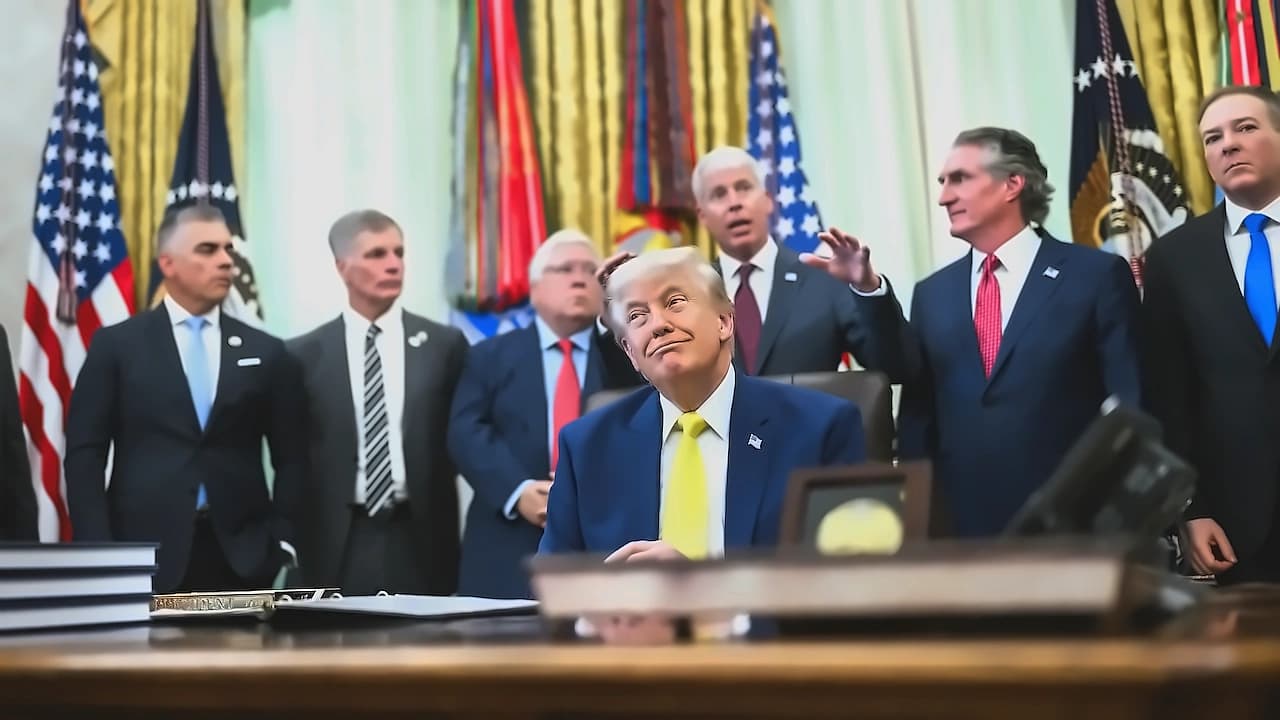
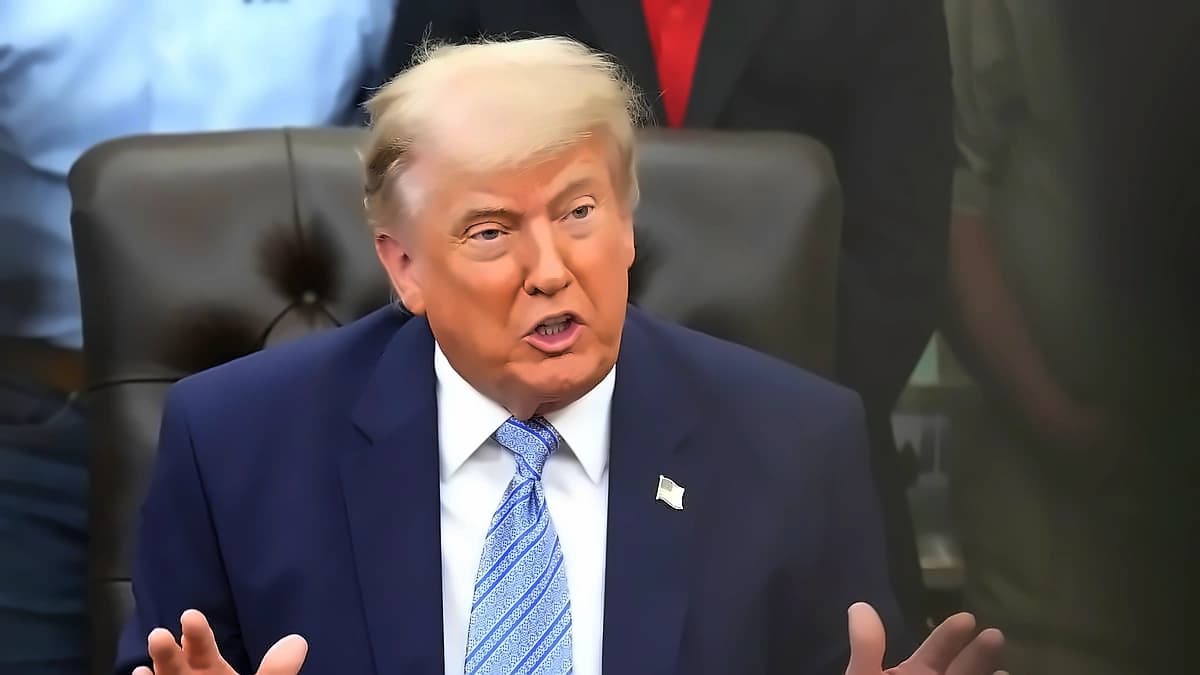
US President Donald Trump has significantly escalated his demands for Muslim-majority nations to sign the Abraham Accords as part of a potential Iran peace deal. In his latest Truth Social post, Trump wrote: "It may be possible that one or two have a reason for not doing so, and that will be accepted, but most should be ready, willing, and able to make this settlement with Iran a far more historic event than it would otherwise be." He specifically demanded that "It should start with the immediate signing by Saudi Arabia and Qatar, and everybody else should follow suit. If they don't, they should not be part of this deal in that it shows bad intention." Trump emphasized that "support and cooperation" with Arab and Muslim nations would be "further enhanced and strengthened by their joining the Nations of the historic Abraham Accords," adding "Who knows, perhaps the Islamic Republic of Iran would like to join, as well!" The proposal came as the emerging Iran deal from fellow Republicans who favor a harder line on Iran, and it could add new diplomatic complications to the negotiations. Trump pointed to Saudi Arabia and Qatar as countries that should "immediately" sign on, stating "after all the work done by the United States to try and pull this very complex puzzle together, it should be mandatory that all of these Countries, at a minimum, simultaneously sign onto the Abraham Accords."
Pakistan Defence Minister Khawaja Asif has publicly pushed back against the suggestion, stating he was personally opposed to Islamabad joining any arrangement that conflicts with the country's "fundamental ideologies." As reported by CNN, Asif said during an interview with Samaa TV: "Personally, I don't think we should join any such accord which clashes with our fundamental ideologies." Reiterating Islamabad's long-standing policy, he emphasized that Pakistan would not recognize Israel until an independent Palestinian state based on pre-1967 borders with East Jerusalem as its capital is established. Asif questioned Israel's credibility as a negotiating partner, asking: "How will you sit with those people whose word cannot be trusted for even a single day?" However, Pakistani officials have yet to comment on Trump's latest demand, with Foreign Office spokesperson Tahir Andrabi previously stating that Islamabad's position requires "the creation of a viable contiguous state of Palestine, with Al-Quds Al-Sharif (Jerusalem) as its capital." Masood Khan, Pakistan's former ambassador to the United States, said it remains to be seen how workable the proposal might be for the countries on Trump's list. "The invocation of the Abraham Accords at this stage gives an altogether new dimension to the diplomatic and mediatory processes because this issue was not on the agenda," Khan said, pointing to the domestic pressure Trump is facing to strike a favorable deal. Still, Khan said, "the diplomatic track is still working, and I believe Pakistan is very much at the center of it, supported by regional countries."
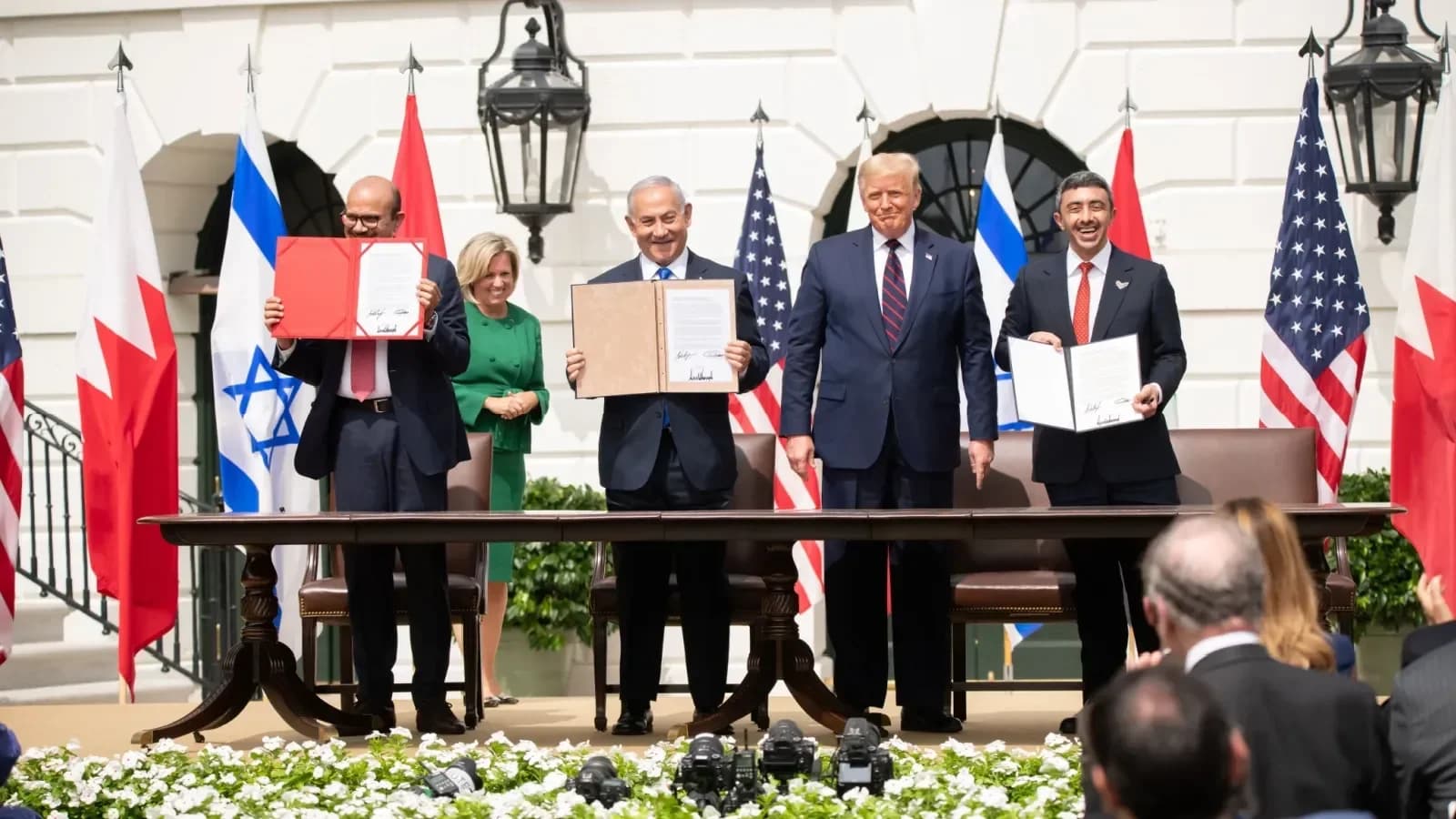
The situation is similarly complicated for several Arab states, with Saudi Arabia maintaining that normalization with Israel would require credible progress toward Palestinian statehood. According to CNN analysis, the Gaza conflict triggered by the October 7, 2023 Hamas attacks on Israel and subsequent Israeli military offensive has caused massive civilian casualties and destruction in the enclave. The continued Israeli military operations in Gaza, tensions in the West Bank and escalating confrontations involving groups such as Hezbollah have sharply reduced political space for Arab governments to openly engage with Israel. Gulf states are currently more focused on regional stability, economic security and the fallout from the Iran conflict than on expanding diplomatic ties with Israel. Egypt and Jordan already formally recognize Israel and have long-standing peace treaties, while Turkey first recognized Israel in 1949. However, Saudi Arabia in particular has for decades called on Israel to return to its 1967 borders and allow the formation of a Palestinian nation with east Jerusalem as its capital. Islamabad-based analyst Syed Mohammad Ali said Pakistan's position on Israel remains unchanged despite Trump's latest proposal. The accords are a series of diplomatic, economic and security agreements created with U.S. influence during Trump's first term, which also saw Sudan, Morocco, and, more recently, Oman join.
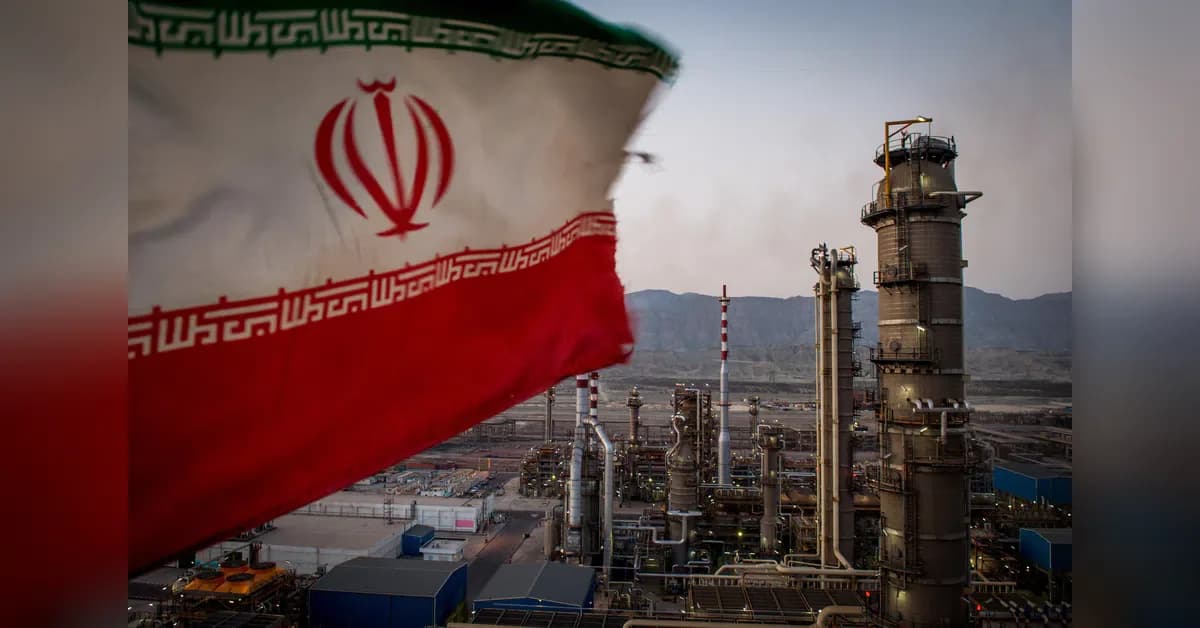
Trump's demands come as Iran peace negotiations appear to be in final stages, with the President stating talks were "proceeding nicely" and threatening to resume strikes if a deal is not reached in a "limited timeframe." Over the weekend, Trump "said that a memorandum of understanding on a peace deal had been "largely negotiated" with Iran and would open the Strait of Hormuz, with details to be unveiled soon." Meanwhile, Chief of Defence Forces and Chief of Army Staff Field Marshal Asim Munir undertook a high-stakes visit to Tehran over the weekend, marking the most consequential mediation effort since the direct talks hosted by Pakistan last month. According to Inter-Services Public Relations (ISPR), Field Marshal Munir held "high-level engagements" with Iranian leadership including President Masoud Pezeshkian, parliament speaker and chief negotiator Mohammad Bagher Ghalibaf, Foreign Minister Abbas Araghchi and Interior Minister Eskandar Momeni. ISPR stated that "intensive negotiations over the last twenty-four hours have resulted in encouraging progress towards a final understanding," though the statement stopped short of announcing any breakthrough. However, the U.S. military said Monday that it carried out "self-defense" strikes in southern Iran, including on missile launch sites and boats placing mines, even as Trump said negotiations were proceeding nicely. The strikes were done "to protect our troops from threats posed by Iranian forces," but the military was "using restraint during the ongoing ceasefire." There was no official response from Iran, which had sent its parliament speaker Mohammad Bagher Qalibaf to Qatar for negotiations over the possible deal with the U.S.
The negotiations occur against the backdrop of the ongoing US-Iran war, which began with strikes on February 28, with Tehran launching retaliatory missile strikes at US bases in neighboring Gulf states. A congressional report detailed that over the course of Operation Epic Fury, the US lost 42 aircraft, including fighter jets and support planes. Since the opening strikes, a ceasefire was agreed upon with the help of mediators Pakistan on April 8, before being extended indefinitely on April 21 at Islamabad's request. The Abraham Accords themselves remain unpopular among the public in many parts of the region, not least because they do not tackle the Israeli-Palestinian conflict, with the nations named by Trump having traditionally advocated for a two-state solution as a precursor to any Israel normalization discussions. The Strait of Hormuz, through which a fifth of all crude oil and natural gas traded once passed, remains effectively in Iran's chokehold, disrupting global energy markets. The strikes were the latest attacks to shake the weekslong ceasefire in the war, with Iranian state television separately reporting blasts around Bandar Abbas, a city on the Strait of Hormuz home to a military port and a dual-use airport.