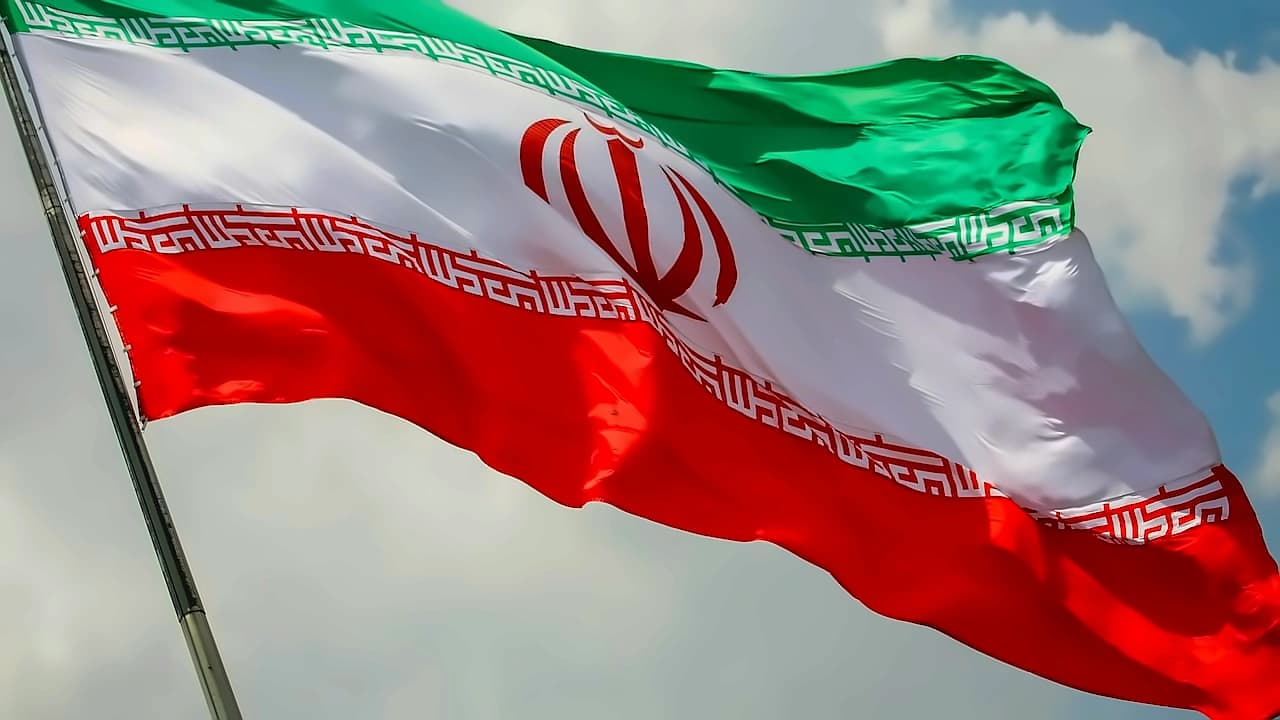
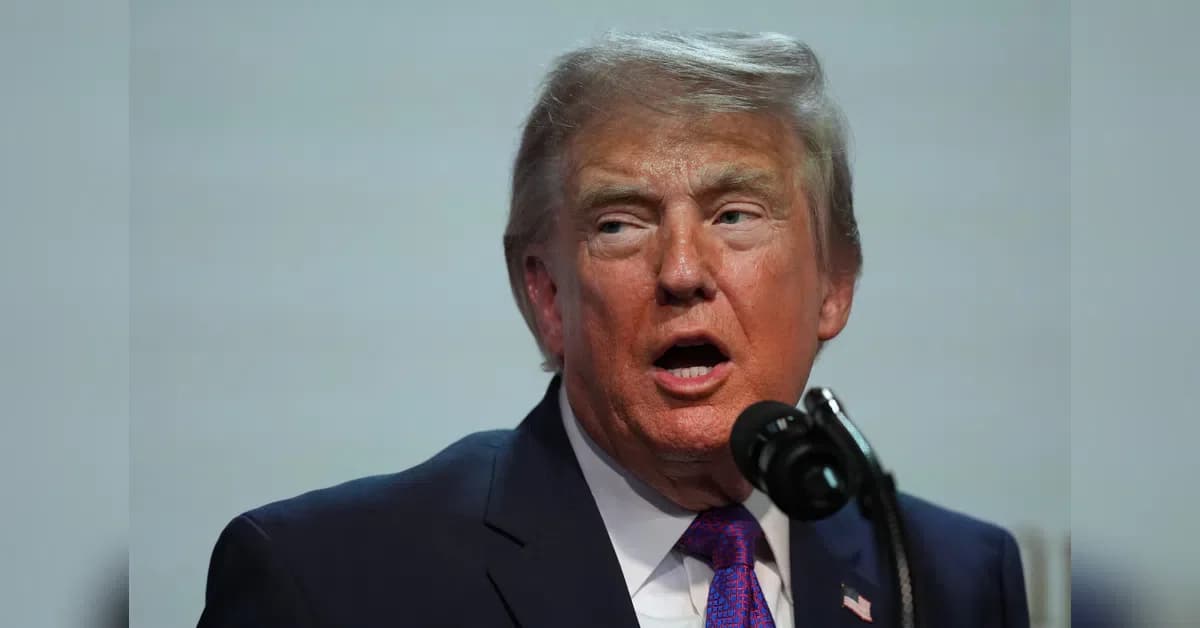
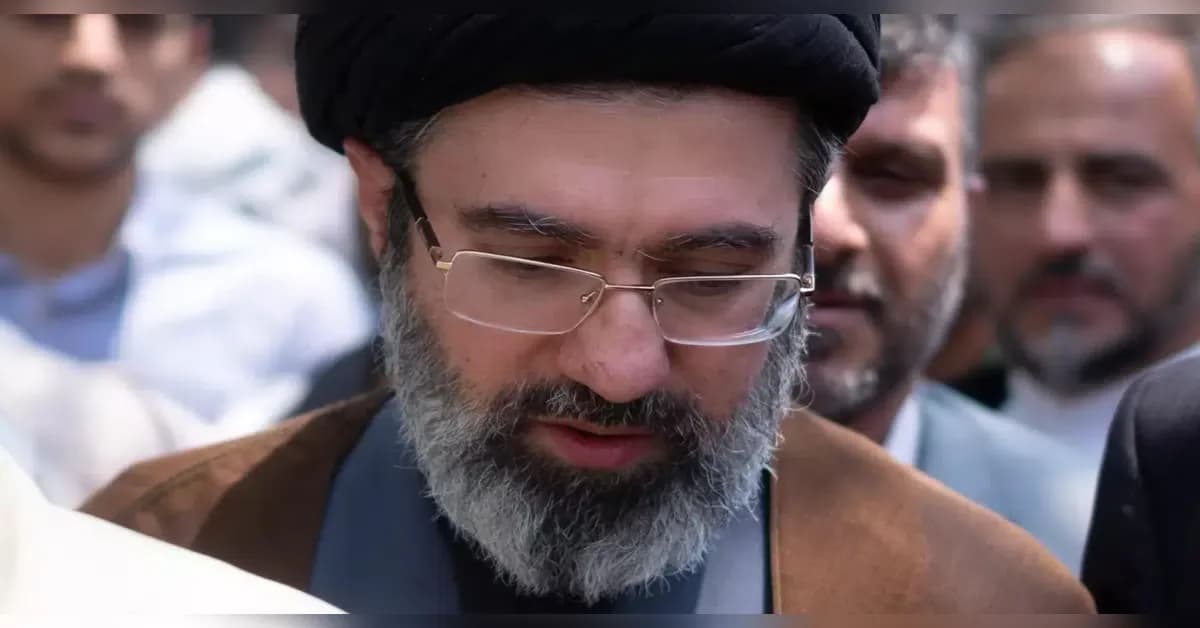
US President Donald Trump announced a new proposal to Iran involving the retrieval and destruction of Iran's enriched uranium stockpile. Speaking to NBC News' 'Meet the Press', Trump said 'If we make a deal that now we're friendly, we'll all go together. It'll be our equipment. We'll take it out and destroy it, whether it's on-site or whether we take it off-site.' The President emphasized that 'Now, if we don't make a deal, then we're going to take them out militarily very harshly. And we'll wait till we do that before we go, in which case we'll have safety either way.' Trump stated that no sanctions on Iran would be lifted or assets unfrozen upfront until the peace deal is reached, adding that 'If they behave, if they do a good job, we start talking.' In his latest interview, Trump described negotiations with Tehran as being very close to a breakthrough but said he is seeking stronger language in the agreement to prevent Iran from obtaining nuclear weapons through purchases or transfers from third parties. Trump also confirmed he is not demanding that Lebanon be a part of a short-term deal with Tehran and said he is finding Iran's new leadership to be 'more rational, very smart' and was open to speaking with Iran's new supreme leader Mojtaba Khamanei.
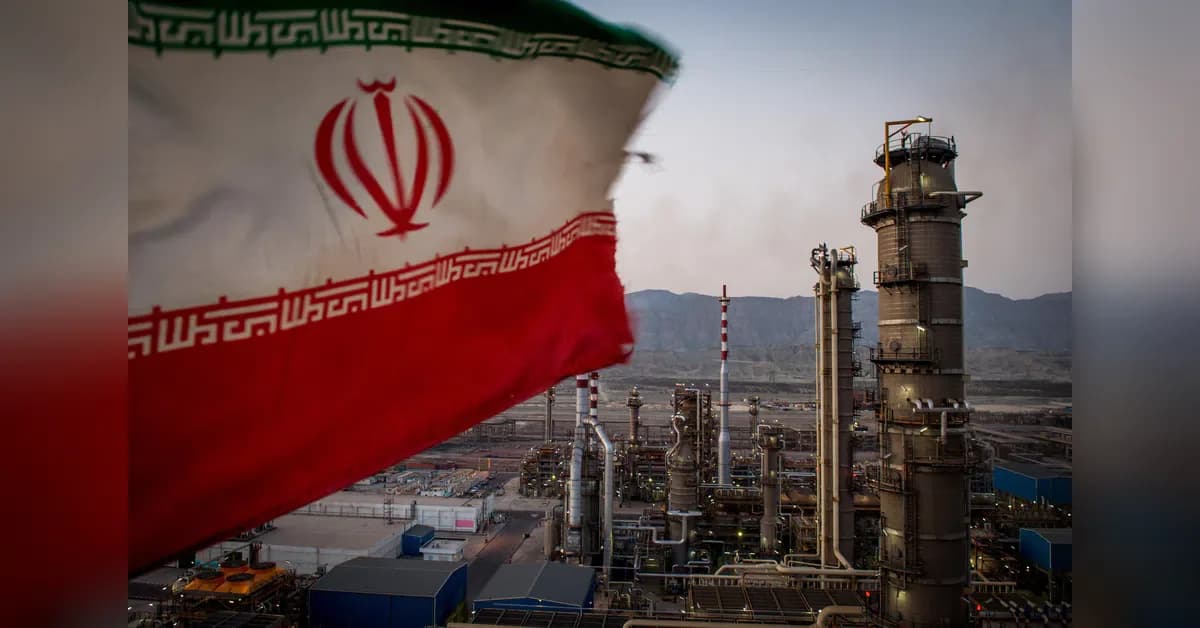
The World Food Program has warned that millions of people are being pushed into acute hunger by the Iran war, as reported by Business Standard. The UN food agency found that an additional 2.5 million people in Somalia, 2.3 million in Afghanistan and 1.3 million in Sri Lanka are struggling to meet their basic food needs. In March, WFP predicted that 45 million people could be pushed into food insecurity by the end of June, which would be on top of the 318 million people around the world who are already food insecure. WFP's acting Executive Director Carl Skau told UN reporters that 'We remain by that prognosis,' citing the tight correlation between energy and food prices in many places, particularly affecting the poorest countries where people already spend all their money on food.
The International Atomic Energy Agency (IAEA) has concluded that the possibility of Iran developing a nuclear weapon is now higher than it was before the United States and Israel first attacked the country in February. As reported by Bloomberg, the agency warned its member states that Iran already has a large stockpile of enriched uranium that is close to weapon-grade, and it can continue the enrichment to achieve weapon-grade nuclear material. The IAEA pointed out that this stockpile was subject to regular inspections by the IAEA, but Iran suspended these inspections following Israel's and the U.S. strikes last June. The agency stated that 'This gives rise to a proliferation concern as this nuclear material, which the agency was not able to verify, includes a large amount of high-enriched uranium.'
Iran has formally argued that normal safeguards inspections are no longer feasible, according to a February 2026 response to the IAEA. As reported by Reuters, Tehran stated that 'in light of prevailing circumstances … the expectation of the normal implementation of safeguards in Iran is, from legal, technical, and operational perspectives, untenable.' Iran also claimed that facilities at Isfahan that inspectors sought to visit had been subjected to 'illegal military attacks', further justifying its suspension of cooperation. The IAEA has repeatedly sought access to affected sites, including the Isfahan Fuel Enrichment Plant, and remains prepared to conduct long-delayed inspections either at the facility itself or at an alternate location arranged by Iranian authorities.
According to the IAEA, Iran maintains a stockpile of 440.9 kg of uranium enriched up to 60 per cent purity, which represents a short, technical step away from weapons-grade levels of 90 per cent. As reported by Associated Press, this stockpile could allow Iran to build as many as 10 nuclear bombs, should it decide to weaponise its programme. IAEA director general Rafael Grossi warned that such highly enriched nuclear material should normally be verified every month according to the IAEA's guidelines, but current conditions prevent this monitoring. Grossi emphasized that while the stockpile represents a technical capability, it doesn't necessarily mean Iran has such weapons.
In response to the IAEA report, the White House dismissed the agency's conclusions as 'an indescribably stupid analysis', according to New York Post. As quoted by the White House, 'Suggesting that Iran can more capably produce a nuclear weapon with no functioning nuclear enrichment facilities or military defenses is an indescribably stupid analysis by Bloomberg.' According to Bloomberg, IAEA director general Rafael Mariano Grossi stated that 'We are not a party to this negotiation. We participated until the last round which ended in February.' Grossi emphasized that 'Something that is not verifiable will lead to a bad agreement,' further complicating the situation for the United States. The IAEA's 35-nation board of governors plans to meet next week, with the agency's involvement as verifier of any peace deal considered essential for any agreement to be considered viable.