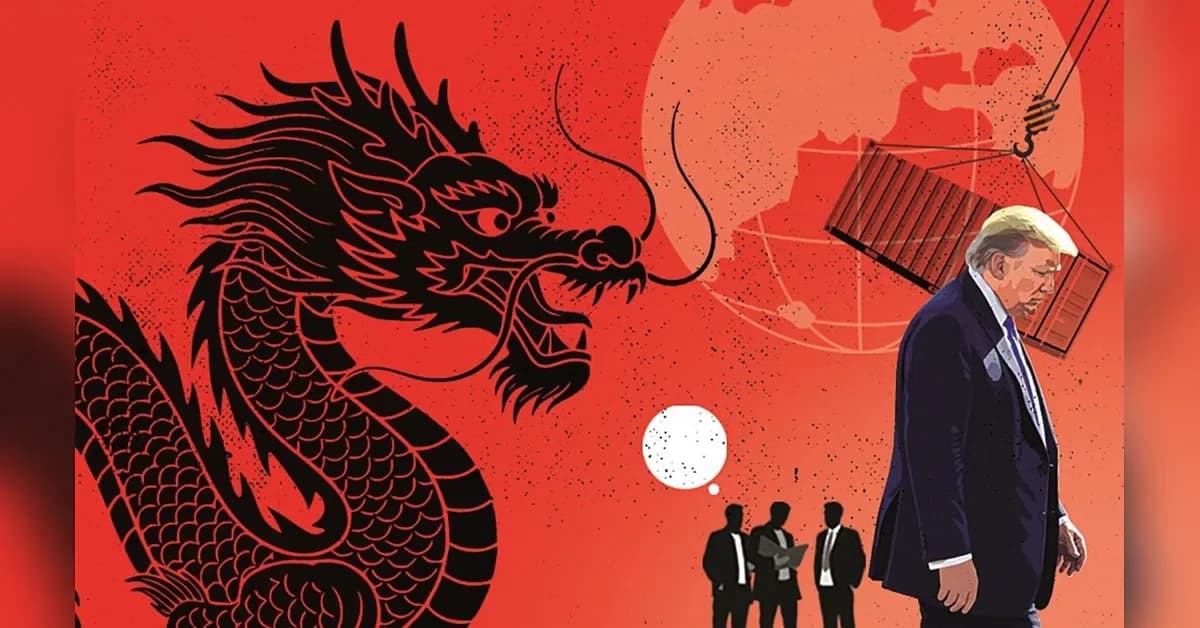
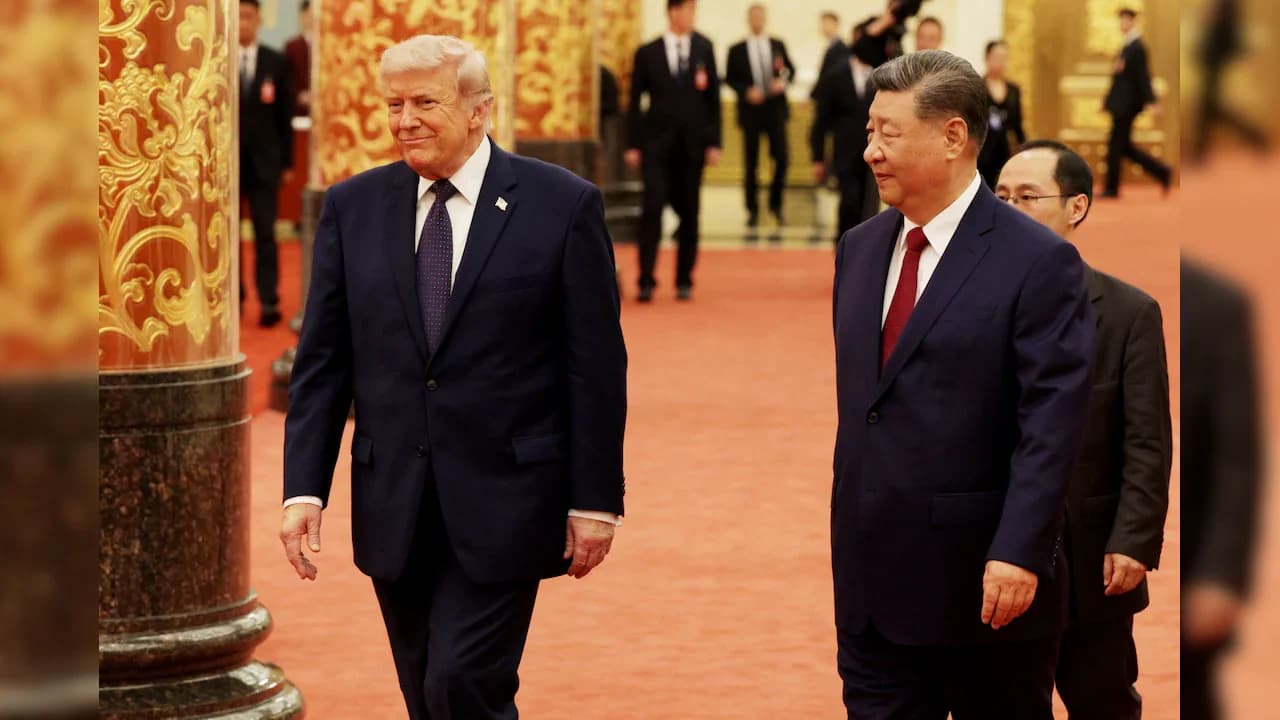
US President Donald Trump's recent visit to China has revealed the failure of his signature China policy, according to reports from Business Standard. Chinese President Xi Jinping described the current state of US-China relations as 'constructive strategic stability', indicating that no disruptive shifts are expected and China's rise will continue unimpeded. This represents a significant departure from Trump's original promise to push back against China throughout his political career, with the President now acknowledging that tariffs have failed to force Beijing into concessions. As Reuters reports, compared to where relations were a year ago with 145% tariffs, the current phase represents a 'counterrevolution' back to stability. However, the visit's significance extends beyond diplomatic relations to reveal the broader failure of Washington's aggressive trade strategy.
The visit highlighted the extreme desperation of US corporations for access to China's massive market, with Trump traveling alongside dozen top US corporate executives including Elon Musk of Tesla, Jensen Huang of Nvidia, and Tim Cook of Apple. As reported by multiple sources, these billionaires were effectively treated as shadow government officials, with Trump boasting about the corporate entourage on his Truth Social platform. The presence of these executives demonstrates the stark reality that China's population of 1.4 billion people includes the largest middle class on Earth, with Brookings Institution researchers estimating 1.2 billion Chinese in the middle class by 2027. This represents a quarter of the entire world's middle class, making China the world's largest middle-class consumption market segment. Despite Trump's effusive praise for Xi Jinping, the visit produced no major corporate deals, with Reuters reporting that Trump's boasted 200 Boeing aircraft orders fell short of analyst expectations for 500 planes, causing Boeing's stock to fall 4% in response.
The visit revealed the devastating consequences of Washington's scorched-earth campaign against China's technology sector, particularly in semiconductors. Nvidia CEO Jensen Huang's presence highlighted the stark failure of Washington's tech containment strategy, as his company's market share in China fell from 95% to zero following US restrictions on advanced chip exports. According to multiple reports, this campaign of tech warfare - known as the 'chip war' - has backfired spectacularly, with Beijing responding by pouring billions into domestic semiconductor development. China is now dominating the global market for legacy chips and is likely to catch up to US Big Tech companies very soon. The US military-industrial complex faces similar vulnerabilities, as it cannot manufacture weapons systems without Chinese rare earth elements, creating a political earthquake in Washington. Even major US think tanks like the Council on Foreign Relations now openly acknowledge that Beijing has 'the upper hand' and Washington 'has lost its leverage over China'.
The visit focused primarily on Taiwan's status, a conversation that Beijing initiated rather than the issues Washington would prefer, as reported by Business Standard. Trump expressed deep reluctance about American forces having to travel 9,500 miles to fight a war over Taiwan independence, though he maintained the policy of strategic ambiguity about US defence of the island. Xi reportedly pressed Trump on Taiwan issues and arms sales, particularly a $14 billion deal that Trump said he would decide on in a 'fairly short period'. The Chinese President emphasized that 'the Taiwan question is the most important issue in China-US relations'. According to Reuters, Xi warned Trump that mishandling the Taiwan issue could place the entire relationship in 'great jeopardy', while Beijing later said it sensed Washington 'understands China's position' and 'does not support or accept Taiwan moving toward independence'. Trump later told Fox News that 'nothing has changed' in US policy but acknowledged extensive discussions on the issue.
The summit produced 'modest, marketable and managed outcomes' that is about all the US-China relationship can bear right now, according to Reuters. While Washington highlighted incremental economic outcomes, Beijing appeared to secure broader symbolic gains. China advanced its preferred framing of bilateral ties, describing a new phase of 'constructive strategic stability' - a term the US did not formally adopt but officials signaled broad alignment on reducing miscalculations. However, this framing could allow China to challenge future US actions it views as destabilising, particularly in trade and technology policy. As Reuters reports, a White House official said 'President Trump leveraged his positive relationship with President Xi of China in order to bring home deliverables for the American people', though key areas of friction including technology restrictions and advanced chip sales remained unresolved. The visit marked the first time a sitting US president traveled to China since 2017, with Beijing not initiating the meeting but Washington requesting it. As Xi prepares for a potential visit to the United States later this year, the current phase of US-China relations appears to be stabilising, though without resolving core disputes over trade, technology, and Taiwan.