President Donald Trump is moving toward levying a new 7.5% tariff on China that would penalize the world's second-largest economy for flooding the global market with underpriced goods, according to three people familiar with the matter. The move appears to be a calibrated effort by the White House to work around a Supreme Court decision earlier this year that struck down Trump's plan to implement a sweeping, high-tariff scheme. Two people who spoke on condition of anonymity to discuss internal deliberations still being finalized said Trump is considering setting the new tariff at 7.5%, a level administration officials believe would not endanger the one-year trade truce between Washington and Beijing or a planned White House meeting between Trump and Chinese President Xi Jinping expected to take place in late September. The details of what rates would be suspended and for how long is still under negotiation, with Trump known to make last-minute demands or changes to trade announcements. The White House and the US Trade Representative's office did not respond to requests for comment on the tariff deliberations, which Bloomberg News reported earlier Monday.
The proposed tariff would bring Trump's second-term duties on Chinese goods to roughly 20%, though the final rate has not been approved. For US agriculture, the central question is not simply whether Washington adds another 7.5% tariff, but the bigger risk is whether Beijing responds by targeting American agricultural products. Previous US-China trade disputes demonstrated how quickly tariffs can redirect soybean and other commodity flows, with China remaining a crucial buyer in global agricultural markets. Soybeans would be among the commodities most exposed to a renewed agricultural trade confrontation because China can shift purchases between origins. Corn, sorghum, cotton, meat and other products could also face indirect effects if political tensions alter trade flows. For US farmers already managing commodity prices, input costs, crop insurance decisions and tighter operating margins, another period of uncertainty could complicate marketing and planting strategies. The White House has pushed back on reporting, saying tariff announcements would come directly from the administration and that discussion of potential measures should be regarded as speculation.
Beijing and Washington are also looking to extend their so-called trade pact, which established a one-year truce that's set to expire on November 10. Administration officials are hoping to publish the results of the excess capacity inquiry before Trump and Chinese President Xi Jinping meet in Washington on September 24. The timing of these developments suggests both sides are working toward a coordinated approach to address trade tensions. China's Commerce Ministry, in its July 27 statement, signaled continued vigilance: "We will continue to closely monitor and fully assess subsequent US measures, and reserve the right to take all necessary measures." For agriculture, preserving that truce could prove more consequential than whether the next US tariff is precisely 7.5%. If Washington and Beijing keep duties within negotiated boundaries and China avoids agricultural retaliation, disruption to farm markets could remain manageable.
The details of the overcapacity report have proven legally challenging, according to people familiar with the matter. US Trade Representative Jamieson Greer told Bloomberg Television in July that the excess capacity investigation would take longer than another on forced labor due to its complexity and that the delay had nothing to do with efforts to maintain the truce with Beijing. The Trump administration previously imposed a 12.5% tariff on Chinese goods in July, citing inadequate efforts to address forced labor practices, while Beijing criticized the move but stopped short of announcing retaliatory measures. These latest tariffs would mark the latest step by Trump to resurrect his protectionist trade agenda after the Supreme Court struck down his previous import taxes on products from China and dozens of other economies, while stopping short of escalating the trade conflict with Beijing beyond the agreed-upon threshold. A coalition of 25 states, including New York, California and Illinois earlier this month filed a lawsuit at the US Court of International Trade, adding to similar proceedings by small businesses that claim the levies are illegal. The states allege Trump unlawfully invoked Section 301 to replace tariffs that were struck down by the Supreme Court by using the forced-labour rationale as a pretext.
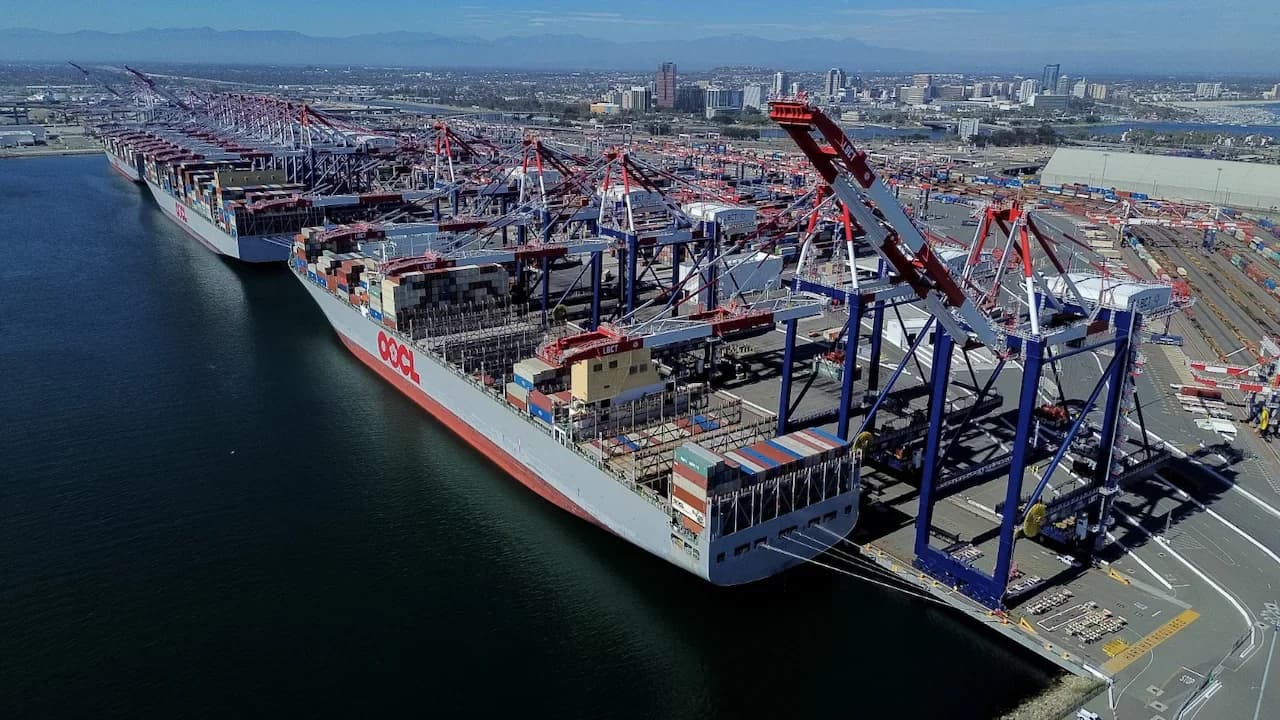
The proposed tariff would bring Trump's second-term duties on Chinese goods to roughly 20%, according to CNBC TV18, though the final rate has not been approved. The new tariff would come on top of existing tariffs of 10% to 12.5% announced last month for 60 economies around the globe that the Trump administration accused of failing to effectively enforce a ban on goods produced with forced labour. Many countries, including China, protested that move, which took effect just as the clock ran out on temporary tariffs Trump had turned to after the Supreme Court in February struck down sweeping "reciprocal" tariffs he levied on nearly every US trade partner. The excess industrial capacity probe of China was initiated under Section 301 of the Trade Act of 1974, which allows the president to levy tariffs against nations that discriminate against US companies or commerce. Washington's strategy follows a March investigation launched under Section 301 into excess manufacturing capacity among more than a dozen major US trading partners. The US has since refunded roughly ₹81-100 billion in duties collected under the struck-down authority, according to Investing.com. A decision by Beijing to alter purchases of US agricultural commodities could quickly reshape trade flows across the Americas. If China reduces purchases from the United States, Brazil would be positioned to capture additional Chinese soybean demand, as it has during previous periods of US-China trade friction.