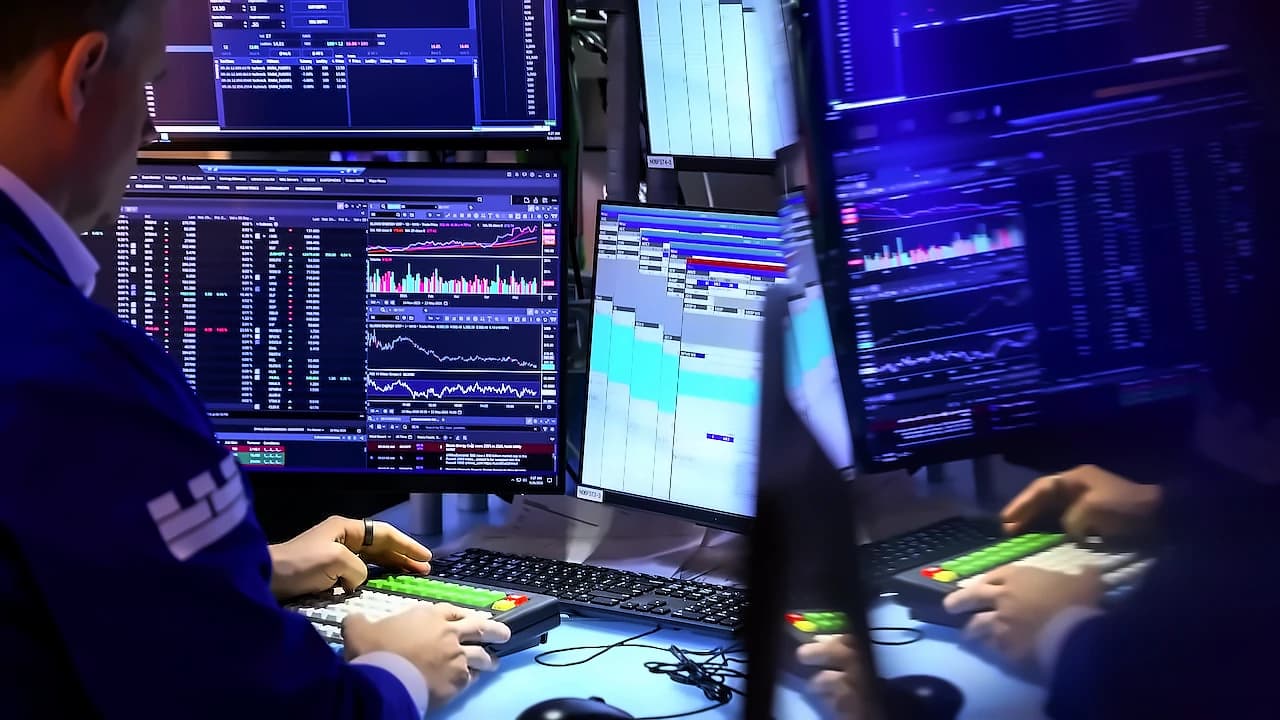
The Nasdaq 100 climbed 0.8% to reach its first record high since June, with semiconductor stocks extending their winning streak to six consecutive days. According to CNBC TV18, the Nasdaq Composite closed at a record high on Tuesday, gaining 0.45% to reach another all-time high, while the S&P 500 ended marginally lower by 0.01% at 7,764.27 points, hovering just below its August 13 record high. The Dow Jones Industrial Average fell 0.36%, creating a mixed performance across major indices. This marks the longest winning streak for the Nasdaq 100 since April this year, with the rally primarily driven by AI-related stocks, with memory chipmakers Micron and SanDisk both rallying significantly. Meta Platforms' AI assistant Muse, which launched this month and can send emails and complete transactions on behalf of users, has fueled gains for AI-related chip stocks in recent days, though some investors worry about competition with retailers and consumer companies. As reported by Investing.com India, the chip complex did most of the heavy lifting, with semiconductor shares pushing higher for a sixth straight session, and the familiar AI leaders back in command.
Brent crude fell to $99 per barrel, marking a fifth consecutive day of losses as oil prices and Treasury yields dipped in choppy trading after a senior Iranian official told Reuters that Tehran can reopen the Strait of Hormuz within seven days if the United States eases military pressure and lifts its blockade on Iranian ports. According to Business Standard, lower oil prices added to risk appetite as crude flows through the West Asia improved, with US crude down 0.6% at $94.59 a barrel. President Donald Trump said US officials had held a three-hour meeting with the Iranian delegation on the sidelines of the UN General Assembly, describing it as "very good" and "very productive." As reported by Investing.com India, Trump said another meeting was being planned, while his envoys Steve Witkoff and Jared Kushner had participated in the talks, helping knock Brent back below $100/bbl. The problem is that nobody really knows how much of that premium deserves to disappear, with the market still trying to price two conflicting signals: genuine diplomatic engagement today, but potentially no final settlement for weeks. Oil spent much of the session ricocheting between competing headlines over Iran, Hormuz and the possibility of a diplomatic opening, with hopes of a Saudi pipeline restart adding another layer of supply optimism.
The Nasdaq 100's record-breaking advance is masking a concerning trend of extreme market concentration, with half of Tuesday's gains coming from just four semiconductor companies: Micron Technology, SanDisk, Advanced Micro Devices, and Nvidia. According to Investing.com India, over the five sessions that delivered a 6.4% rally and pushed the index to its record, 32 Nasdaq 100 members actually declined. Half of the entire advance came from only five stocks: Micron, AMD, Nvidia, Intel, and Meta. This level of concentration is approaching territory last seen during the dot-com bubble, though today's leaders are supported by unusually strong earnings growth. Since ChatGPT arrived in November 2022, the market-capitalization-weighted Nasdaq 100 has comprehensively outperformed its equal-weighted counterpart, with the standard index becoming a scoreboard for the largest AI winners while the equal-weighted version offers a less flattering view of what has happened to the average constituent. The breadth statistics become more uncomfortable the deeper one looks, with both occurring roughly three months before historic market collapses, though this does not necessarily mean the current market must repeat the dot-com collapse.
The summit's impact extended beyond AI stocks, with oil prices trading choppy near $100 per barrel, while the yield on the benchmark 10-year Treasury note hovered around 4.953%, retreating in line with oil. As reported by Reuters, the S&P 500 is valued at just under 19 times expected earnings, its lowest valuation since 2023, with AI-related heavyweights responsible for much of the recent increase in earnings expectations. Ride-hailing apps Uber Technologies and Lyft lost ground, while Expedia and Charles Schwab also fell as investors focused on Muse-related competition fears. Meta Platforms surged more than 11% in the previous session, while chipmakers Intel and Advanced Micro Devices jumped 12% and around 10%, respectively. Bitcoin fell 0.9% to $86,196.01 as the broader market was supported by a rise in artificial intelligence-related stocks. Shopify led gains on the Nasdaq 100, surging over 7% after its partnership with Meta for its Muse AI product, demonstrating the continued momentum in AI-related investments. As noted by Investing.com India, it was not a broad everything rally - the Nasdaq was where the heat lived, while the Dow went the other way and the S&P 500 barely moved, suggesting this was less about investors suddenly falling in love with risk again and more about money piling back into the part of the market that still has momentum.
Financials were the big underperformers and dragged the Dow Jones lower on concerns about the damage AI would cause to margins and fees at financial brokerages. According to CNBC TV18, financials have a 27% weightage on the Dow Jones, making their underperformance particularly significant. Allstate Corp and Charles Schwab, both big broking houses, fell 5.5% and 6.1% respectively after Muse AI posed a threat to brokers' income, according to analysts at Truist Securities. Consumer service stocks like Expedia and Planet Fitness also fell on fears that Meta's Muse AI products, along with other assistants are now able to complete digital tasks like price comparison and travel booking. This sector-specific pressure highlights the broader concerns about AI's impact on traditional financial services, with investors questioning the sustainability of current market gains.
Wall Street is gearing up for this week's summit between Trump and Chinese President Xi Jinping, which will offer the leaders of the world's two largest economies a chance to improve personal ties and look for common ground on contentious topics. According to Reuters, Xi arrives in Washington on Wednesday for the first time in more than a decade, helping fuel optimism that a trade truce between the two countries will be extended and there could be cooperation over AI. Attention is also turning to a meeting between Trump and Chinese President Xi Jinping later this week, with investors watching for any indications that the leaders of the world's two largest economies can prevent a further deterioration in relations. The heads of some of the largest US technology companies are expected around the event, which makes the summit almost as much about the architecture of the AI economy as the old trade war. The guest list alone tells you how much of the conversation now revolves around the technological arms race, with the summit almost as much about the architecture of the AI economy as traditional trade issues. Traders are awaiting a US-China summit on Thursday, with speculation the trade truce with Beijing could be extended and talks could touch on AI regulation.