US President Donald Trump signaled growing impatience with Iran during his Thursday interview with Fox News, stating "I am not going to be much more patient." As per Reuters, Trump was blunt about Iran's refusal to close a deal, saying "Any sane person would make a deal," but adding "But they might be crazy." He warned he would not wait "much more" for Tehran to come to the table. Trump also described the Iranian officials he was engaging with in nuclear talks as "reasonable," suggesting back-channel diplomacy was still in motion even as he kept military options open. Responding to questions about enriched uranium Iran possesses, Trump agreed with Fox News' Sean Hannity that the materials are entombed in the rubble of nuclear facilities the US and Israel bombed, stating "I'd rather get it. I just feel better if I got it, actually, but it's more for public relations than it is for anything else."
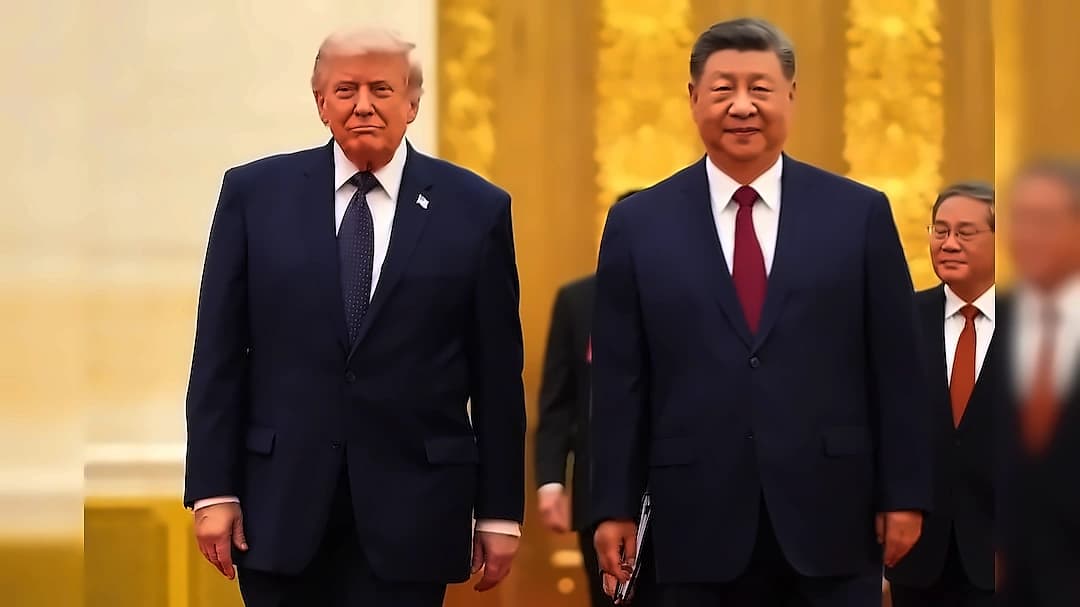
Chinese President Xi Jinping offered direct assistance to resolve the Iran crisis during their two-and-a-half-hour summit at the Great Hall of the People. As per Trump's comments to Fox News, "He said, 'I would love to be a help, if I can be of any help whatsoever.'" The offer comes as the conflict has rattled energy markets and deepened concerns about a widening regional war. "He said he's not going to give military equipment," Trump told Fox News, describing this as "a big statement." However, the Chinese leader's offer appeared carefully calibrated, stopping short of addressing broader questions about Chinese support for Iran, including intelligence sharing, electronics exports, or the enormous revenues Iran derives from oil sales to Chinese buyers. The White House confirmed both sides agreed that Iran must not obtain a nuclear weapon and that the Strait of Hormuz must remain open, though Chinese state media did not mention the Strait of Hormuz in their official statement.
Iran has blockaded the strait since early March in response to US and Israeli airstrikes that killed many of its leaders, including its head of state, Ayatollah Ali Khamenei. The blockade has cut off Persian Gulf oil exports to the global market, triggering the biggest supply disruption in history. Some 20% of the world's crude oil transited through the strait before the war, making the closure a significant global energy crisis. Shipping flows through the chokepoint remain limited, though vessel traffic has shown signs of gradually increasing in recent days, according to Bloomberg. As per CNBC, no oil has been loaded at Iran's main export terminal, Kharg Island, in the past three days, with the U.S. believing Iran's storage tanks are full. Oil prices were little changed Thursday, with Brent crude trading near $105/bbl after rising sharply since the conflict began, with the International Monetary Fund warning that prolonged disruption could weigh on global economic growth.
Iran has been charging vessels for passage through the waterway since the blockade began, though recent developments suggest potential progress in resolving the shipping crisis. Iranian Foreign Minister Seyed Abbas Araghchi said Thursday that the Strait of Hormuz is open for commercial vessels "as far as we are concerned." "The Strait of Hormuz is now suffering first and most from the U.S. aggression and the blockade that they have imposed on it," Araghchi said while at the BRICS foreign minister meetings in New Delhi on Thursday. "As far as we are concerned, the Strait of Hormuz is open for all, you know, commercial vessels," he said. "But they need to cooperate with our navy forces. So we have not made any obstacles." According to IRIB state TV, more than 30 ships had passed through the strait since Wednesday night "in coordination with our country's authorities and maritime agencies." Iranian state media reported that additional Chinese-linked vessels are expected to transit the strait under what it described as "Iranian management protocols," indicating potential progress in resolving the shipping crisis.
China occupies a uniquely important position in the Iran conflict because it is the largest buyer of Iranian oil, providing Iran with a critical economic lifeline despite American sanctions. Trump said Xi told him that China intended to continue buying oil from Iran, even as Beijing opposed any effort by Iran to militarize or effectively toll the Strait of Hormuz. "He said, you know, they buy a lot of their oil there and they'd like to keep doing that," Trump said. China's Ministry of Foreign Affairs spokesman Guo Jiakun confirmed that the Middle East was among the topics discussed during the summit, stating that China's policy regarding the strait had been "consistent and clear." However, there was no signal from China that Mr. Xi's government would grow more assertive in pressuring Iran to allow more ships through the strait, let alone to agree to a peace deal that would suit Mr. Trump. Treasury Secretary Scott Bessent told CNBC that "it is very much" in China's interest to get the Strait of Hormuz reopened, "and I think they will be working with, behind the scenes, to the extent anyone has any say over the Iranian leadership."
The Strait of Hormuz processes approximately 20 million barrels of oil per day, which the EIA reports equals roughly 20% of global petroleum liquids consumption, making access through Hormuz a direct global oil-market issue. Trump confirmed that "an effort was underway to reopen it for regional nations," signaling progress in resolving the shipping crisis. This strategic importance is underscored by the recent diplomatic developments, with both Trump and Xi now backing the strait's reopening after their Beijing meeting. Oil prices were little changed Thursday, with Brent crude trading near $105/bbl after rising sharply since the conflict began, reflecting the market's ongoing concerns about supply disruptions. The International Monetary Fund has warned that prolonged disruption could weigh on global economic growth, highlighting the economic stakes of the ongoing crisis. Despite an April ceasefire between the U.S. and Iran, negotiations over reopening Hormuz remain stalled as Iran continues demanding an end to U.S. naval restrictions and broader sanctions relief before fully restoring shipping access.