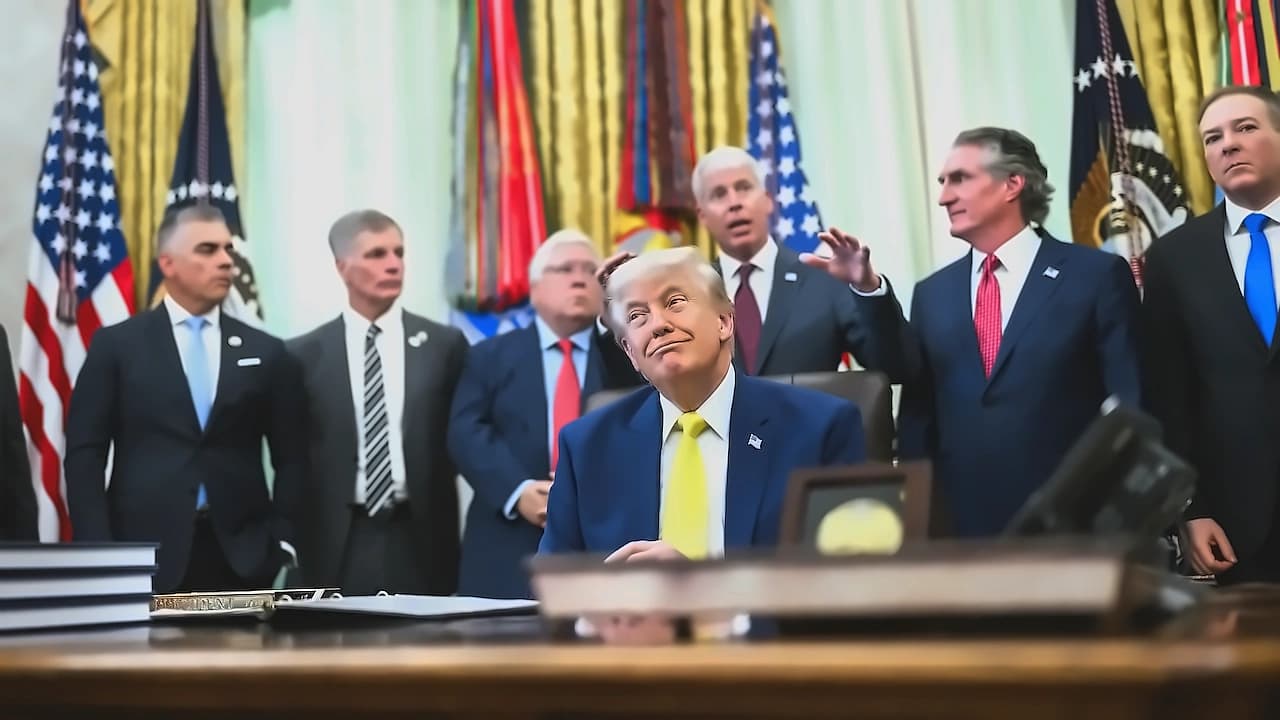
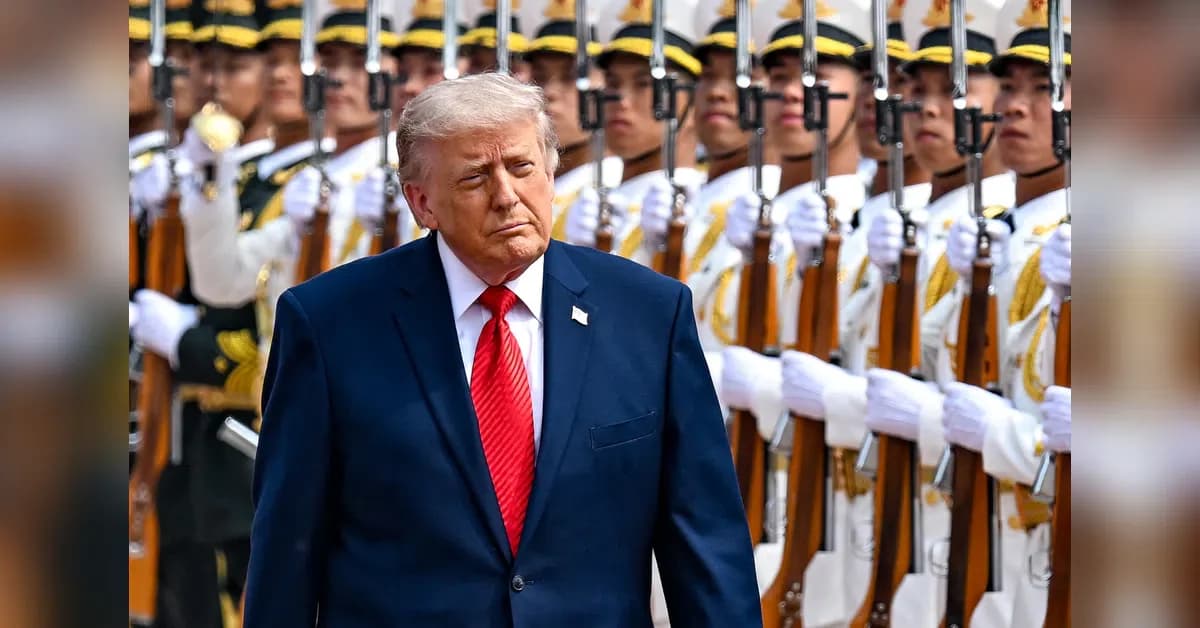
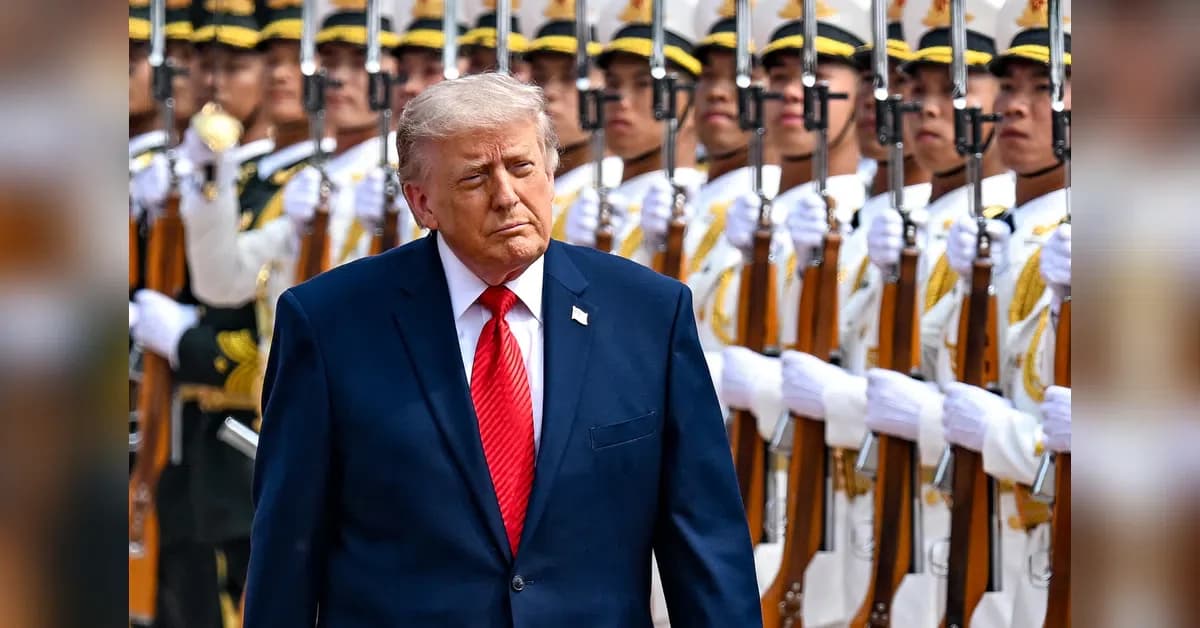
US President Donald Trump issued an escalated warning to Iran as diplomatic negotiations remain deadlocked, writing on Truth Social: 'For Iran, the Clock is Ticking, and they better get moving, FAST, or there won't be anything left of them. TIME IS OF THE ESSENCE!' According to reports from Business Standard, the sharp remarks came just hours after Iranian media revealed Washington's core conditions for resuming negotiations. The warning came as both Washington and Tehran hardened their positions amid growing frustration over stalled talks. As reported by The Hill, Trump has stated that the Middle Eastern country's military infrastructure has been severely destroyed, arguing Tehran has no leverage in negotiations. 'There's something wrong with them, and actually, they're crazy, and you know what? Because of that, they cannot have a nuclear weapon,' Trump added during a recent interview. The message echoed his earlier threat that a 'whole civilisation' would die unless Iran agreed to a deal to end the war', shortly before the ceasefire was announced in early April.
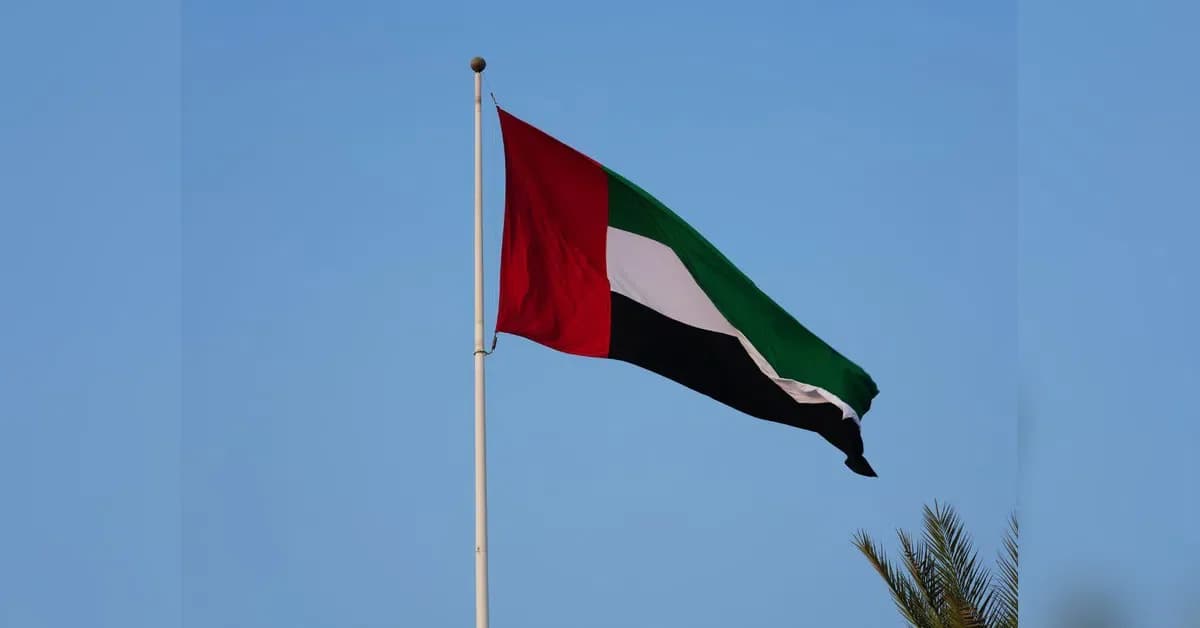
A drone strike targeted the United Arab Emirates' sole nuclear power plant on Sunday, sparking a fire on its perimeter that highlighted the risk of renewed war as the Iran ceasefire remains tenuous. According to Business Standard, UAE authorities described the incident as an 'unprovoked terrorist attack', although no group immediately claimed responsibility. The $20 billion Barakah nuclear power plant, built with South Korean support and online since 2020, is the only nuclear facility in the Arab world and can provide a quarter of the UAE's energy needs. The UAE Defence Ministry said three drones crossed the western border with Saudi Arabia, with two intercepted before reaching their targets. There were no injuries or radiological leaks, while the UAE's nuclear regulator confirmed that all reactors remained operational. The International Atomic Energy Agency said the strike caused a fire in an electrical generator and temporarily forced one reactor to rely on emergency diesel generators. This marks the first time the four-reactor Barakah plant has been targeted in the war, with the UAE having signed a strict '123 agreement' with the US to forego domestic uranium enrichment.
Iranian President Masoud Pezeshkian accused the US and Israel of trying to destabilise Iran during the conflict, alleging their objective was to create insecurity inside the country by backing 'terrorist groups''. According to Business Standard, Pezeshkian made these remarks during a high-stakes meeting in Iran with Pakistan Interior Minister Mohsin Naqvi amid escalating regional tensions. The Iranian President claimed the plan ultimately failed because neighbouring countries did not allow their territory to be used against Iran, and thanked Pakistan, Afghanistan and Iraq for refusing to let the US or Israel use their land for attacks targeting Iran. As reported by The Hill, earlier Sunday, Trump and Israeli Prime Minister Benjamin Netanyahu spoke on the phone, with the two leaders discussing the conflict in the Middle East and Trump's recent visit to China. Iranian state television meanwhile aired segments with news anchors holding rifles in an effort to prepare the public for war, with presenters on at least two channels appearing armed during live programs. Iranian officials responded defiantly to Trump's warning, with senior military adviser Mohsen Rezaei declaring on state television: 'Our armed forces' fingers are on the trigger, while diplomacy is also continuing.'
According to Iran's Fars News Agency, the US wants Iran to surrender 400 kilograms of enriched uranium, keep only one nuclear facility active, drop demands for war compensation, accept that most frozen Iranian assets will remain blocked and end the war on all fronts only after negotiations are completed. As reported by Business Standard, in a swift counter-response, Tehran laid out its own five preconditions for talks, including military operations across the region ending, sanctions on Iran being lifted, and its frozen overseas assets being released. Iran also demanded compensation for war damages and recognition of its sovereignty over the Strait of Hormuz. According to Iran's semi-official Tasnim news agency, Tehran's proposals included an immediate end to the war on all fronts - a reference to the continued Israeli attacks against Iran-supported Hezbollah in Lebanon - a halt to the US naval blockade of Iranian ports, and guarantees of no further attacks on Iran. Iranian foreign ministry spokesperson Esmail Baghaei insisted they were 'responsible' and 'generous' in their approach.
The Strait of Hormuz remains a core flashpoint in the ongoing crisis, with Iran tightening control over shipping movement through the strategic route while the US has increased pressure on Iranian ports and maritime trade through a sweeping naval blockade. As reported by Business Standard, these geopolitical tensions have continued to simmer despite a ceasefire reached earlier this year through Pakistani mediation. Although the temporary truce stopped large-scale fighting, it failed to yield a long-term political agreement. The strategic importance of the Strait of Hormuz has been highlighted by recent developments, with Iran continuing to control the Strait of Hormuz, effectively closing the vital waterway through which around 20% of the world's oil and liquefied natural gas travels. The move, which Iran has said is in retaliation for US and Israeli attacks, has sent oil prices soaring globally. The US, for its part, has been enforcing a blockade of Iranian ports to exert pressure on Tehran to agree to its terms. Fighting has heated up between Israel and the Iran-backed Hezbollah militant group in Lebanon despite a nominal ceasefire there, with Israel coordinating with the US about a possible resumption of attacks, according to two people familiar with the situation.
Diplomatic tracks aimed at ending the war have been entirely on hold since last week, when Iran and the US rejected each other's most recent proposals. According to Business Standard, the US President has made clear that he agreed to a ceasefire with Iran as a favour to Pakistan and ruled out any further bombing of the Persian Gulf nation. However, Trump told reporters that the ceasefire between the U.S. and Iran was on 'massive life support' after rejecting Tehran's demands, labelling them 'totally unacceptable'. As reported by The Hill, Trump has made clear that he agreed to a ceasefire with Iran as a favour to Pakistan and ruled out any further bombing of the Persian Gulf nation. The diplomatic process has become increasingly complicated, with Trump stating he would no longer send a delegation overseas for in-person talks and instead urged Iranian counterparts to travel to the U.S. or speak with officials via phone. During recent diplomatic engagements, Trump and Chinese President Xi Jinping discussed the war during their high-stakes meeting, with the latter offering help to bring about an end to the conflict. Pakistan has been playing the role of mediator between the US and Iran, but both sides still appear to be far apart.