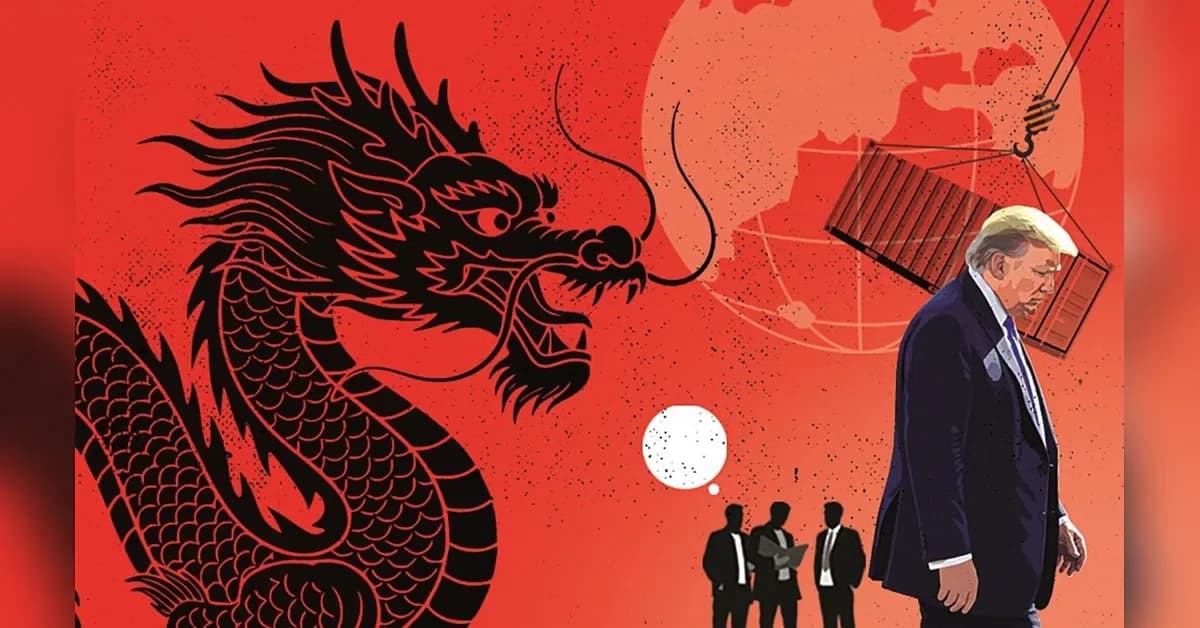
President Donald Trump has arrived in Beijing on Wednesday for a state visit with Chinese leader Xi Jinping at a critical moment for his presidency. According to reports from Business Standard, Trump's popularity at home has been weighed down by the US and Israel's war with Iran and rising inflation as a consequence of that conflict. The president is seeking a diplomatic victory by signing deals with China to buy more American food and aircraft, with trade discussions expected to dominate the agenda. As expert Zongyuan Zoe Liu from the Council on Foreign Relations notes, 'Rising energy prices linked to the Iran war, market volatility, and growing concerns about inflation have complicated the administration's economic messaging ahead of the midterms.' For Trump, the political clock runs to November, creating urgency for diplomatic success, while Xi's strategic timeline extends much longer. The visit marks the first from an American president to China since Trump visited in 2017, but it's playing out in front of a vastly different backdrop as the two leaders now sit on different sides of an increasingly fractured geopolitical landscape.
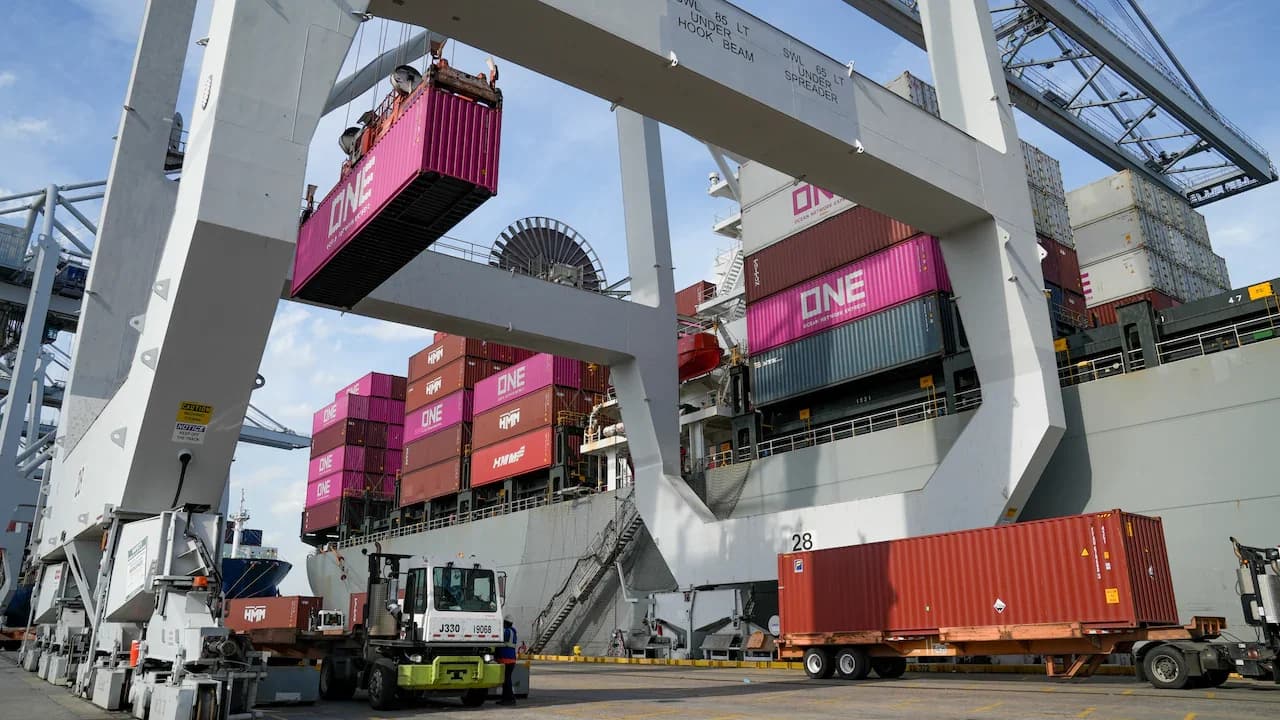
The Trump administration hopes to begin establishing a 'Board of Trade' with China to address bilateral differences, as reported by Business Standard. This mechanism could help prevent the trade war ignited last year after Trump's tariff hikes, which China countered through control of rare earth minerals. The one-year truce that followed last October is now under review. Trump has indicated he'll be talking with Xi about trade 'more than anything else' during the visit. According to Council on Foreign Relations, 'China's economy continues to struggle with weak household demand, persistent deflationary pressure, and excess industrial capacity, but Beijing's priority remains stability and strategic patience rather than major redistributive reform.' During the visit, Treasury Secretary Scott Bessent will join his counterpart He Lifeng for a meeting in Seoul ahead of the leaders' summit, with more than a dozen business leaders including Apple CEO Tim Cook, Tesla and SpaceX CEO Elon Musk, Boeing CEO, BlackRock CEO, and Goldman Sachs CEO traveling as part of the US delegation. Trump and Xi are expected to unveil a series of agreements on aerospace, agriculture and energy, and discuss a US-China board of trade and a US-China board of investment.
Despite Trump's outward confidence, Iran continues to dominate his domestic agenda as the war has led to the effective closure of the Strait of Hormuz, stranding oil and natural gas tankers and causing energy prices to spike to levels that could sabotage global economic growth. According to Business Standard, Trump declared that Xi didn't need to assist in resolving the conflict, even though Iran's Foreign Minister Abbas Araghchi was in Beijing last week. The president told reporters Tuesday that 'we have Iran very much under control'. Asked why Trump is moving forward with this trip, a senior US official said, 'Why would he not continue with all the other duties that he has as a US president?' But it's Iran that is likely to dominate the conversation, with Trump saying he plans to have a 'long talk' about Iran with Xi. The closure of the critical oil thoroughfare has major implications for China, the largest consumer of Iranian oil, as well as many key US allies in Asia. On the eve of Trump's trip, the US Treasury Department blacklisted 12 people and entities for their roles enabling the 'sale and shipment of Iranian oil' to China, though some US officials have expressed concern that Trump is walking into a meeting in which Xi holds many of the cards. Former Secretary of State Mike Pompeo warned Wednesday that 'China is unlikely to offer President Trump meaningful help on Iran' during the summit, stating that 'I don't think China is going to stick their neck out on our behalf' and that Beijing doesn't want to appear as though it is helping Washington or abandoning Iran.
While the trip is expected to touch on a range of issues, experts are tuning in to see if the US will call on China to help with the ongoing Iran conflict. As Xiaoxiao Shen, an assistant research professor of political science at Northeastern, notes, 'The Iran war has complicated the usual assumption that the U.S. automatically holds more leverage globally.' Beijing has recently sought to cast itself as a key diplomatic broker on the world stage, including helping facilitate a 2023 rapprochement between Saudi Arabia and Iran. Because of China's close economic relationship with Iran, including its role as a major buyer of Iranian oil, experts say it could be uniquely positioned to pressure Iran toward de-escalation and renewed negotiations with the US. However, Kellee Tsai, a political scientist and dean of the College of Social Sciences and Humanities, warns that 'Gulf instability is risky for Beijing as well because China depends heavily on imported energy and stable shipping routes.' The war has not necessarily shifted power decisively toward either side, with both nations facing similar challenges from the energy crisis.
The status of Taiwan appears to be a major topic as China is displeased with US plans to sell weapons to the self-governing island that the Chinese government claims as part of its own territory. As reported by Business Standard, Trump told reporters Monday that he would be discussing with Xi an $11 billion weapons package for Taiwan that the US administration authorized in December but has not yet begun fulfilling. Taiwan's importance has grown as the world's leading chipmaker, with the US importing more goods from Taiwan than China so far this year. According to Council on Foreign Relations, 'Taiwan's importance has grown as the world's leading chipmaker, with the US importing more goods from Taiwan than China so far this year.' China is expected to push the US to adjust its Taiwan policy to express 'opposition' (instead of non-support) to Taiwan independence and reduce arms sales to the island. Beijing also wants its companies, including electric vehicle makers, to have more access to the US market and to be removed from blacklists. Former Arizona Senator Kyrsten Sinema, co-chair of the AI Infrastructure Coalition, said Wednesday that Trump's trip to China is designed to project American dominance in artificial intelligence and send a message to both Beijing and Tehran. 'We have been in a race with China for AI dominance for a number of years, and it's so incredibly important that American AI is the global AI,' Sinema said, noting that Trump's decision to bring 17 handpicked leaders from the AI community and finance sector was strategic as the US competes with China for leadership in artificial intelligence and advanced technology.