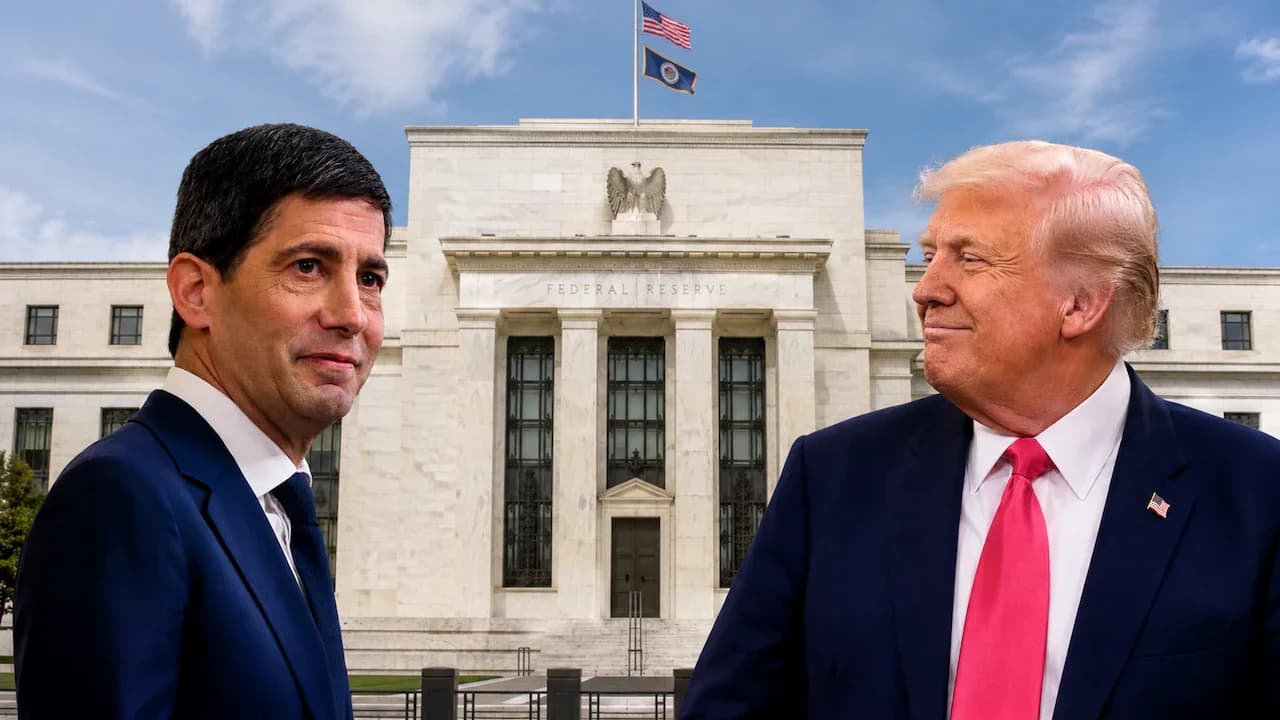
US President Donald Trump has strongly opposed Federal Reserve interest rate increases, stating that the central bank should lower rates rather than raise them as his nominee Kevin Warsh prepares to chair his first Federal Open Market Committee meeting on June 16-17. According to reports from NBC's Meet the Press, Trump made these remarks during an interview with moderator Kristen Welker, pushing back against market expectations that the Fed may need to lift rates to control inflation. "Nowadays when you have good reports, the market goes down because they think they're going to raise interest rates," Trump said, adding "There's no reason to raise interest rates." Trump characterized the latest employment figures as "roughly triple what forecasters had anticipated," pointing to increased factory construction and foreign investment entering the country. "Raising the benchmark rate is the wrong thing to do," Trump stated, adding "We should actually lower interest rates." Following the jobs report, Trump posted on Truth Social: "With a great Jobs Report, like just announced, stocks should go up, not down. That's the way it was for 200 years. Growth does not mean inflation!"
The opposition comes as Fed Chair nominee Kevin Warsh prepares to lead his first Federal Open Market Committee meeting on June 16-17. As reported by NBC's Meet the Press, Trump characterized the latest employment figures as "roughly triple what forecasters had anticipated," pointing to increased factory construction and foreign investment entering the country. However, the market reaction has confused the White House, with Trump posting on Truth Social: "With a great Jobs Report, like just announced, stocks should go up, not down." The stronger labor-market data triggered a selloff in Treasury bonds and prompted traders to fully price in a quarter-percentage-point rate increase by the end of the year. Nonfarm payrolls rose by 172,000 in May, while the unemployment rate remained unchanged at 4.3%, indicating continued strength in the job market. The US unemployment rate held steady at 4.3% according to Bureau of Labor Statistics data, with nonfarm payrolls increasing 172,000 last month after upward revisions to the prior two months. The job gains were broad-based, with local governments adding 55,000 workers, restaurants and bars 48,000, and healthcare companies 35,000.
Trump has argued that robust employment and economic growth can help ease inflationary pressures without the need for higher interest rates. According to NBC's Meet the Press, he told moderator Kristen Welker that "success can kill inflation just like higher interest rates." However, the current economic environment presents unique challenges that complicate this argument. Demand is running unusually hot—overall spending in the economy grew 5.9% last quarter, well above the roughly 4% pace that is consistent with the Fed's inflation target—while the economy's capacity to meet that demand is being short-circuited from multiple supply chain crises. The war in Iran has shut off most oil shipments through the Strait of Hormuz, sending gas prices skyrocketing, while tariffs have raised the cost of imported goods. Additionally, the labor force is slowly shrinking, partly due to the Trump administration's immigration crackdowns. The combination of too much demand chasing too little supply represents the textbook definition for inflation—and is why consumer prices have now run above the Fed's 2% target for more than five years.
Following the jobs report, economists at Goldman Sachs abandoned their forecast for a Fed rate cut in December 2026, as reported by Livemint. While they still anticipate two quarter-point reductions, they now expect those cuts to occur later, in June and December 2027. The bond-market reaction and changing expectations for Fed policy reflect growing belief among investors that the central bank may need to raise rates to prevent inflation from remaining above its target. Wall Street now expects a rate hike in December, which would be sharply at odds with Trump's repeated demands for a cut. An increase by the Fed could lead, over time, to higher borrowing costs for mortgages, auto loans, and business loans. "Higher rates are coming, particularly when inflation is above target and clearly moving in the wrong direction," said Dario Perkins, an economist at TS Lombard. "The only question is when." The AI trade shriveled, sending the Nasdaq down 4%, the worst day in over a year, and the S&P down another 1.2%, as reported by Truth Social.
The comments underscore the political and economic pressures surrounding Warsh as he takes charge of monetary policy at a time of persistent inflation and resilient economic growth. According to NBC's Meet the Press, Trump has argued that with public approval weighed down by concerns over the Iran conflict, economic management, and elevated fuel prices, robust employment and economic growth can help ease inflationary pressures. However, the market reaction suggests that growth itself has changed meaning for markets—when supply is abundant, a strong jobs report signals more output and more profits, more room to grow. When supply is constrained, it signals more spending power pressing against that same ceiling of inflation. So if the labor market is hot, it's evidence that the Fed has no room yet to cut rates, and might in fact have to raise them. With just five months to go before consequential midterm elections, Americans have grown increasingly frustrated by rising costs, and it's unclear if the strong job numbers this year will change their gloomy view of the economy.