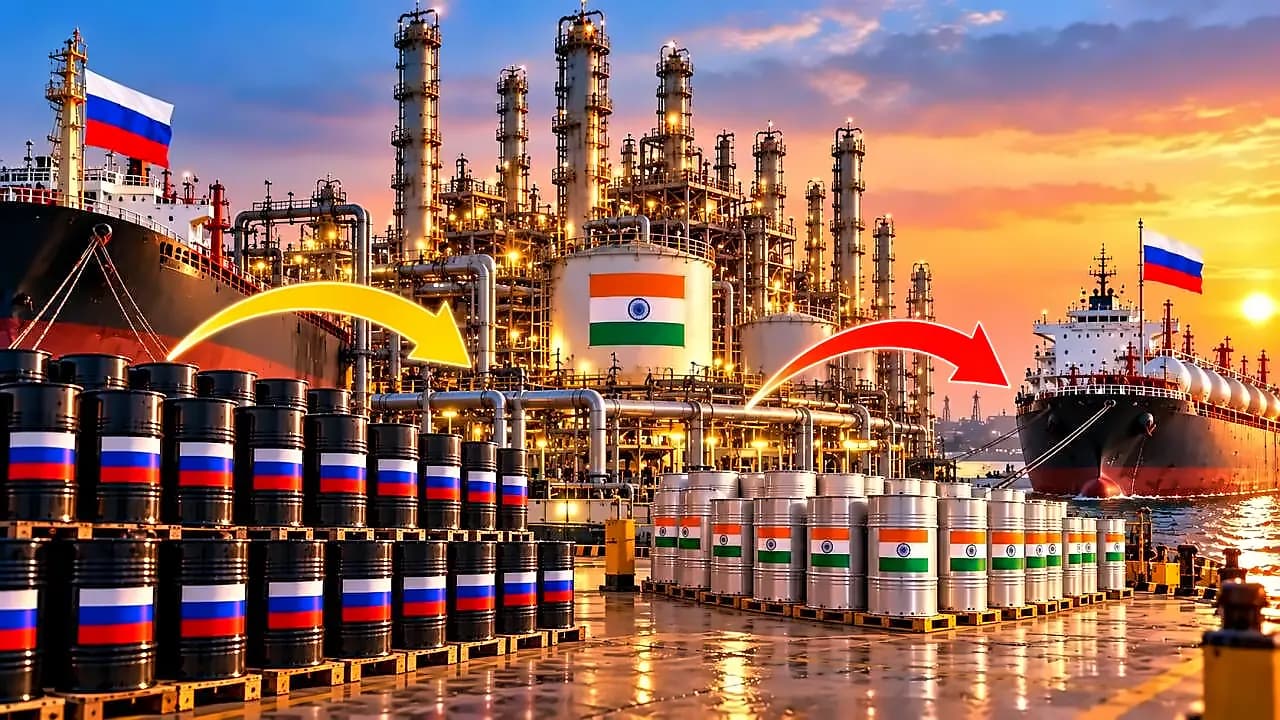
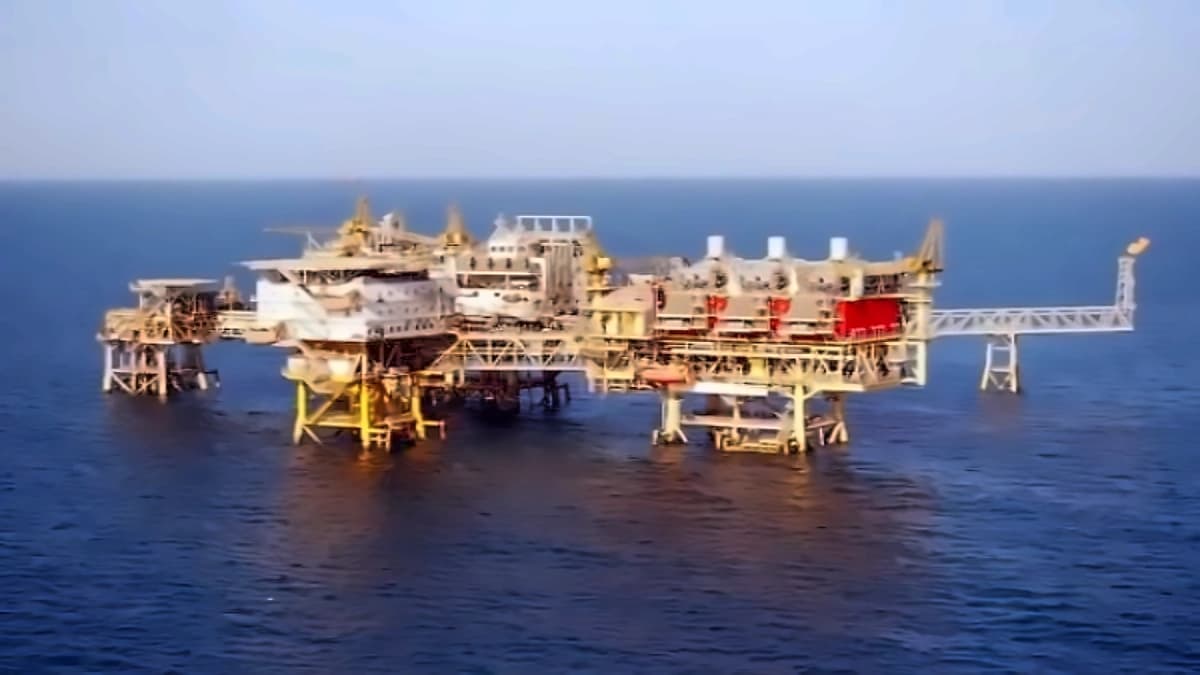
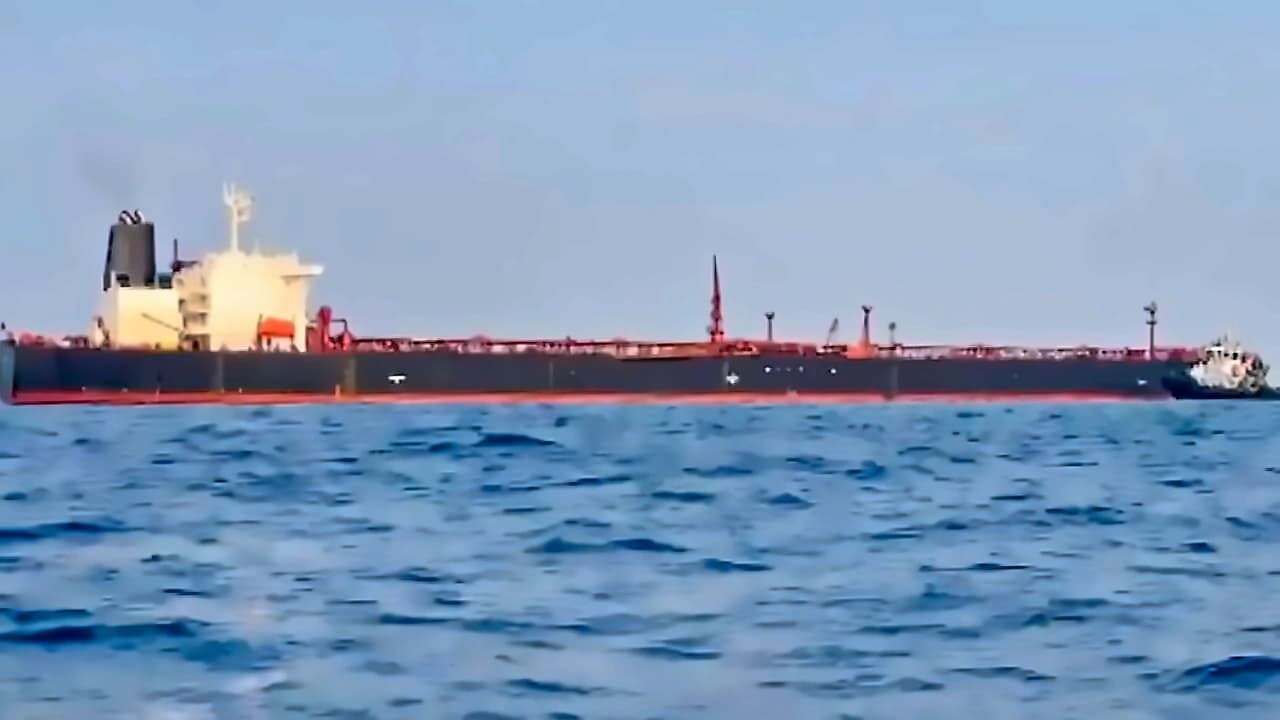
India's imports of Russian crude oil reached a record high of $5.14 billion in June 2026, with the Centre for Research on Energy and Clean Air (CREA) reporting a 32% month-on-month growth and 25% year-on-year increase. India imported around 2.7 million barrels per day (mb/d) of Russian crude oil in June 2026, accounting for more than half of New Delhi's cumulative monthly imports. Russian crude constituted 83% of India's total Russian hydrocarbon purchases, valued at Euro 4.5 billion ($5.14 billion), while oil products ($558 million) and coal ($508 million) constituted the remainder. The Jamnagar refinery saw the largest month-on-month rise in imported volumes of Russian crude (150% increase), followed by Paradip (126%), Kochi (83%), and Vadinar (45%), according to CREA data. New Delhi remained the second-largest buyer of Russian fossil fuels last month, importing a total of Euro 5.5 billion ($6.3 billion) of Russian hydrocarbons. Kpler emphasizes that Russian crude has become India's strongest energy security hedge, particularly since the Strait of Hormuz disruptions, enabling Indian refiners to maintain high refinery run rates and ensure uninterrupted fuel supplies.
Responding to the proposed legislation, Ministry of External Affairs (MEA) spokesperson Randhir Jaiswal said India sources crude oil from multiple countries based on its energy requirements. Addressing a press briefing, Jaiswal said the government is aware of the proposed legislation and provided an update on Indian shipping in the Persian Gulf. "We are closely following these developments, and we are aware of the proposed legislation. Especially on the number of Indian vessels which are there in the Persian Gulf, as of today, we have, there is regular traffic between India and the Persian Gulf region; we have seven Indian ships which are there in the Persian Gulf," Jaiswal stated. The MEA spokesperson emphasized that "as far as buying oil, we buy oil from various countries in the world. It is based on our approach towards energy sourcing." India on Friday said it is closely monitoring developments after 60 US Senators backed legislation proposing tariffs of up to 100% on India and four other countries for purchasing Russian oil.
The revised US Senate bill cuts tariffs on buyers of Russian oil-India, China, Slovakia, Hungary and Azerbaijan-from 500% to 100%, representing a significant softening from the original proposal. According to Sen. Richard Blumenthal at a press conference in Washington on Tuesday, the new proposal "imposes tariffs that are targeted, narrowly limited to the five major purchasers, up to 100 per cent, with waiver authority that is narrowly tailored and constricted." The bill, introduced on Thursday with support from over 60 lawmakers, targets countries that are the world's top five purchasers of Russian crude oil or natural gas or are among the top five facilitators of Russian oil sanctions evasion. The top five purchasers of Russian crude oil are China, India, Slovakia, Hungary and Azerbaijan, while the leading importers of Russian natural gas include China, France, Belgium, Japan and Hungary. The updated version, which replaces the original bill introduced by Graham and Democratic Senator Richard Blumenthal in April 2025, caps potential tariffs on the top five buyers of Russian crude and gas at 100%. Senator John Thune, the Republican majority leader in the Senate, is among the key supporters of the bill, strengthening its prospects in the upper chamber.
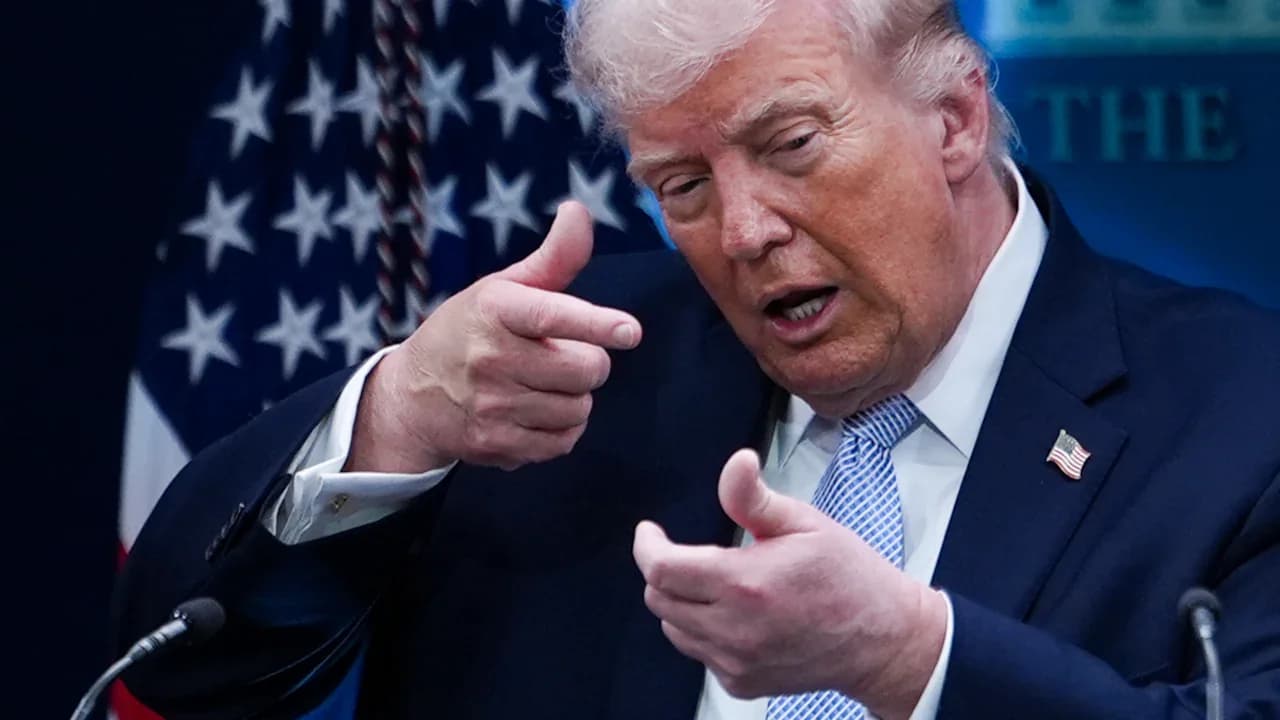
The Sanctioning Russia Act of 2026 has been introduced with tariff authority up to 100% on countries buying Russian energy, representing a substantial escalation from earlier proposed levels. According to recent reports, the bill targets nations purchasing Russian oil, gas, and uranium, or those helping Moscow dodge existing sanctions. If enacted and enforced, countries currently relying on discounted Russian crude, most notably China and India, would face a stark choice: find alternative suppliers at higher prices, or absorb punishing US tariffs on their exports. The immediate consequence would likely be a spike in oil and gas prices as buyers scramble to replace Russian supply, with energy-importing economies, particularly in Europe and Asia, facing reignited inflationary pressures. Higher energy input costs would flow through to manufacturing, transportation, and food production, creating ripple effects across global markets.
India remains firmly in focus as one of the world's biggest buyers of Russian crude oil, with recent data showing India's imports of Russian crude oil climbed to a record 2.58 million barrels per day (bpd) in June, driven by constrained supplies from West Asian producers and discounts offered by Moscow. Russia contributed nearly 50 per cent of India's total crude oil imports in June, with Kpler data showing that Russian crude accounted for more than half of India's total oil imports during June. India's crude oil imports from Russia are tracking at healthy levels in July as well and could exceed the previous month's volumes, given supply disruptions triggered by fresh tensions between the US and Iran. However, Kpler analyst Sumit Ritolia told PTI that Indian refiners have already secured most of their crude supplies through the first half of August, as oil cargoes are generally booked one or two months in advance, meaning refiners are unlikely to immediately make significant additional purchases even if geopolitical tensions persist. India's imports of Russian crude reached a record level in June, rising 34% month-on-month, with purchases valued at 4.5 billion Euros, accounting for roughly 36% of Russia's exports, according to the Centre for Research on Energy and Clean Air. India became the second-largest buyer of Russian crude after China during this period. In June, Washington allowed a general licence permitting countries, including India, to purchase energy without attracting US sanctions to expire.
The updated legislation includes mandatory sanctions on Russian President Vladimir Putin, his top deputies, the Russian military, Russian banks and energy companies, foreign entities doing business with Russia and Russia's shadow fleet of oil tankers. The bill would block Americans from buying Russian debt or doing business with the Russian government or its energy sector. Under the revised framework, the U.S. would reevaluate the top five purchasers of Russian energy every 180 days, with the president having flexibility to exempt certain entities if he provides justification to Congress. The legislation also contains a waiver provision allowing the US President to suspend sanctions and duties on a country, provided the President submits a justification to Congress and certifies that doing so is in the national interest. The proposal also exempts European allies that continue importing Russian natural gas, provided their Russian natural gas imports account for less than 15 percent of Russia's total natural gas exports and are taking significant steps to reduce those imports. The text of the bill had been finalized before Graham met with Ukrainian President Volodymyr Zelenskyy last week in Kyiv, according to a Senate aide. The measure aims to push these countries to buy energy from alternate sources to increase financial pressure on Moscow.
Washington has proposed additional duties of up to 12.5% on Indian goods over concerns regarding the enforcement of restrictions on imports of products made with forced labour. The Office of the US Trade Representative (USTR) in a report released in early June examined the enforcement of forced-labour import prohibitions across 60 countries, including members of the European Union. The USTR said India's failure to impose and effectively enforce a forced-labour import prohibition was unreasonable and burdened or restricted US commerce. While the US trade authority found enforcement shortcomings across all countries examined, economies with existing laws or rules were treated differently from those without a legal mechanism. The USTR proposed additional duties of 10% on Canada, Ecuador, the European Union, Indonesia, Mexico and Pakistan, which had laws but were found to lack effective enforcement. For the remaining 54 countries, including India, which the USTR said lacked a legal mechanism on forced-labour imports, duties of 12.5% were proposed. India has since issued detailed guidelines aimed at identifying goods produced using forced labour through a Trade Notice by the Directorate General of Foreign Trade (DGFT), empowering the authority to investigate and recommend prohibiting such imports.