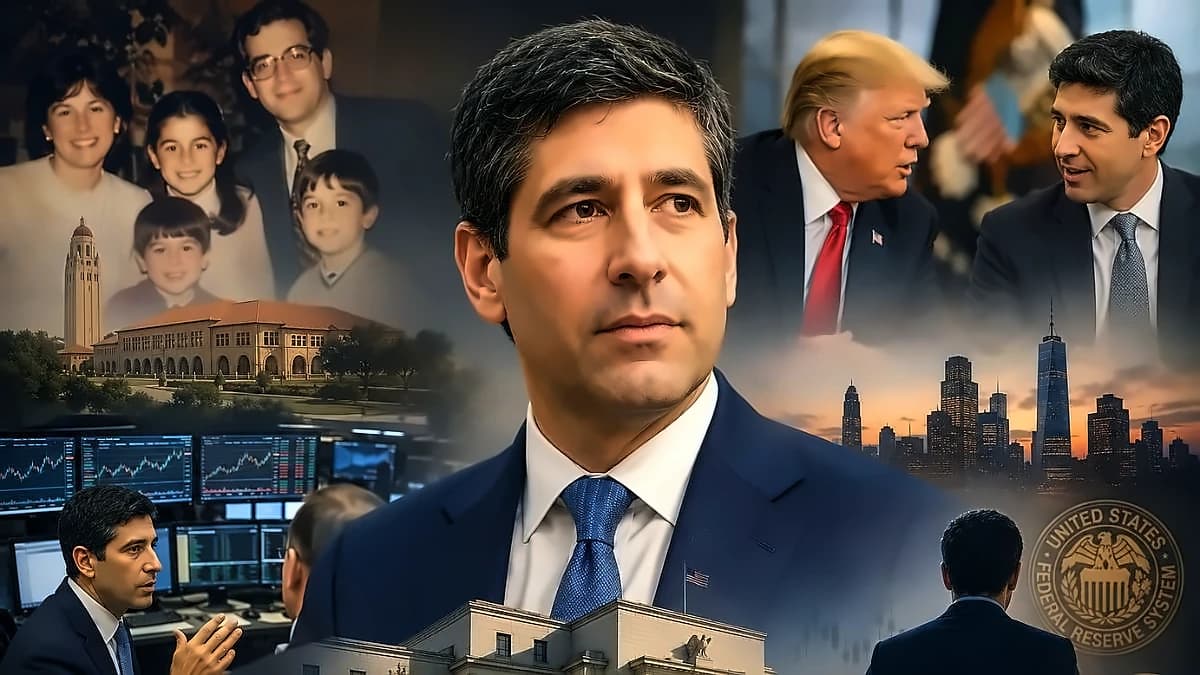
The US Senate confirmed Kevin Warsh as Federal Reserve Chair in a 54-45 vote, marking the narrowest margin ever recorded for a Fed chair. According to reports from The Times of India, Pennsylvania Senator John Fetterman was the only Democrat to vote in favor of the confirmation. Warsh inherits a central bank under direct pressure from President Donald Trump to cut interest rates, with the new Fed Chair taking over from Jerome Powell, whom Trump has repeatedly criticized for not lowering rates. The confirmation margin came in under Janet Yellen's 56-26 tally in 2014, reflecting polarized politics in Congress and Democratic fears that Warsh will bend to Trump's demands for rapid rate cuts. As per The Financial Times, this vote brings to an end one of the most fraught processes of selecting a central bank chief in decades.
As reported by The Times of India, lawmakers first signed off on Warsh's 14-year term as a Federal Reserve governor, clearing the way for the subsequent vote that handed him a concurrent four-year stint as chair. Warsh still needs to be sworn into both roles, which is pending the White House's final signatures on the paperwork forwarded by the Senate. Warsh takes over from Jerome Powell, whose run as chair wraps up May 15, and previously served on the central bank's Board of Governors between 2006 and 2011. The confirmation process gained momentum after Senator Thom Tillis (R-N.C.) lifted his blockade on Fed nominations last month, following the Department of Justice's announcement that it had ended a criminal inquiry of Powell related to cost overruns in the Federal Reserve's building renovations.
According to The Times of India, the new Fed Chair takes over a central bank boxed in by hot data, with headline US CPI rising 3.8% year over year in April, the highest reading since May 2023. The producer price index in April rose 6% from a year ago, topping all estimates in a Bloomberg survey of economists. A core measure of wholesale inflation that excludes food and energy was up 5.2%, suggesting the war-driven increase in energy costs is spreading to other goods. These numbers have prompted Wall Street to revise its outlooks, with Goldman Sachs pushing its first rate cut forecast back to December 2026, citing sticky inflation. Pimco went further, flagging the possibility of a rate hike.
During his confirmation hearing, as reported by The Times of India, Warsh said he was committed to keeping monetary policy 'strictly independent.' Warsh chairs his first Federal Open Market Committee (FOMC) meeting on June 16 and 17, with his June FOMC vote expected to signal whether he leans toward Trump's preference for cuts or holds the line on inflation. However, Trump has made it clear he expects Warsh to lower borrowing costs immediately, creating a potential tension between political pressure and central bank independence. An increasing number of Fed officials are arguing the U.S. central bank should signal explicitly that the Fed's next rate move could be either a cut or a hike, suggesting Warsh will face fierce resistance if he attempts to steer the Fed toward rate reductions that officials don't see as justified.
The confirmation comes amid heightened concerns about political pressure on the Federal Reserve. Powell said in April he will remain on the central bank's board after his term as chairman ends but maintain 'a low profile.' He decided upon this course, a break with recent precedent, because ongoing threats of criminal investigations into him and the central bank endanger the Fed's autonomy. Democrats remain angry over Trump's efforts to fire Fed Governor Lisa Cook, which they see as part of a campaign to intimidate the central bank. Warsh has also suggested he would seek to shrink the Fed's $6.7 trillion balance sheet over time and argued during his confirmation hearing that interest rate cuts are fairer than balance sheet expansion because the benefits are more broad-based.