Traders expect a quarter point rate increase by Fed Chairman Kevin Warsh on Wednesday, with CME's FedWatch tool estimating more than 92% chance of an interest-rate hike. The FedWatch tool currently points to an 87% chance the target range for the federal funds rate will increase to 3.75% to 4%, up from the current 3.5% to 3.75%. According to reports from Bloomberg News, citing Macro Risk Advisors LLC, a possible rate hike could result in a correction in the S&P 500 as lower corporate margins weigh on profit outlooks and markets prepare for tightening policy. The market also expects another quarter-point rate hike at the December meeting. As reported by SimCorp, markets are seeking guidance from the Fed, with investors concerned that Warsh might not provide adequate clarity about future policy direction.
New data reveals that first rate hikes in tightening cycles have historically triggered stock market corrections across major indices. As reported by The Motley Fool, after the first hike in each cycle, the S&P 500, Nasdaq Composite, and Dow Jones have, on average, suffered double-digit losses at some point in the next three months. The historical data shows the S&P 500 has averaged an 11% drawdown, Nasdaq Composite 17%, and Dow Jones 10% during this period. The Federal Reserve has only initiated three rate-hike cycles in the last 25 years, making current conditions relatively rare. The responsibility for 'sustained, elevated inflation sits squarely with the central bank,' said Fed Chair Kevin Warsh in August, as inflation has stayed above the Federal Reserve's 2% target since February 2021. According to analysis by Jeff Buchbinder, chief equity strategist at LPL Research, history shows that initial rate hikes tend to trigger stock market losses in the short term, but equities generally rebound after six months.
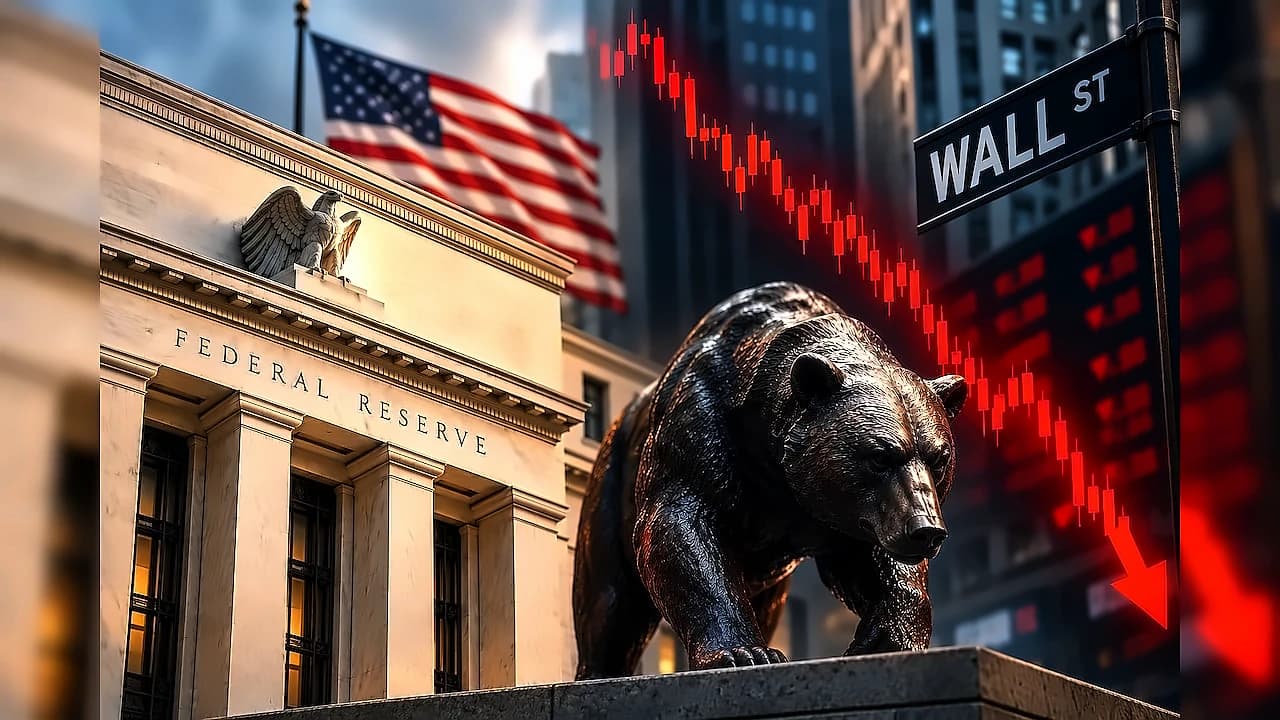
The S&P 500 has fell around 1% in September so far, its weakest month historically, amid concerns over higher energy costs and latest inflation data that has pushed US 10-year Treasury yields over 5% for the first time since 2023. The major averages closed lower on Monday as higher bond yields and oil prices kept the market under pressure, with the Dow Jones Industrial Average losing 404 points, or 0.8%, the S&P 500 trading down about 0.4%, and the Nasdaq Composite dropping 0.8%. As reported by SimCorp, investors are finally catching up with concerns about the U.S. government debt passing $40 trillion and inflation remaining 'stubbornly high.' Oil prices exceeding $100 per barrel and reaching above $109 for Brent crude and $106 for WTI are making people sit up and take notice. Despite current weakness, the S&P 500 has gained 12% year-to-date, the Nasdaq Composite advanced 13%, and the Dow Jones Industrial Average added 9%. Recent analysis shows that the recent rise in the 10-year Treasury yield is already flashing a warning for stocks, with the current yield running at 100% of its highest level over the past 200 days.
According to Curnutt's analysis reported by Bloomberg News, a hike in interest rates will compress margins in companies that cannot pass costs through and post a volatility shock into a market that is not prepared for it. The rate increase is expected to create additional pressure on corporate profitability, particularly affecting companies with limited pricing power to offset higher borrowing costs. However, strong business fundamentals may help offset pressure from higher borrowing costs and tighter financial conditions, as S&P 500 companies reported revenue growth of 15% in the second quarter and earnings increased 31% (excluding unrealized gains), the fastest growth outside of a post-recession recovery since 1992. As reported by Barclays, higher rates have already pressured valuations and are increasingly putting equity portfolios at risk, with the approaching 5% threshold in 10Y yields marking a historically important inflection point. Goldman Sachs chief US equity strategist Ben Snider notes that the medium-term impact of Fed tightening on equities will depend on how tightening affects earnings growth, with roughly half of S&P 500 earnings growth driven by AI investment.
Looking at historical patterns, Curnutt expects another downturn this year, similar to 2018, when the market is expected to take another leg lower in December in response to multiple Fed hikes. As reported by Bloomberg News, in the same year, Curnutt cautioned that 'The Santa Claus rally did not come' as the market crashed further in December, ultimately tumbling nearly 20% from its peak. However, past performance shows that major indexes have recovered from every past drawdown, and there is no reason to expect a different outcome in the future. Curnutt advises that 'a defensive posture is the correct approach' given the current market conditions and Fed policy trajectory, while noting that if the market does suffer a correction, history suggests investors should treat it as a buying opportunity. As reported by SimCorp, markets want at least a little bit of guidance from the Fed, with the concern that Warsh might not provide adequate clarity about future policy direction. The recent rise in Treasury yields is shifting investor attention back to Federal Reserve policy, with the key risk no longer what the Fed does today, but what it signals about the path forward.