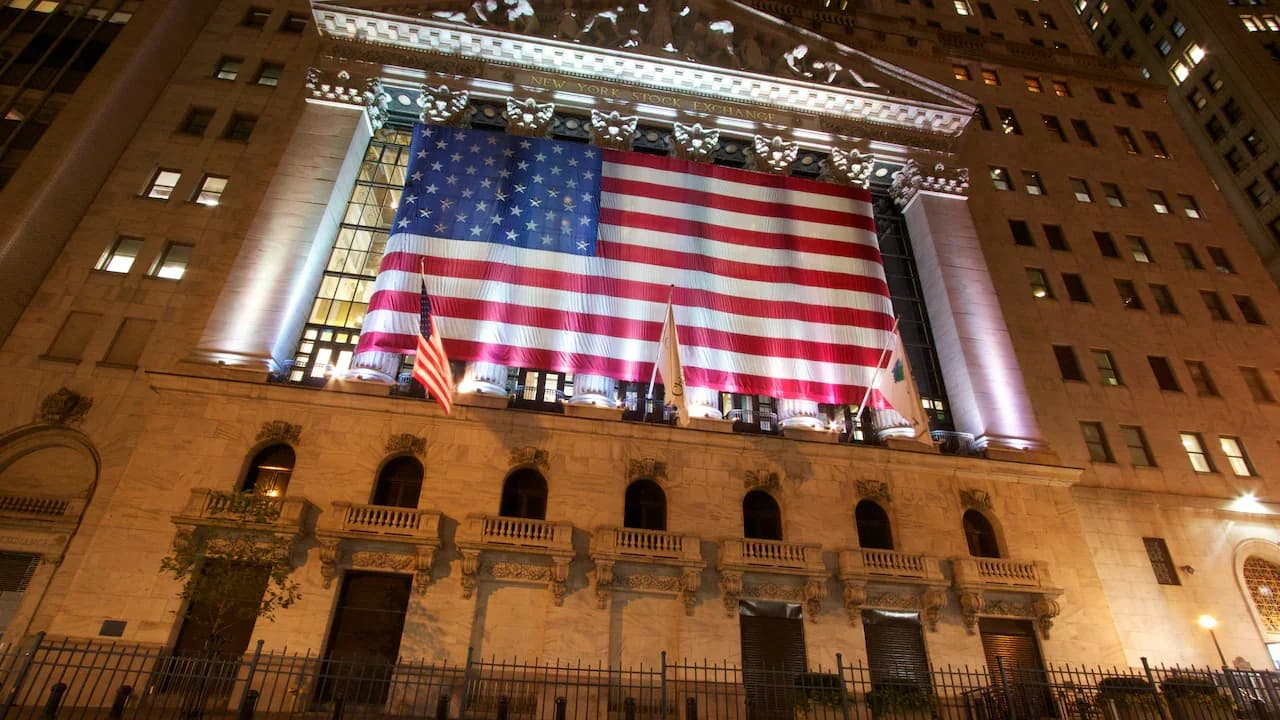
US markets extended their decline on Thursday as investors grappled with mounting concerns over potential Federal Reserve rate hikes and escalating geopolitical risks. The S&P 500 Index closed down 0.2%, falling 13.59 points to 7,709.96, putting the gauge on track to extend declines for a second-straight session and further pulling away from its all-time closing high on Tuesday. The Dow Jones Industrial Average fell 464.02 points (0.9%) to 53,885.10, while the Nasdaq 100 Index fell 0.4%, with technology stocks facing particular pressure. According to Investing.com, this follows Wednesday's session where markets closed little changed after Minneapolis Fed President Neel Kashkari's comment that it's time for the central bank to start slowly raising rates. The market has settled over the past two sessions after beginning the week with strong gains that pushed major indexes to record levels.
Brent crude jumped more than 3% to trade above $83/bbl, putting oil prices back on the inflation trade radar and derailing hopes for an equity rebound. As reported by Investing.com, this development has restored the unstable three-legged trade relationship investors had hoped was fading: oil higher, yields higher and stocks lower. The dollar strengthened alongside Treasury yields, with Treasury yields rising approximately 5-7 basis points across the curve as stronger labour data, higher crude prices and heavy corporate issuance combined to push borrowing costs higher. Alphabet's $25 billion bond sale added another large load to a market already digesting substantial government and corporate supply, with the timing particularly unwelcome for the equity market. Goldman Sachs estimates fair value for spot Brent near $80/bbl and expects crude to remain within an $80–$90/bbl range until either a durable US-Iran agreement is confirmed or attacks escalate materially.
Federal Reserve Governor Lisa Cook signaled readiness to raise interest rates if inflation does not slow, delivering her remarks at an event in Alaska on Wednesday. As reported by Macquarie Group's Thierry Wizman, this could be a sign that Fed Chairman Kevin Warsh may have to hike rates, probably in October. Cook is not usually among the Fed's hawks, but Wizman noted that "if Cook's view reflects the direction of the FOMC's median voter, Kevin Warsh is likely to be dragged into a rate hike." This development adds to the market's concerns about potential monetary policy tightening, contributing to the continued decline in equity markets. Rate markets responded by lifting the probability of another Federal Reserve increase during 2026, with December pricing rising notably.
Oil prices gained ground as uncertainty remains over the ongoing U.S. war with Iran that has stifled the global flow of oil. Brent crude, the international standard, rose 3.8% to $82.49, with prices having surged as high as $113 during the conflict. A fifth of the world's traded oil and natural gas once passed through the Strait of Hormuz, making the geopolitical tensions particularly significant for global energy markets. Iranian state media published what it described as an initial plan for managing the Strait of Hormuz, with the proposal appearing considerably more restrictive than markets had assumed. US and Israeli vessels would reportedly be barred from using the waterway, while countries deemed hostile to Iran could face restrictions until compensation was paid. Iranian media separately reported that naval forces had struck hostile targets near the entrance to the strait, with a tanker off Oman also reporting hearing two explosions while transiting the area. Goldman Sachs estimates fair value for spot Brent near $80/bbl and expects crude to remain within an $80–$90/bbl range until either a durable US-Iran agreement is confirmed or attacks escalate materially.
A fresh batch of quarterly earnings from companies across multiple sectors continued to drive trading activity during an already busy corporate reporting season. Warner Bros. Discovery climbed 1.7% after reporting earnings that came in ahead of what investors were expecting, while Molson Coors rose 1.3% after also delivering encouraging financial results. However, among the biggest decliners, Honeywell Aerospace plunged 23% after reducing its outlook for the full-year to reflect supply chain issues. SpaceX surged 6.1% as shares held by early investors and employees became eligible for sale following the expiration of a lockup period, with the stock currently trading around $115 after initially jumping as high as $225 following its market debut in June. Memory stocks were the clearest pressure point, with Sandisk and Western Digital falling after their forecasts disappointed investors, placing fresh strain on the broader AI narrative. The AI complex itself was mixed, while the S&P 500 excluding the major AI beneficiaries finished in the red, as the market becomes less willing to buy the AI theme wholesale.
Initial jobless claims remained below 200,000 for a third consecutive week, close to their lowest levels in decades, while labour productivity accelerated more than expected in the second quarter. According to Investing.com, Wall Street economists expect Friday's payroll report to show that employers added roughly 80,000 jobs in July after June's weaker 57,000 increase. The resilient labour data, combined with the renewed rise in oil prices, has lifted expectations for another Federal Reserve rate increase in 2026. The major US indices finished only modestly lower, but the surface calm concealed a weaker session underneath, with the Nasdaq swinging sharply around the opening and spending much of the afternoon circling its 50-day moving average. After rebounding approximately 13% from last week's lows, the most heavily shorted stocks began rolling over again ahead of payrolls, as the early-week squeeze now appears to be losing oxygen. Goldman Sachs traders described overall activity as muted, with total market volume running about 12% below its five-day average.