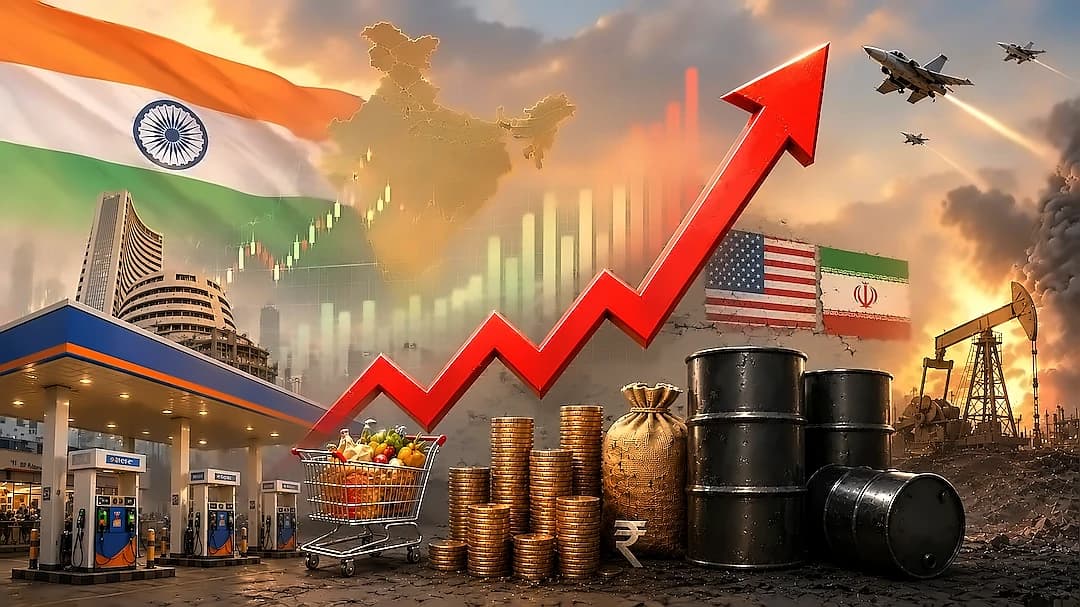
The Reserve Bank of India highlighted in its May bulletin that the global economy continues to face significant challenges from uncertainties in West Asia, with the spillover impact on domestic inflation needing to be monitored. According to the RBI report, the conflict in West Asia continued to exert pressure on commodity markets, global trade flows and supply chains, contributing to volatility in financial markets. Against the backdrop of the Iran war, constricted shipping routes and trade flows increased supply chain pressures to their highest levels since 2022. Prices of commodities for which the Strait of Hormuz is a critical transit route remained elevated in April and early May, while base metal prices, including aluminium, zinc and nickel, rose due to supply disruptions and higher fuel costs. India has entered this phase from a position of macroeconomic strength, with domestic demand continuing to be the key driver of growth, though the near-term outlook is somewhat clouded by supply-side pressures. As per the RBI bulletin, although headline inflation remains firmly within the tolerance band, the pass-through to domestic prices needs to be monitored. The RBI noted that the global economic activity in April continued to be shadowed by uncertainties in West Asia and disruption of energy supplies and trade flows, with the pace of expansion remaining subdued amidst rising input costs, supply chain bottlenecks and weak business sentiment.

Despite global uncertainties, domestic economic activity exhibited resilience in April, with both industrial and services sectors maintaining strength across several segments. As reported by the RBI, this domestic strength provides a buffer against external challenges and demonstrates the underlying robustness of India's economic fundamentals. Economic activity showed a mixed trend in April, as evidenced by several high-frequency indicators such as fuel consumption, trade, and logistics. E-way bills continued to achieve double-digit growth backed by GST rate rationalisation, while petrol and diesel consumption continued to grow, though overall petroleum consumption declined in April due to a sharp fall in the consumption of naphtha, liquified petroleum gas (LPG) and other petroleum products. Higher temperatures led to a sharp increase in electricity demand, reflecting the varied performance across different sectors of the economy. Early Q4:2025-26 results of listed private non-financial companies also showed an improvement in business performance over the previous quarter, with aggregate sales and operating profit recording a double-digit growth. The RBI bulletin concluded that domestic economic activity in April showed resilience notwithstanding deceleration in some of the indicators, with industrial and services activity staying strong in many segments.
CPI inflation rose to 3.5 per cent in April, driven mainly by food inflation, while core inflation remained steady during the same period. As reported by the RBI, this inflation pattern reflects the impact of food price movements on overall consumer price levels, with alcohol and tobacco inflation rising to 7.3 per cent in April compared to 6.4 per cent in March. The merchandise trade deficit widened in April 2026 over March 2026 primarily on account of crude oil and gold imports. On a year-on-year basis, the deficit increased albeit marginally vis-a-vis April 2025, mainly due to rise in imports of electronic goods, gold and machinery. The surge in precious metals imports prompted the Government to raise custom duties on gold, silver, and platinum. The RBI noted that core inflation, which excludes volatile food and fuel prices, remained steady indicating limited pass-through of higher input cost conditions. The report also highlighted that the financial conditions, crude oil prices and capital flows continue to pose challenges to the external sector outlook, with the RBI emphasizing that the pass-through to domestic prices needs to be monitored, though headline inflation remains firmly within the tolerance band.
Labour market conditions witnessed some moderation in Q4:2025-26, with the labour force participation rate and worker population ratio declining and unemployment edging up, largely in rural areas. However, in April, the all-India unemployment rate witnessed an increase driven by rural areas, while the urban unemployment rate declined. PMI employment for manufacturing and services rose to a ten-month high in April driven by new business orders, indicating improving employment prospects in key sectors. The RBI bulletin noted that system liquidity moderated slightly in May after easing in April on account of a pickup in government spending, while the weighted average call rate generally remained below the policy repo rate during April and May. The report also highlighted that labour force participation and worker population ratios declined while unemployment edged higher in rural areas, though urban employment conditions improved.
In March, net foreign direct investment remained positive for the second consecutive month, marking a positive development in foreign investment flows. However, according to the RBI bulletin, foreign portfolio investors continued to remain net sellers in April and May, though the pace of outflows moderated during this period. This mixed pattern in foreign investment reflects the ongoing challenges in attracting sustained foreign portfolio investment despite positive FDI trends. India is witnessing a trade reconfiguration amidst the emerging geopolitical situation, with trade through the Strait of Hormuz, which had declined sequentially in March, went up in April 2026. The bulletin noted that robust services exports, positive net FDI flows, foreign exchange reserve buffers and proactive policy measures undertaken by the Government and the Reserve Bank are likely to cushion the Indian economy against external headwinds.
In the agricultural sector, summer sowing progressed well in April, supported by above normal pre-monsoon rainfall and comfortable reservoir levels. According to the RBI bulletin, this favorable agricultural environment provides a positive outlook for crop production and food security in the coming months. However, a higher probability of above-normal minimum temperatures and unseasonal rains in some parts of the country could pose risks to the harvesting of remaining rabi crops. The current public foodgrain stocks remain well above the buffer norms, ensuring domestic food security despite potential weather-related challenges. The RBI emphasized that foodgrain availability remains strong, with the central bank noting that the current public foodgrain stocks remain well above the buffer norms ensuring domestic food security.